




TIANJIN, CHINA:
Pakistan has reaffirmed its commitment to maintaining the ceasefire agreement with India but warned against normalising the arbitrary use of force, urging New Delhi to resolve disputes through dialogue instead of aggression.
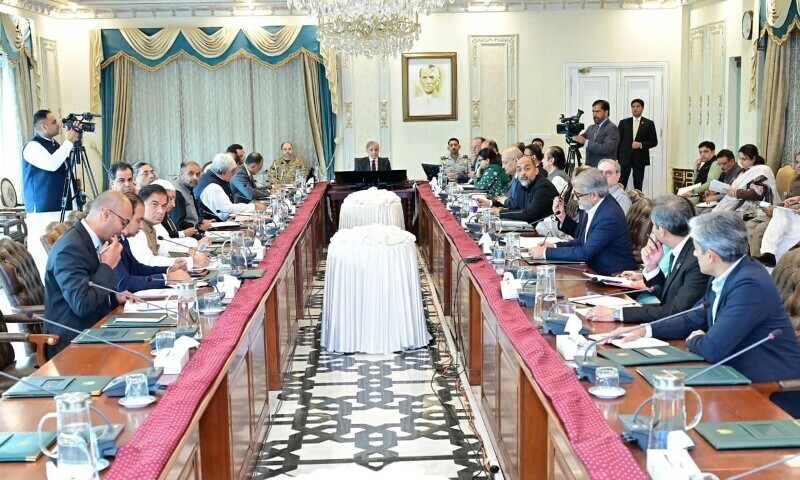
Addressing the Shanghai Cooperation Organisation (SCO) Council of Foreign Ministers meeting, Finance Minister Ishaq Dar stated that Pakistan remained dedicated to fostering regional peace and stability. However, he cautioned that peace could not prevail if coercion and aggression became routine instruments of policy.
“Pakistan remains steadfast in its commitment to the ceasefire and the cultivation of a stable regional equilibrium,” Dar said. “But we cannot accept that the arbitrary use of force is normalised.”
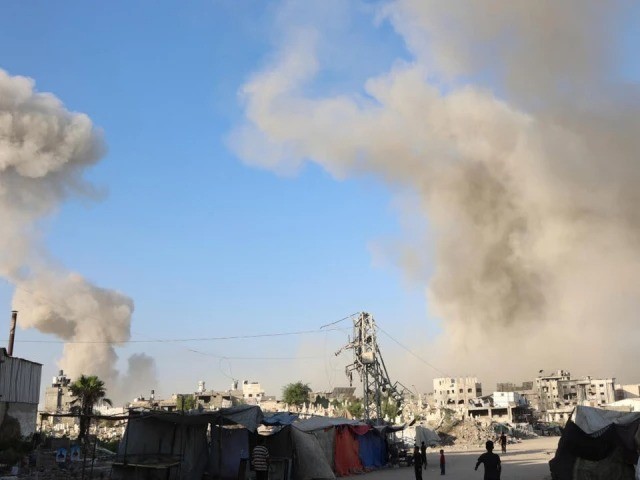
The comments come weeks after the worst escalation in decades between the two nuclear-armed neighbours. Tensions flared on April 22 after an attack in Indian Illegally Occupied Jammu and Kashmir killed 26 people, mostly tourists. India blamed Pakistan for the assault, an accusation Islamabad firmly denied. In response to India’s cross-border strikes, Pakistan launched Operation Bunyan-um-Marsoos, shooting down six Indian Air Force jets, including three Rafale aircraft. The two sides later agreed to a US-brokered ceasefire on May 10 after four days of intense conflict.
Dar underlined that enduring peace required resolving disputes through dialogue and diplomacy rather than confrontation. “A comprehensive and structured dialogue can meaningfully address the full spectrum of issues that have long bedevilled peace and security in South Asia,” he emphasised.
He also highlighted the importance of adhering to bilateral agreements to prevent future escalations, adding that Pakistan had exercised restraint despite India’s provocative rhetoric and strategic recklessness. “The events since April 22 reaffirm a central truth of South Asian geopolitics – that the peaceful settlement of longstanding disputes is imperative for enduring peace,” he said.
Dar urged the SCO to continue serving as a platform for regional stability based on mutual respect and sovereign equality, stating that unresolved disputes must be settled fairly and lawfully. He reiterated Pakistan’s readiness to work with all regional partners within the SCO framework to advance peace, development, and connectivity through cooperation rather than confrontation.
SCO as a stabilising force
The finance minister also underlined Pakistan’s appreciation of the SCO as an organisation of immense political, strategic, and economic significance.
“At a time when the global order is experiencing profound challenges, the SCO has emerged as a stabilising force,” he said, noting that its inclusive approach based on sovereign equality and peaceful conflict resolution offered an alternative to aggression and zero-sum rivalries.
“The SCO’s commitment to consensus, development, and mutual respect is a beacon of hope for building a better and equitable world.”
Dar reaffirmed Pakistan’s adherence to the UN Charter, the SCO Charter, and universally recognised norms of international law, adding, “We believe in non-aggression, non-interference in internal affairs, non-use of force, and no unilateral military superiority in the region.”
He stressed that longstanding disputes must be resolved peacefully through dialogue and diplomacy based on international law, justice, and fairness.
On terrorism and Afghanistan
Addressing terrorism, Dar described it as a threat to global security, condemning all forms, including state terrorism. “We must shun the use of terrorism for political purposes and combat this menace cooperatively, including by addressing its root causes,” he said.
On Afghanistan, Dar reiterated that peace and stability in the country were central to regional aspirations. “Reviving the SCO-Afghanistan Contact Group could provide a valuable platform for pragmatic cooperation,” he suggested.
Dar also called for concrete steps to strengthen trade and development within the SCO, promoting the use of national currencies for settlements to avoid global financial shocks. He supported proposals to create an alternative development funding mechanism under the SCO to revive stalled regional initiatives.
“We support strengthening SCO structures to meet contemporary challenges, and the establishment of four new security centres would enhance cooperation among member countries,” he concluded.


