



ISLAMABAD — Director General of the Inter-Services Public Relations (ISPR), Lieutenant General Ahmed Sharif Chaudhry, has said that the conditions set by Afghanistan hold “no significance” for Pakistan, emphasizing that the only priority for the country is the complete elimination of terrorism.
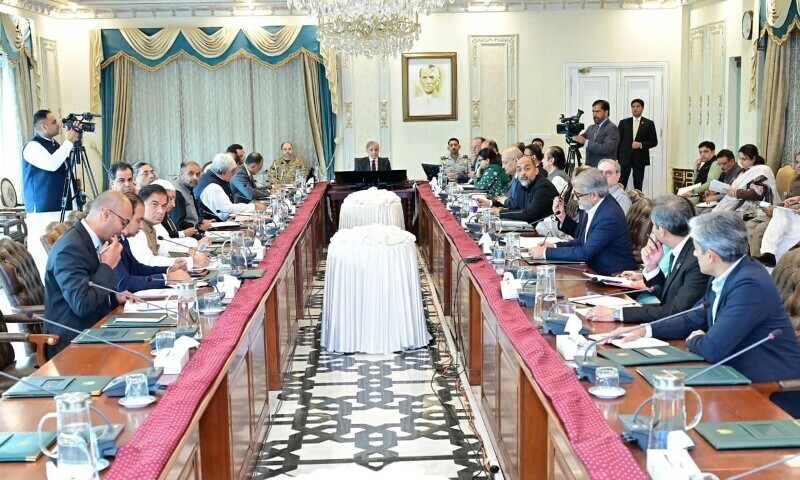
In a detailed, closed-door briefing to senior journalists on Monday, Lt Gen Chaudhry addressed the recent developments following Pakistan-Afghanistan talks held in Doha and Istanbul. “The conditions set by Afghanistan hold no value,” he stated firmly. “What matters to Pakistan is the eradication of terrorism nothing else.”
His comments came days after Pakistan and Afghanistan agreed on an immediate ceasefire in Doha on October 19, with both sides pledging to respect each other’s sovereignty. The second round of discussions took place in Istanbul on October 25, where Islamabad pushed for a “concrete mechanism” to monitor Taliban actions and curb cross-border militant activity.
Lt Gen Chaudhry clarified that Pakistan’s national security rests solely with its armed forces, not with Afghanistan. “The guarantors of our security are our armed forces,” he said. “Pakistan never celebrated the Taliban’s return to power, and our stance on terrorism has always been clear.”
According to the DG ISPR, Pakistan’s ongoing counterterrorism operations have killed more than 1,600 militants, including members of proscribed outfits such as the Tehreek-e-Taliban Pakistan (TTP) and the Balochistan Liberation Army (BLA).
“In Istanbul, we made it clear to the Afghan Taliban that controlling terrorism is their responsibility,” he said. “We conducted operations on our soil, and when terrorists fled across the border, we demanded their handover. Once in our custody, they’ll be dealt with under our Constitution and the law. There will be no negotiations with terrorists.”
The spokesperson also exposed the financial networks fueling militancy, revealing that terrorist groups generate millions through opium cultivation earning between Rs1.8 and Rs2.5 million per acre. “This is a nexus between criminals, drug smugglers, and terrorist outfits,” he noted. “Entire communities and even warlords join this network for profit.”
Lt Gen Chaudhry accused Afghan drug smugglers of not only trafficking narcotics into Pakistan but also interfering in Afghanistan’s own politics.
Senior journalist Hamid Mir, who attended the briefing, said that reporters were shown evidence linking Afghan Taliban soldiers to terror activities in Pakistan. “We were presented with the same evidence Pakistan had already shared with the Taliban during the Doha talks,” Mir said. “It included identification cards belonging to Afghan soldiers involved in terrorist attacks.”
The recent flare-up between Pakistan and Afghanistan has strained relations, with a series of border clashes and mutual allegations of cross-border attacks. Tensions escalated following an October 11 assault on Pakistan from Afghan territory, which came after Kabul accused Islamabad of conducting airstrikes a claim Pakistan neither confirmed nor denied.
Islamabad has repeatedly demanded that the Taliban prevent their soil from being used by terrorist groups targeting Pakistan a demand the Taliban continue to deny. Despite the hostilities, both sides eventually came to the negotiation table in Doha, agreeing to a temporary ceasefire and a follow-up round of talks in Istanbul aimed at establishing long-term peace mechanisms.
Türkiye and Qatar, both close allies of Pakistan, played a facilitating role in these discussions, with Doha also having been central to previous negotiations between the Taliban and NATO forces.


