



ISLAMABAD – July 28, 2025: Deputy Prime Minister and Foreign Minister Ishaq Dar has reaffirmed Pakistan’s intent to maintain strong and balanced relations with both the United States and China, insisting that its deep strategic ties with Beijing should not hinder its cooperation with Washington.
Speaking to members of the Pakistani community at the Consulate General in New York, Dar emphasized that Pakistan had successfully moved past a phase of diplomatic isolation and was now entering a phase of economic and international resurgence. “We are no longer isolated — Pakistan has friends across the world,” he declared.
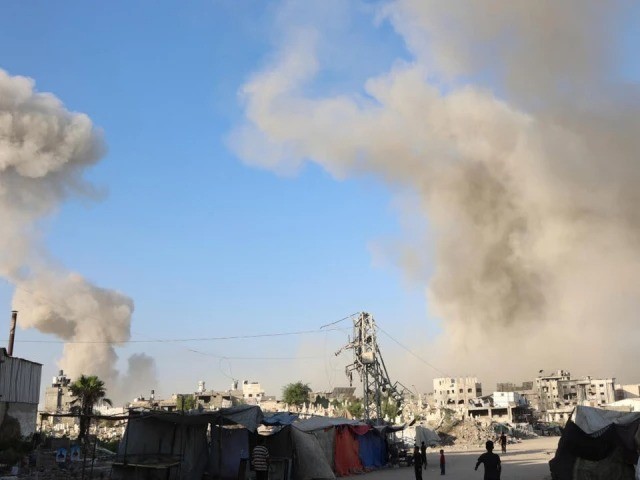
Dar called on global institutions, particularly the United Nations and the Organization of Islamic Cooperation (OIC), to take meaningful action on unresolved global conflicts — notably the situations in Palestine and Indian-occupied Jammu and Kashmir. “These disputes are not just regional issues, they are flashpoints threatening global peace,” he said, urging the OIC to evolve beyond symbolic gestures and assume a proactive diplomatic role. He reiterated Islamabad’s long-standing position supporting a two-state solution to the Palestinian crisis.
Highlighting recent diplomatic milestones, Dar pointed to the unanimous adoption of UN Security Council Resolution 2788 — a measure focused on strengthening peaceful dispute resolution — as a major achievement under Pakistan’s presidency of the Council.
Addressing Pakistan-India ties, Dar reiterated Islamabad’s readiness for dialogue if New Delhi extends an invitation. He stressed that progress on the Kashmir dispute could pave the way for regional development, increased trade, and tourism. “Pakistan welcomes US mediation, but of course, any breakthrough requires India’s willingness to engage,” he said. “If the United States plays an active and balanced role, the Kashmir issue can be resolved.”
Dar also signaled the possibility of a future visit by US President Donald Trump to Pakistan, though he clarified that no formal announcement had yet been made.
Touching on national security, the foreign minister recalled Pakistan’s strong response during Operation Bunyanum Marsoos, which resulted in the downing of six Indian aircraft. He praised the unity shown by the Pakistani public and diaspora during those tense days, calling it a moment of national resilience.
In response to Indian allegations linking Pakistan to militant groups, Dar dismissed the claims, stating that Lashkar-e-Taiba (LeT) had already been dismantled. He also noted that the United States had not provided any concrete evidence implicating the so-called “The Resistance Front” (TRF) in the recent Pahalgam attack in Indian-occupied Kashmir.
On the regional front, Dar stressed Pakistan’s efforts to deepen economic and transit ties with Afghanistan and Central Asia. He expressed hope that Afghan soil would not be used for terrorism, adding that recent assurances from Afghan officials had been encouraging.
He also touched on Pakistan’s role in regional peacebuilding efforts, mentioning Islamabad’s diplomatic outreach aimed at easing tensions between Iran and Israel. Dar confirmed that the Iranian president is expected to visit Pakistan in the near future.
Signs of Economic Recovery
Turning to the economy, Dar shared a cautiously optimistic outlook, citing a sharp drop in inflation — from a peak of 40% to just 2.4% by January 2025 — attributing it to effective policy measures and renewed international confidence in Pakistan. “Global credit agencies have acknowledged the improving trajectory of our macroeconomic indicators,” he noted.
He pointed to the Special Investment Facilitation Council (SIFC) as a key platform for attracting foreign investment and streamlining business operations in critical sectors. Dar said Pakistan aspires to join the G20 in the future, positioning itself as a rising economic player.
He also confirmed that Pakistan had successfully concluded its latest IMF program — a significant milestone — and encouraged overseas Pakistanis to play a greater role in national development through investments in technology, education, trade, and innovation.
The minister assured the expatriate community that efforts were underway to restore Pakistan International Airlines (PIA) routes to Europe and the UK, in compliance with international aviation safety standards.
Diplomacy, Dialogue, and Aafia Siddiqui
Wrapping up his remarks, Dar reaffirmed Pakistan’s belief in diplomacy and dialogue as the cornerstone of its foreign policy. He highlighted the country’s presidency of the UN Security Council and its continued push for peaceful conflict resolution worldwide.
He also reiterated Pakistan’s consistent demand for the release of Dr. Aafia Siddiqui, imprisoned in the United States, stressing the issue remained a humanitarian concern for the country.
“Under Prime Minister Shehbaz Sharif’s leadership, Pakistan is reclaiming its place on the global stage — not just diplomatically, but economically as well,” Dar concluded.


