




United Nations, July 28, 2025 — A high-level international conference aimed at advancing a two-state solution to the Israeli-Palestinian conflict will open today at the United Nations headquarters in New York — but notably absent from the table are two key players: the United States and Israel.
Dozens of foreign ministers and senior officials from around the world are expected to attend the long-planned conference, jointly organized by France and Saudi Arabia. The gathering was originally scheduled for June but was delayed following Israel’s military strikes on Iran.
At the heart of the agenda is the goal of mapping out a viable path toward the creation of an independent Palestinian state — while also addressing the security concerns of Israel. However, the absence of both Washington and Tel Aviv casts a shadow over the conference’s potential impact.
French Foreign Minister Jean-Noël Barrot, speaking to La Tribune Dimanche ahead of the summit, revealed that France would use the platform to rally international support for recognizing Palestinian statehood. He reaffirmed President Emmanuel Macron’s recent announcement that France will officially recognize Palestine during the annual UN General Assembly session in September.
“We will issue a strong call in New York, encouraging other nations to join France in launching a new, ambitious dynamic that will culminate on September 21,” Barrot stated. He added that France also expects Arab states to take a firm stance against Hamas, calling for its disarmament.
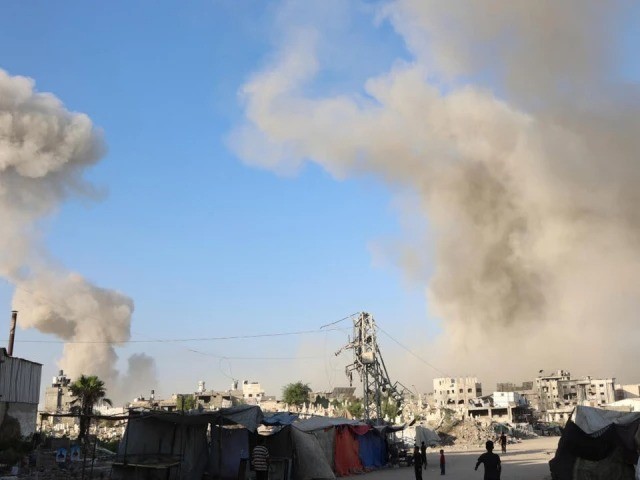
The conference comes against the backdrop of a devastating 22-month-long war in Gaza, triggered by the Hamas-led October 7, 2023, attack on southern Israel that left around 1,200 people dead and roughly 250 hostages taken, according to Israeli sources. In response, Israel’s military operations have resulted in nearly 60,000 Palestinian deaths, according to Gaza’s health authorities.
The United States has opted out of the conference, with a State Department spokesperson describing the meeting as “a gift to Hamas,” accusing the group of rejecting ceasefire offers previously accepted by Israel. Washington, which voted against the UN resolution authorizing the conference last year, said it does not support initiatives that “undermine prospects for a lasting and peaceful resolution to the conflict.”
Israel has also declined to participate, criticizing the conference for not prioritizing a condemnation of Hamas and for failing to focus on the immediate release of hostages. “A serious diplomatic effort must begin by addressing Hamas terrorism head-on,” said Jonathan Harounoff, spokesperson for Israel’s mission to the UN.
Despite the tensions, the UN continues to endorse the two-state framework — envisioning Israel and Palestine living side by side within secure and mutually recognized borders.
The Palestinians seek statehood in the West Bank, Gaza Strip, and East Jerusalem — territories Israel has occupied since the 1967 war.
In a symbolic but powerful move last year, the UN General Assembly overwhelmingly supported a resolution recognizing Palestine as qualified for full UN membership and encouraged the Security Council to revisit the matter. The resolution passed with 143 votes in favor and only nine against, underscoring the broad international backing for Palestinian statehood — even as a US veto in the Security Council continues to block formal recognition.


