



ISLAMABAD: Pakistan and Saudi Arabia are taking significant steps toward launching a Pakistan–Saudi Economic Corridor, a strategic initiative that could redefine trade, investment, and connectivity across South Asia and the Middle East.
Modeled on the China-Pakistan Economic Corridor (CPEC), the proposed project aims to align Saudi Arabia’s Vision 2030 with Pakistan’s economic growth priorities. Officials say the corridor could pave the way for large-scale investments, new job opportunities, and the transfer of advanced technologies between the two countries.
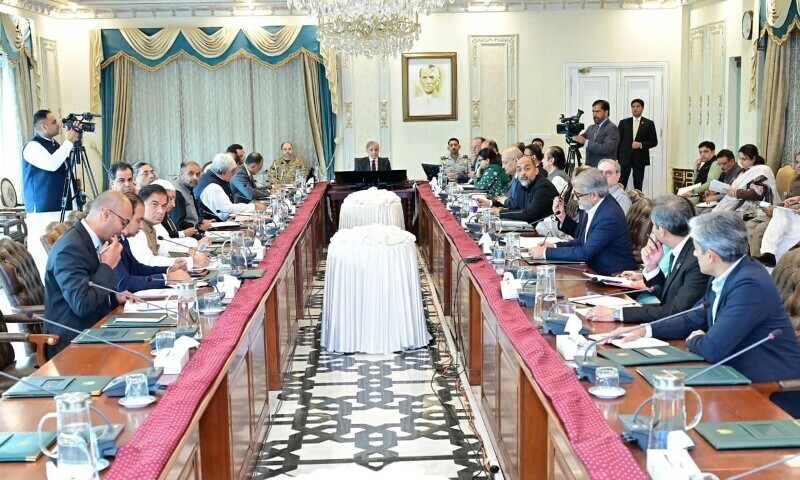
To spearhead the initiative, the federal government has formed a high-powered 18-member committee under the Pakistan–Saudi Arabia Economic Framework. The body, approved by Prime Minister Shehbaz Sharif, has been tasked with leading economic negotiations and expanding cooperation beyond the traditional areas of defense and energy into emerging sectors such as environmental sustainability and climate resilience.
The committee will be co-chaired by Senator Musadik Masood Malik, Federal Minister for Climate Change, and Lt. Gen. Sarfraz Ahmed, National Coordinator of the Special Investment Facilitation Council (SIFC). It also includes key cabinet members overseeing Economic Affairs, Commerce, Energy, Food Security, IT, and Communications, along with senior representatives from the State Bank of Pakistan, FBR, SECP, and the Pakistani Embassy in Riyadh.
According to the official notification, both co-chairs will assemble specialized teams to engage in fast-track negotiations with Saudi counterparts. All members have been instructed to remain available from October 6, 2025, while the SIFC will ensure logistical and operational support. Notably, travel approvals for meetings related to the corridor are to be cleared within one hour—a rare sign of urgency in government coordination.
The committee has also been granted authority to add new members if required and will submit performance updates to the Prime Minister every fifteen days to maintain momentum.
Under the new framework, Pakistan plans to seek renewed Saudi investments in oil refining and agriculture through a “buy-back” model, while also pushing to increase exports to narrow the $3 billion trade gap currently favoring Saudi Arabia. The long-delayed oil refinery project, pending for nearly a decade, is once again expected to top the agenda.
Prime Minister Shehbaz Sharif is also likely to visit Riyadh in late October to finalize a series of economic agreements aimed at accelerating cooperation under this framework.
The renewed economic drive follows last month’s historic “Strategic Mutual Defense Agreement” signed during PM Shehbaz’s visit to the Kingdom at the invitation of Crown Prince and Prime Minister Mohammed bin Salman. The pact formally commits both nations to a joint defense understanding, declaring that “any aggression against either country shall be considered an aggression against both.”
Officials believe the defense pact and the proposed economic corridor mark a turning point in Pakistan–Saudi relations, positioning the partnership as a cornerstone for regional stability, economic growth, and strategic cooperation in the years ahead.


