



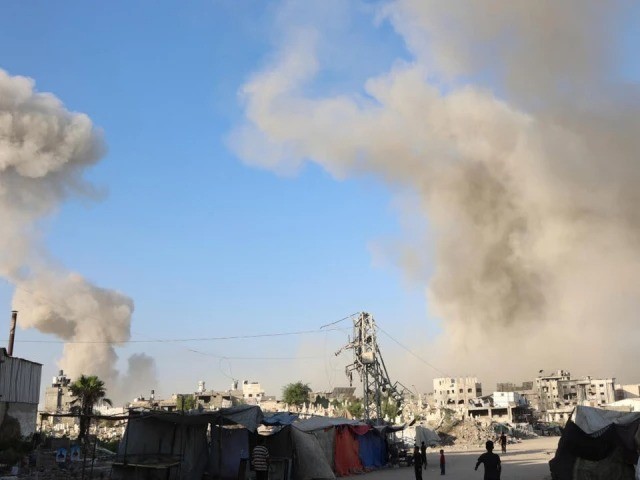



KARACHI — A fire broke out early Wednesday morning at a plastic factory in Karachi’s Liaquatabad area but was brought under control after swift efforts by firefighters, officials confirmed. Fortunately, no casualties were reported.
According to Rescue 1122 spokesperson Hassaanul Haseeb Khan, the blaze erupted around 7:30 a.m. in a plastic manufacturing unit located in a busy market near the Sindhi Hotel area of Liaquatabad. “Three fire tenders were dispatched immediately, and the fire was contained after some time,” he told Dawn.com, adding that all workers managed to evacuate safely.
Liaquatabad Station House Officer (SHO) Ghulam Yasin said that preliminary investigations suggest the fire may have been caused by a short circuit a recurring hazard in Karachi’s industrial and commercial zones.
Incidents like this are common across the city, where outdated infrastructure, substandard wiring, and weak enforcement of safety regulations continue to pose serious risks. Experts say many industrial units still operate without basic fire safety systems such as alarms, extinguishers, or emergency exits.
According to the Fire Protection Association of Pakistan, around 70 percent of Karachi’s residential, commercial, and industrial buildings lack proper fire safety mechanisms. Citing fire department data, the association’s president, Kunwar Waseem, said the city recorded nearly 3,000 fire-related incidents in 2024 alone.
Recent months have seen several deadly blazes. On September 9, four firefighters and a TV cameraman were injured while battling a massive fire at a garment factory in New Karachi. Later that month, two women lost their lives in a fire at a residential building in DHA. In August, six people were killed in a warehouse fire near the Taj Medical Complex, while eight others were injured in another blaze at a factory in the Karachi Export Processing Zone.
Despite repeated tragedies, safety experts warn that little progress has been made in implementing effective fire prevention systems leaving both workers and residents vulnerable to future disasters.


