



July 22, 2025
As tensions simmer once again in South Asia, all eyes are on Washington this week, where Deputy Prime Minister and Foreign Minister Ishaq Dar is set to meet US Secretary of State Marco Rubio on Friday, July 25. The high-level engagement — the first between the two officials — is expected to cover a broad range of strategic and bilateral issues, but it’s the question of Kashmir that’s quietly gaining renewed attention behind closed doors.
The meeting, confirmed by both Islamabad and Washington, comes amid fragile calm between Pakistan and India following the deadly flare-up in May, which saw aerial dogfights, missile exchanges, and civilian casualties on both sides. Though a ceasefire has held since May 10, the scars of that escalation are still fresh — and the diplomatic fallout continues to unfold.
Hints of Mediation?
At a press briefing earlier this week, US State Department spokesperson Tammy Bruce offered a careful but noteworthy response when asked whether Washington would support direct talks between India and Pakistan on Kashmir — similar to its encouragement of dialogue under the Indus Waters Treaty.
Bruce said, “We have Pakistan who is going to be here for a bilat, and I’ll be participating in that, so I’m looking forward to that as well.” While vague, the remark hinted at the possibility that Kashmir — often the elephant in the room — could feature on the agenda, at least indirectly.
Though no official confirmation has been given, the statement aligns with growing chatter in diplomatic circles about a possible revival of quiet US facilitation, especially in light of Washington’s recent shuttle diplomacy during the May crisis.
Trump’s Shadow Looms Over Talks
Adding a dramatic twist to the narrative is Pakistan’s recent decision to nominate former US President Donald Trump for the Nobel Peace Prize, citing his “extraordinary role” in de-escalating May’s cross-border violence. According to Pakistani officials, it was Trump’s last-minute intervention — reportedly backed by economic pressure and backchannel diplomacy — that helped convince both sides to stand down.
While India has rejected claims of external influence in the ceasefire decision, insisting it acted independently and in its own strategic interest, the timing of Trump’s tweets, in which he declared a breakthrough after speaking with both governments, paints a more complex picture.
This week’s meeting in Washington marks the first direct engagement between Dar and Rubio since the new US administration took office. And while the official readout is expected to emphasize trade, counterterrorism, and regional connectivity, the subtext of strategic stability in South Asia will likely loom large over every discussion point.
A Fragile Calm After the Storm
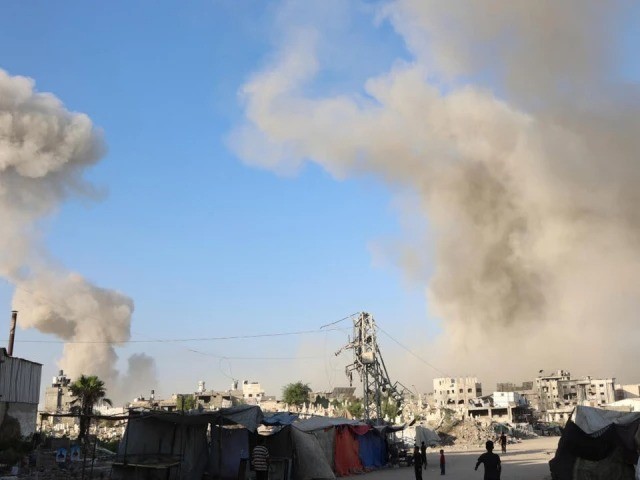
The recent crisis began on May 7, when the Indian Air Force carried out a surprise strike on Pakistani territory, claiming it had targeted alleged militant infrastructure. Islamabad, however, reported that the air raids hit civilian areas, killing several and wounding dozens more. The Pakistan Air Force responded swiftly, shooting down six Indian aircraft, including three French-built Rafale jets — a move that dramatically escalated hostilities.
Over the next three days, both countries engaged in a dangerous exchange of air strikes, drone raids, and artillery shelling. The skirmishes killed dozens, displaced hundreds, and pushed the region to the brink of a wider conflict.
Eventually, a ceasefire was announced — first by Trump via social media, who claimed credit for brokering peace after speaking to leaders in both New Delhi and Islamabad. But India, wary of foreign mediation, has since downplayed Washington’s role and reaffirmed its long-standing position that bilateral disputes with Pakistan, including Kashmir, must be resolved without third-party involvement.
Looking Ahead: Dialogue or Detour?
For now, the upcoming Washington talks present a rare diplomatic opening. Whether that space will be used to merely reaffirm old positions — or explore new ground — remains to be seen.
Dar’s team is expected to press for greater US recognition of Pakistan’s security concerns in the region, especially following the recent military exchanges. While formal mediation is unlikely to be declared, American signaling — even subtle — carries weight, particularly in moments of renewed volatility.
What’s clear is that the Kashmir dispute, long seen as frozen and intractable, is once again inching its way back into international conversations — not through loud declarations, but through quiet, careful diplomacy.
And in a world where wars often start with silence and peace begins with whispers, Friday’s meeting in Washington might just be more than a routine exchange. It could be the first step toward a cautious reset.


