



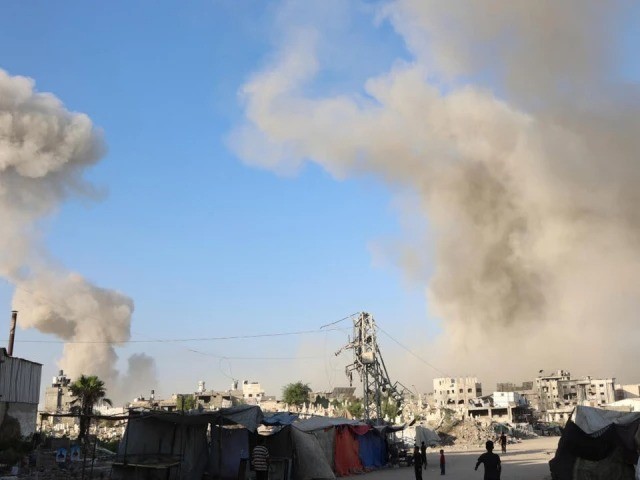


In a move that could reshape the post-war landscape of Gaza, the United States has reportedly circulated a draft resolution to members of the United Nations Security Council (UNSC), seeking approval for the creation of an International Security Force (ISF) with a two-year mandate, Axios revealed on Tuesday.
According to the report, the proposed force would operate in the Palestinian territory under a broad mandate potentially extendable beyond 2027 to maintain law and order, oversee demilitarisation, and support Gaza’s transition toward stable self-governance.
The draft resolution, described as “sensitive but unclassified,” envisions the ISF as an “enforcement force” rather than a traditional peacekeeping mission, with the authority to use all necessary measures under international law to fulfill its mandate. The first troops could be deployed by January if the proposal is approved in the coming weeks.
Under the plan, the ISF would work “in consultation with the Gaza Board of Peace,” an administrative body chaired by US President Donald Trump and expected to function until at least the end of 2027. The board would act as a transitional governing mechanism, supervising a technocratic Palestinian committee responsible for day-to-day civil administration in Gaza.
The draft also outlines that the ISF’s duties would include securing Gaza’s borders with Israel and Egypt, protecting civilians and aid corridors, and training a new Palestinian police force to eventually assume control. It further stipulates that the force would help dismantle militant infrastructure, prevent rearmament, and ensure the complete demilitarisation of non-state armed groups, including Hamas if it refuses voluntary disarmament.
The resolution calls for close coordination with Israel and Egypt, while emphasising adherence to international humanitarian law. It also proposes that humanitarian assistance be delivered through the UN, Red Cross, and Red Crescent warning that any organisation found misusing aid would be banned.
The ISF’s formation is central to the US-brokered Gaza Peace Agreement, which paved the way for the October 10 ceasefire following nearly two years of relentless violence. That ceasefire, though fragile, was achieved through the mediation of eight Muslim nations Pakistan, Saudi Arabia, Qatar, the UAE, Egypt, Jordan, Türkiye, and Indonesia in coordination with Washington.
On Monday, foreign ministers from seven of these countries met in Istanbul to discuss the post-war framework for Gaza. They reaffirmed that Palestinian governance and security must ultimately remain in Palestinian hands, but agreed on the need for a UN-sanctioned mechanism to ensure stability during the transition.
Following the meeting, Turkish Foreign Minister Hakan Fidan told reporters that any deployment of troops would require a clear UN mandate to provide legitimacy and define the scope of the mission. “A general consensus must be reached first, followed by Security Council approval free of vetoes from any permanent member,” he said, noting Israel’s strong opposition to Turkish involvement.
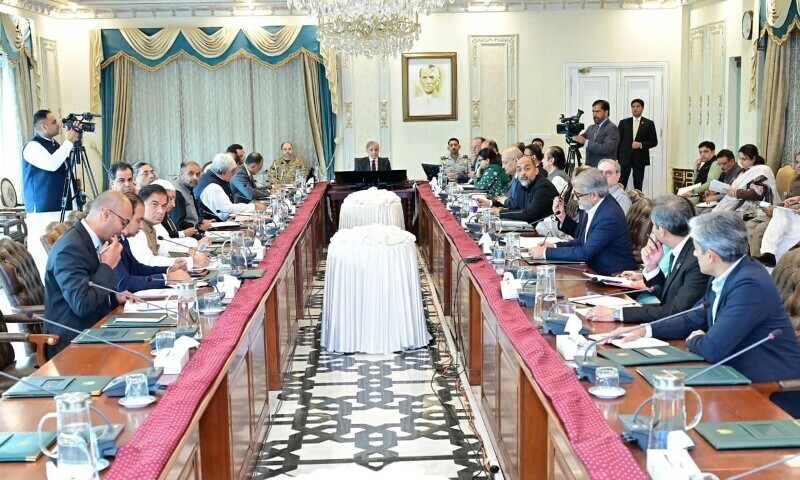
Washington, meanwhile, continues to coordinate with Arab and international partners to determine the composition of the ISF. Sources suggest that Pakistan, like Jordan and Germany, is considering participation only under a UN-authorised framework, with internal consultations on the matter reportedly at an advanced stage.
If approved, the resolution could mark a significant turning point for Gaza introducing a multinational enforcement presence designed to stabilise the region while laying the groundwork for a long-term, Palestinian-led governance structure.


