



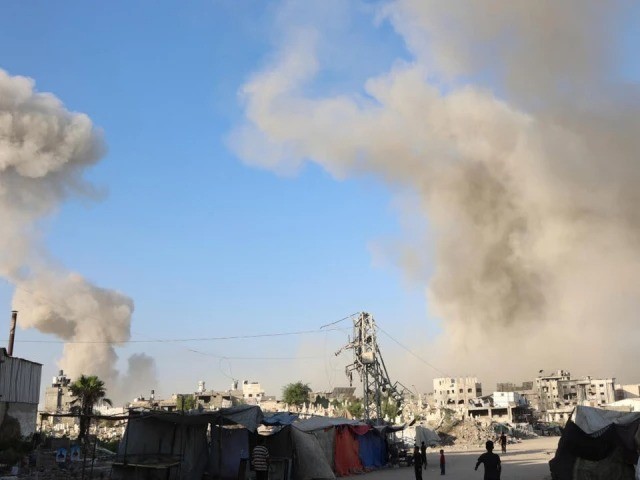

President Donald Trump considers whether to support Israel’s strikes on Iran, including plans to use powerful bombs to hit underground nuclear sites. His top officials discuss ways for the US to target these sites without getting dragged into an all-out war, according to sources familiar with the situation.
Trump made avoiding an extended conflict that started last Thursday a key priority. Sources revealed that while he listens to arguments, including those from Israeli Prime Minister Benjamin Netanyahu suggesting that the United States has the ability to put an end to Iran’s nuclear goals, he dislikes the idea of being drawn into the kind of overseas wars he promised to steer clear of.
Over the weekend, word spread to some US allies that Trump’s team was planning to watch how much progress Israel made during the first week of its operation targeting Iran’s nuclear program. According to two European diplomats, they would decide later whether to involve US military resources.
The day before the deadline, Trump mentioned he had not settled on a decision about what to do next. Diplomats shared that in talks with US allies on Wednesday, administration officials did not choose a specific course of action. A source informed CNN that Trump has gone over military plans targeting Iran but is waiting to see if Tehran backs away from its nuclear ambitions.
“I prefer making the final call the very last second it’s due,” Trump stated in the Oval Office. “War is unpredictable. It can shift from one extreme situation to another.”
While the president considers his choices, he has stated he does not think a US strike leads to full-scale US involvement in a foreign conflict, according to a source with knowledge of the situation. Advisers close to Trump have suggested that strong targeted strikes should not be confused with larger actions that might extend the conflict.
“America could just drop a few MOABs on Fordow, take out the final nuclear facility, and then step away,” David Friedman, who served as Trump’s ambassador to Israel during his first term posted on social media. MOAB stands for Massive Ordnance Air Blast bomb often called the “mother of all bombs.”
“The air space is already clear,” Friedman said. “What does that have to do with anything?”
Trump is leaving his choices open, while the administration keeps getting feedback from allies who warn against direct US military action. Reasons they point out include Iran trying to shut down the Strait of Hormuz, which could disrupt the global oil supply, and the chance Iran might rush to build a nuclear weapon if the US launches any attacks, according to two people aware of these talks. Iran has promised to strike back if US troops assist Israel in launching an attack.
“If the Americans choose to take military action, we will have no option but to respond wherever we identify necessary targets,” Iranian Deputy Foreign Minister Majid Takht-Ravanchi told CNN’s Christiane Amanpour. “It’s straightforward. We are defending ourselves.”
One approach that Trump’s allies have discussed in recent weeks involves his 2020 operation to kill top Iranian commander Qasem Soleimani near Baghdad International Airport with an MQ-9 Reaper drone. The strike escalated tensions and provoked Iranian retaliation, but it stopped short of starting a full-scale war.
Officials from the Trump administration talked about the Soleimani strike as a response to claims suggesting a US strike might cause “uncontrollable escalation,” according to people with knowledge of the discussions.
Trump, for now, has said that he will not order the killing of Iran’s supreme leader.
Top national security leaders working with Trump have tried to coordinate their efforts as they lay out choices for him.
Defense Secretary Pete Hegseth told a Senate panel on Wednesday, “My job, along with the chairman is always to make sure the president has options and understands both the options and their possible consequences.”
John Ratcliffe, who served as Trump’s CIA director, has been someone Trump relied on in recent days. This happened both before Israeli strikes began and while Trump thought about his next decisions.
A source with knowledge of the matter said Ratcliffe attended a Camp David retreat on June 8. This took place just before Israel launched its first attack. During the meeting, he gave Trump an update on the most recent intelligence about Iran’s nuclear program and what Israel might do next.
Camp David’s retreat did not start out as a gathering focused on intelligence. A senior administration official mentioned that neither Ratcliffe nor Trump’s Director of National Intelligence Tulsi Gabbard had been invited at first. Ratcliffe joined at the last moment and shared updates with the president about the fast-changing events.


