




WASHINGTON — In a landmark policy shift, former U.S. President Donald Trump has signed an executive order to formally lift a broad array of sanctions imposed on Syria, a move set to reshape the country’s economic and diplomatic landscape in the wake of President Bashar al-Assad’s ouster late last year.
The U.S. Department of the Treasury confirmed on Monday that 518 Syrian individuals and entities have been removed from its sanctions list as a result of Trump’s directive. The decision, officials said, is aimed at “entities critical to Syria’s development, the operation of its government, and the rebuilding of the country’s social fabric.”
Syrian Foreign Minister Asaad Hassan al-Shaibani welcomed the announcement in a post on X, calling it a “long-overdue breakthrough” and saying the relief would “lift the obstacles to economic recovery and reintroduce Syria into the international community.”
The sweeping sanctions, many of which dated back to before the 2011 civil war, were intensified over the years due to human rights abuses and war crimes under the Assad regime. Critics argued they also severely hindered humanitarian and reconstruction efforts, plunging the country’s economy into near-collapse.
Trump’s decision fulfills a pledge he made during his Middle East tour in May, where he emphasized Washington’s desire to support a stable and unified Syria. “A united Syria that does not serve as a safe haven for terrorist groups and respects the rights of its ethnic and religious minorities will contribute to regional peace and prosperity,” Trump said in a statement issued Monday.
However, the administration clarified that not all restrictions are being lifted. Sanctions targeting former regime officials, including Bashar al-Assad, and designated terror groups such as ISIS, Iran-backed militias, and affiliates of al-Qaeda, will remain in place.
As part of the new order, Trump tasked Secretary of State Marco Rubio with reviewing the designation of interim Syrian President Ahmed al-Sharaa as a “Specially Designated Global Terrorist.” Al-Sharaa, known in the past as Abu Mohammed al-Julani, was formerly affiliated with the al-Nusra Front — al-Qaeda’s Syrian branch — before publicly severing ties in 2016 and later leading the rebel coalition Hayat Tahrir al-Sham (HTS).
After leading a surprise offensive that resulted in Assad’s removal in December 2024, al-Sharaa emerged as the de facto leader of the interim government in Idlib. During a meeting with Trump in Riyadh earlier this year, the former U.S. president described al-Sharaa as “tough” and “forward-looking.”
While al-Sharaa has pledged inclusive governance and reconciliation, recent reports of targeted violence and reprisals against Assad loyalists — particularly members of the Alawite sect — have raised alarm among rights groups and regional observers.
Nonetheless, Trump’s decision is being hailed in some quarters as a bold attempt to reset Syria’s future. A bipartisan effort in Congress, led by Democratic Rep. Ilhan Omar and Republican Rep. Anna Paulina Luna, had already been pushing legislation to lift sanctions as part of a longer-term plan to support Syrian recovery.
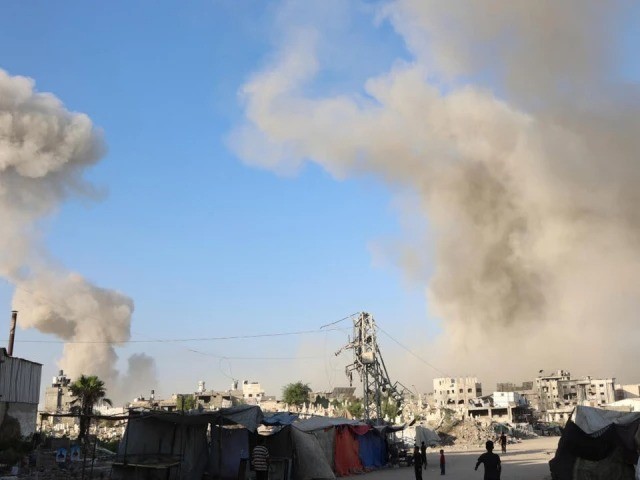
Questions still remain about the path forward — especially with ongoing regional tensions, Israeli military activity inside Syrian territory, and concerns about extremist influence. Yet for the first time in over a decade, the door appears open for Syria’s economic reintegration and reconstruction on the global stage.


