




July 25, 2025
As deadly border clashes between Thailand and Cambodia stretch into their second day, Bangkok has firmly rejected international mediation efforts, insisting on direct bilateral talks with Phnom Penh — but only after hostilities cease completely.
The escalating violence, which has already claimed the lives of at least 16 civilians and prompted mass evacuations, marks the worst confrontation between the two Southeast Asian nations in more than a decade.
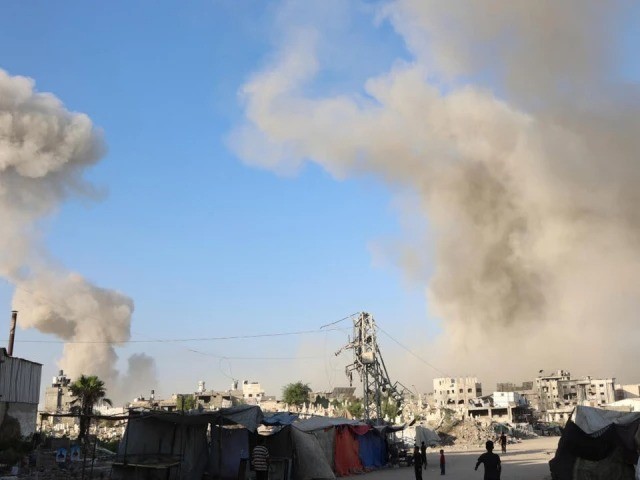
On Thursday, Thai fighter jets struck targets inside Cambodia in retaliation for sustained artillery fire that began near a disputed temple site. The conflict quickly intensified, spreading to multiple flashpoints along the long-contested border. By Friday, Thailand’s military reported that over 100,000 residents from Ubon Ratchathani and Surin provinces had been evacuated as both sides exchanged heavy artillery, including Cambodian use of Soviet-era BM-21 rocket systems.
“Cambodian forces have launched repeated attacks using heavy weapons and rocket systems,” the Thai military said in a statement. “Thai forces have responded with appropriate supporting fire under the tactical situation.”
Mediation Offers Rejected
Despite mounting international concern, Thailand is holding its ground on resolving the crisis without outside help. Offers from the United States, China, and ASEAN chair Malaysia to mediate peace talks were politely declined by Bangkok.
“We appreciate the concern, but I don’t think we need any mediation from a third country yet,” Thai Foreign Ministry spokesperson Nikorndej Balankura told Reuters on Friday.
Thailand maintains that meaningful dialogue cannot begin until a complete halt to hostilities is achieved. The current standoff began after the death of a Cambodian soldier in a border skirmish in May, prompting tit-for-tat diplomatic expulsions and an increased military presence on both sides.
History of a Fragile Frontier
The root of the crisis lies in a century-old territorial dispute. The 817-kilometer border was first delineated by French colonial cartographers in 1907, using the natural watershed line as a boundary. Thailand has long contested parts of that mapping, particularly areas near culturally and historically significant temples.
Although both nations formed a Joint Boundary Commission in 2000 to address unresolved claims, progress has remained sluggish. The dispute reignited in 2008 when Cambodia pursued UNESCO World Heritage status for the Preah Vihear temple, resulting in deadly clashes and a weeklong artillery exchange in 2011. In 2013, the International Court of Justice reaffirmed Cambodia’s sovereignty over the area, ordering Thai troops to withdraw—yet tensions have remained volatile.
A New Flashpoint
The current escalation appears to have been triggered by a fresh outbreak of violence near another ancient temple site early Thursday morning. Initial gunfire quickly escalated into full-scale shelling across at least six locations along the border—stretching as far as 209 kilometers apart.
In one particularly grim incident, a Thai soldier lost a limb to a landmine. Thailand swiftly responded by recalling its ambassador from Phnom Penh and expelling Cambodia’s envoy—a charge Cambodia denies, instead accusing Thailand of initiating the offensive.
On-the-ground reports indicate that most of the 15 civilian casualties so far are Thai nationals, with Cambodian casualties yet to be confirmed.
Regional Ripples
The clashes come at a time of heightened sensitivity in Southeast Asia, where shifting geopolitical alignments and historical grievances have the potential to spiral into wider instability. Analysts warn that if the conflict is not contained soon, it could not only derail ASEAN unity but also provide opportunities for external powers to assert influence in the region.
For now, Thailand remains resolute in its stance: no ceasefire, no talks. Cambodia, meanwhile, accuses its neighbor of aggression and calls for international attention. Yet with both sides entrenched in decades-old narratives of territorial legitimacy, peace seems as elusive as ever.
The world watches as two ancient nations, bound by culture and history but divided by politics and land, inch closer toward a prolonged and dangerous confrontation.


