




ISTANBUL | July 24, 2025
For the first time in months, Russian and Ukrainian delegations met face-to-face in Istanbul on Wednesday, renewing efforts to negotiate an end to a war that has dragged on for over three and a half years. While the optics were hopeful, expectations on both sides remain strikingly low.
As Turkish Foreign Minister Hakan Fidan opened the session, his words reflected the urgency and gravity of the moment.
“Our aim is to end this bloody war, which has a very high cost, as soon as possible,” he said, adding that the ultimate goal was to reach a ceasefire that could pave the way for lasting peace.
The talks come at a particularly tense time. Just days ago, U.S. President Donald Trump issued an ultimatum to Moscow — end the war within 50 days or face a fresh wave of sanctions. While Washington’s warning looms large in the background, there is little indication that the Kremlin is in any mood to compromise.
Low Hopes, Hard Realities
Kremlin spokesman Dmitry Peskov tamped down any optimism.
“No one expects an easy road. It will be very difficult,” he said when asked about Russia’s expectations from the Istanbul dialogue.
The previous two rounds of talks — held in May and June — yielded modest progress. The two sides agreed on prisoner swaps and the repatriation of soldiers’ remains, but there was no real movement toward a broader political resolution.
This latest round, Ukrainian officials say, could help lay the groundwork for a potential meeting between President Volodymyr Zelensky and Russian President Vladimir Putin, though that idea remains distant at best.
“Everything will depend on whether Russia stops speaking in ultimatums and takes a constructive position,” a Ukrainian delegation member told AFP.
For now, Moscow insists that it’s too early to even discuss a direct meeting between the two leaders. The last such encounter took place back in 2019 — in a very different political climate.
Deep Divides on Key Issues
At the heart of the stalemate is a fundamental disagreement over territory.
Russia has demanded that Ukraine withdraw from four regions it claims to have annexed in September 2022 — a condition Kyiv categorically rejects. Ukraine has made clear it will not enter into territorial negotiations until a ceasefire is reached and has vowed never to recognise Russia’s claims over occupied land, including Crimea, annexed by Moscow in 2014.
Ukraine’s delegation is being led by Rustem Umerov, a former defence minister and now the head of the country’s security council. On the Russian side, the delegation is led by Vladimir Medinsky, a political scientist who has previously represented Moscow in past rounds but is not seen as a key decision-maker. Ukrainian officials have openly dismissed him as a Kremlin mouthpiece.
War Fatigue and Mounting Losses
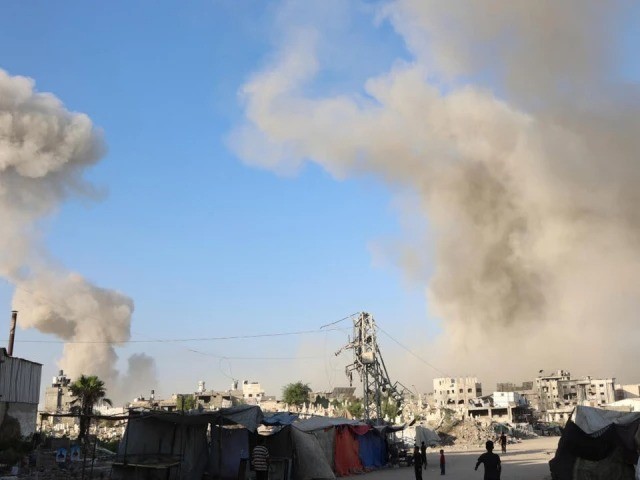
Russia’s full-scale invasion of Ukraine began in February 2022, plunging the region into a long, grinding conflict. Entire cities in eastern and southern Ukraine have been reduced to rubble. Civilian casualties, while difficult to independently verify, are believed to be in the tens of thousands, and military losses on both sides continue to climb.
At the last round of talks in June, both sides exchanged draft proposals for ending the war. According to Kremlin officials, those positions were “diametrically opposed.”
Now, with global pressure mounting and the human cost growing heavier by the day, the question remains: Can Istanbul be the place where the ice begins to thaw? Or is this yet another diplomatic round that ends where it began — with both sides talking, but not listening?
For now, the world watches and waits.


