




Karachi — July 2025
Eight-year-old Sidra Al Bordeeni hadn’t ridden a bicycle in over a year — not since an Israeli missile strike in Gaza left her without an arm. But as soon as she returned from a Jordanian clinic last week, fitted with a sleek new prosthetic, Sidra jumped onto a bike and rode through the refugee camp where she now lives, grinning as she regained a long-lost piece of childhood.
Her mother, Sabreen Al Bordeeni, could barely hold back her tears.
“She’s outside playing now — all her friends are amazed by her arm,” Sabreen said via phone from the refugee camp. “I can’t explain what it feels like to see her happy again. It’s like a piece of our life has come back.”
Sidra’s new prosthetic wasn’t built in Jordan, nor in a European hospital or American lab. It came from Karachi, nearly 4,000 kilometers away, designed and manufactured by Bioniks, a rising Pakistani tech startup dedicated to affordable, custom-built prosthetics using 3D scanning and printing.
This marks Bioniks’ first foray into conflict-affected zones — a milestone that CEO and co-founder Anas Niaz describes as “deeply personal and historic” for the company.
“We’ve fitted more than a thousand children and adults across Pakistan since 2021,” Niaz told The Express Tribune. “But this was different. These were war-wounded children. It wasn’t just about function — it was about dignity, healing, and hope.”
Technology With a Heart
Founded as a social enterprise, Bioniks uses a smartphone app to remotely scan the patient’s limb from multiple angles, creating a precise 3D model. The prosthetic is then designed and printed in Karachi, often customized with colors and features suited to each child’s needs and personality.
For Sidra, it was a prosthetic arm. For three-year-old Habebat Allah — who tragically lost both arms and a leg in the same conflict — the process was far more complex. But through weeks of virtual consultations, Bioniks managed to create designs tailored to her unique situation.
“These are not just devices,” Niaz explained. “They are symbols of resilience, and tools to help kids rebuild their identities.”
A Collaborative Mission
Sidra’s device was sponsored by Mafaz Clinic in Amman, where she was treated. Clinic CEO Entesar Asaker said their decision to partner with Bioniks came down to three things: affordability, accessibility, and innovation.
“They made it possible to conduct remote fittings, ship the prosthetics internationally, and even troubleshoot virtually,” she said. “For refugee communities where mobility is limited and medical infrastructure is stretched, this is a game-changer.”
Habebat’s prosthetics, meanwhile, were paid for through donations collected by generous Pakistanis, moved by her story.
Once the devices were ready, Anas Niaz himself flew from Karachi to Amman to personally deliver the arms — a moment he says will stay with him forever.
“As soon as Sidra tried on her new arm, she smiled and hugged me. That hug — that was worth more than anything,” Niaz recalled.
A Small Step with Big Impact
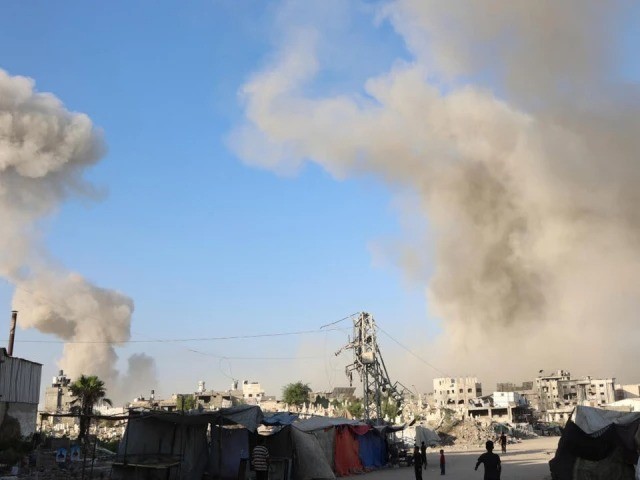
While the project may seem small in scale, the implications are profound. In a region where children’s lives are often shaped by loss, trauma, and displacement, the ability to hold a spoon, throw a ball, or ride a bicycle again is nothing short of transformative.
“Sidra is just one child,” Niaz said. “But her story proves that solutions can come from anywhere — even Karachi. We just need to believe in the power of purpose-driven innovation.”
As Gaza continues to reel from the devastation, and aid agencies struggle to reach all who need help, this Pakistani startup’s quiet act of compassion offers a beacon of hope — and a powerful reminder that sometimes, healing begins with the smallest of steps.


