



ISLAMABAD – July 29, 2025:
Pakistan and Kyrgyzstan have reaffirmed their commitment to strengthening bilateral ties, setting an ambitious trade target of $100 million and signing multiple agreements to boost collaboration in trade, investment, energy, health, and education.
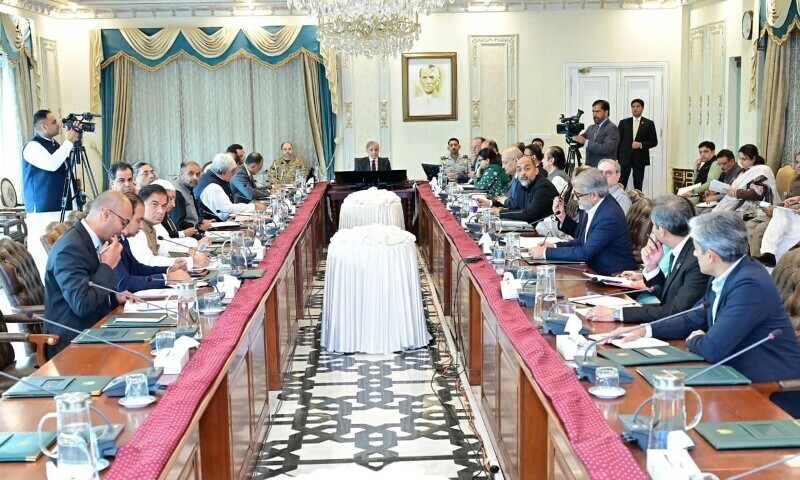
The developments came during the 5th Session of the Inter-Governmental Commission (IGC), held in Islamabad and co-chaired by Pakistan’s Federal Minister for Power, Sardar Awais Ahmed Khan Leghari, and Kyrgyz Deputy Chairman of the Cabinet of Ministers, Edil Baisalov.
In a joint effort to reverse the declining trade figures — which fell from $11.2 million in 2022–23 to just $5.18 million in 2024–25 — both sides agreed to revitalize economic engagement. Minister Leghari emphasized the urgency, stating, “There is a clear need to reenergize our trade relationship. Our shared goal is to raise bilateral trade to $100 million.”
To this end, the two nations agreed to diversify trade portfolios, revive the Pakistan-Kyrgyz Joint Business Council, and facilitate B2B interactions, including trade fairs and business forums.
Three MoUs Signed to Deepen Cooperation
Three Memoranda of Understanding (MoUs) were signed during the session:
- The first MoU was between the Kyrgyz Centre for Standardisation and Metrology and Pakistan’s Standards and Quality Control Authority. It focuses on cooperation in conformity assessment, metrology, and quality infrastructure.
- The second MoU links Kyrgyzstan’s National Investments Agency with Pakistan’s Board of Investment, aiming to encourage cross-border investment in sectors such as textiles, pharmaceuticals, minerals, tourism, and information technology.
- The third MoU focuses on Halal trade, connecting Pakistan’s Halal Authority with the Kyrgyz Halal Development Centre to ensure mutual standards and certifications.
Energy, Connectivity, and Environment in Focus
Discussions also extended to regional energy cooperation. Kyrgyz officials proposed working together on a proposed power transmission corridor connecting Kyrgyzstan, China, and Pakistan. Both countries expressed interest in joint ventures related to renewable energy, hydrocarbon exploration, mining, and institutional collaboration.
Connectivity and logistics remained central to the dialogue. Enhancing postal services, civil aviation, and cargo routes were discussed, with Pakistan encouraging Kyrgyz airlines to move from chartered to scheduled flights. Kyrgyzstan, in turn, proposed a new air route via China and welcomed Pakistan’s involvement in a high-speed fiber-optic cable project.
Financial, Health, and Cultural Collaboration
On the financial front, the State Bank of Pakistan and the National Bank of the Kyrgyz Republic agreed to collaborate on Islamic banking, digital financial services, and capacity building via the National Institute of Banking and Finance.
In health and pharmaceuticals, both sides committed to easing the registration of Pakistani medicines in Kyrgyzstan and discussed joint vaccine manufacturing with Pakistan’s National Institute of Health. Public procurement and regulatory alignment were also explored.
Cultural cooperation featured prominently. Plans include increasing cultural events, sports exchanges, and collaborative media content. Proposals were also made for joint training in broadcasting and cinema.
Expanding Educational and Labour Ties
Educational cooperation is set to grow, with Pakistan pledging continued support for Kyrgyz students through the Pakistan Technical Assistance Programme (PTAP). The two sides also agreed to encourage joint research, academic exchanges, and training initiatives in STEAM (Science, Technology, Engineering, Arts, and Mathematics).
Labour cooperation will be explored through the creation of a Joint Working Group to address employment and workforce mobility between the two nations.
Tourism, Agriculture, and Digital Commerce
Tourism emerged as another priority, with both governments agreeing to finalize an MoU promoting tour operator collaboration, cultural marketing, and joint exhibitions. In agriculture, a new MoU was signed focusing on the trade of Kyrgyz legumes and Pakistani Basmati rice, with cooperation on food safety, veterinary, and phytosanitary controls.
Kyrgyzstan expressed strong interest in investing in Pakistan’s mining sector, particularly in copper and gold. The countries also discussed enhancing digital commerce and launching cargo services under a 1995 transport agreement.
Minister Leghari hailed Kyrgyzstan’s At-Bashi Logistics Centre as a potential model for enterprise-level collaboration and proposed showcasing investment opportunities through updated information on Special Economic Zones (SEZs) and tax incentives.
Looking Ahead
Pakistan reiterated its keen interest in the proposed 500kV Torugart–XUAR–Gilgit Baltistan transmission line, envisioned as a vital link in the broader Kyrgyzstan–China–Pakistan electricity corridor.
In a joint statement, both sides agreed to convene the 6th IGC session in Kyrgyzstan, with dates to be finalized through diplomatic channels.
The Ministry of Economic Affairs described the session as a milestone in Pakistan’s outreach to Central Asia. “These initiatives pave the way for sustainable development, mutual prosperity, and stronger people-to-people ties,” the ministry said.
Wrapping up the session, Minister Leghari noted, “We must reaffirm our commitment to a deeper, integrated, and resilient partnership grounded in trust, cooperation, and regional peace.”


