



ISLAMABAD: Iran’s top security official Ali Ardeshir Larijani, secretary of the Supreme National Security Council, opened a two-day visit to Islamabad on Tuesday, holding wide-ranging discussions with Pakistan’s civilian leadership on economic cooperation and evolving regional dynamics — with the Gaza peace plan high on the agenda.
Mr Larijani began his visit with separate meetings with President Asif Ali Zardari, Prime Minister Shehbaz Sharif, National Assembly Speaker Ayaz Sadiq, and Deputy Prime Minister and Foreign Minister Ishaq Dar. He is set to meet Army Chief Field Marshal Asim Munir and National Security Adviser and ISI Director General Lt Gen Asim Malik on Wednesday.
Diplomatic officials described the trip as part of a renewed push to review stalled agreements, assess bilateral ties, and exchange views on fast-changing developments in the Muslim world.
Shortly after arriving in Islamabad, Mr Larijani told reporters that shifting geopolitical realities “require deeper cooperation across multiple areas,” while highlighting Pakistan’s “important strategic position” in regional security.
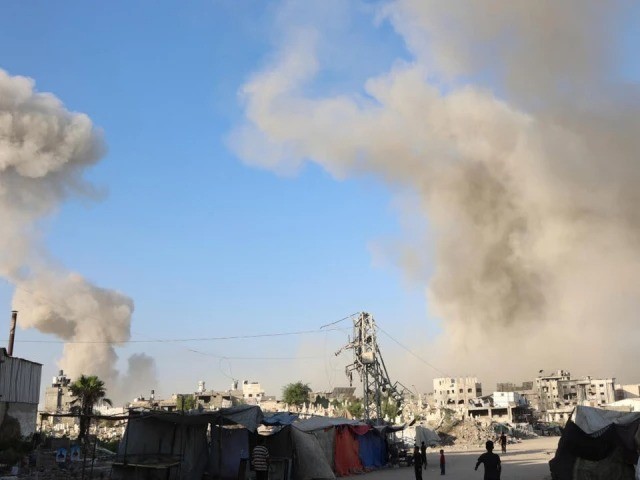
His visit comes as Iran voices concerns over US President Donald Trump’s Gaza plan, which recently entered its implementation phase after the UN Security Council approved it on Nov 17. The plan envisages deploying an international stabilisation force in Gaza — a move Tehran fears could pave the way for prolonged foreign military involvement. Pakistan has supported the initiative and is considered a potential contributor to the force.
While statements issued by Pakistani officials remained cautious about the specifics of the Gaza discussion, Mr Larijani took to X later in the day, conveying Ayatollah Ali Khamenei’s greetings to the Pakistani people for their support during Iran’s recent 12-day war with Israel. He praised Pakistanis for their “firm and principled stance,” and added a message of thanks to Pakistan’s government, parliament, and armed forces — seen by many as a diplomatic balancing act.
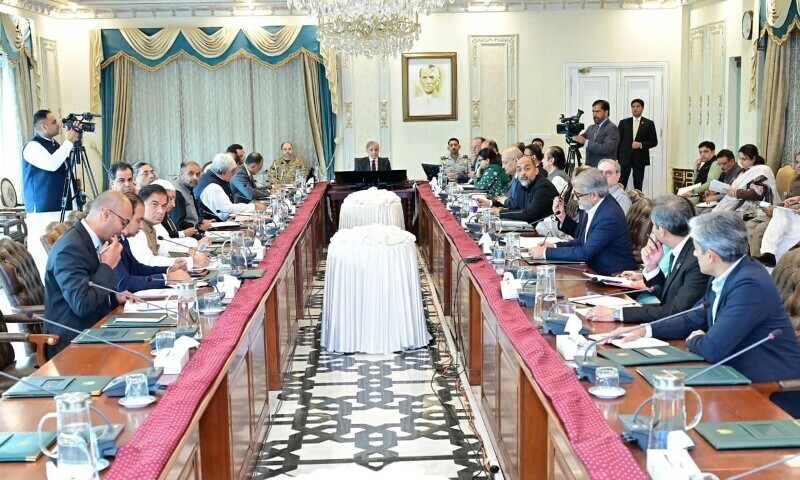
According to the Prime Minister’s Office, Mr Sharif and the Iranian official reviewed broader regional developments and “stressed the need for coordinated efforts to promote peace and stability.”
The prime minister appreciated Iran’s diplomatic outreach, while Mr Larijani thanked Pakistan for advocating dialogue and negotiation to resolve conflicts — a veiled reference to Islamabad’s occasional backchannel role between Tehran and Washington.
Both sides agreed that Deputy PM Ishaq Dar would soon lead a high-level delegation to Tehran to advance cooperation in agriculture, connectivity, and other sectors.
The Foreign Office noted that Mr Dar and Mr Larijani reaffirmed their commitment to strengthening ties and expanding collaboration on regional and international issues.
In comments to Iran’s state news agency IRNA, Mr Dar said his meeting included “detailed and candid discussions,” while Mr Larijani said talks focused on economic development, expanding cooperation, and reviewing regional challenges.
During his call on President Zardari, the two sides explored opportunities for collaboration in energy, trade, and railway connectivity. The president emphasized the need to boost bilateral commerce and improve rail links, especially to facilitate travel for religious pilgrims. He also pushed for progress on the long-delayed Iran-Pakistan gas pipeline, citing Pakistan’s rising energy demand.
Mr Larijani noted that steps taken after Iranian President Masoud Pezeshkian’s visit to Pakistan in August — including moves for preferential access to Pakistani products — had laid the groundwork for achieving the $10 billion bilateral trade target.
In his meeting with NA Speaker Ayaz Sadiq, the two discussed parliamentary collaboration, regional security, and opportunities for expanded economic engagement.
Mr Larijani’s visit follows the trip of Iranian parliament speaker Bagher Ghalibaf just weeks earlier, underscoring intensified diplomatic engagement between the neighboring states amid shifting regional alignments.
Pakistan and Iran share a long but often sensitive border where militant groups operate on both sides, prompting increased security coordination. Tehran has also offered to mediate between Islamabad and Kabul as cross-border tensions with Afghanistan rise.


