



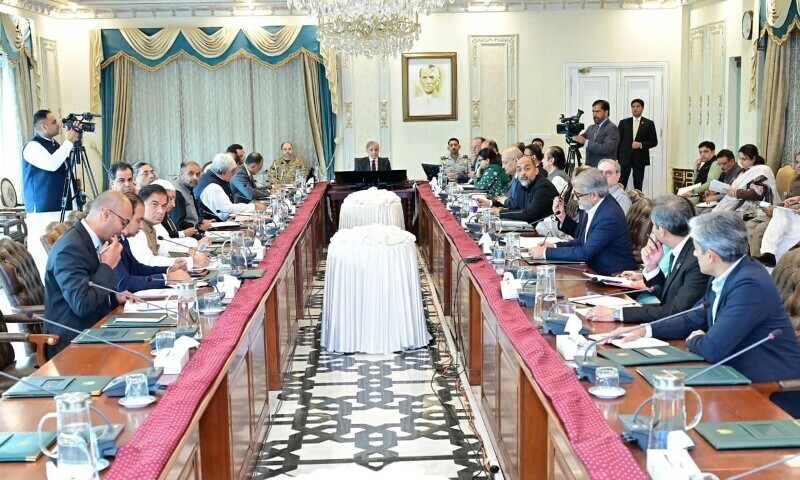

Karachi’s civil society and local residents convened at the Karachi Press Club on Tuesday to voice deep concern over what they called an “urgent and growing threat” to the city’s already shrinking green spaces. Their primary grievance: the Karachi Metropolitan Corporation (KMC) has begun allowing commercial structures—particularly padel courts—to be built inside neighbourhood parks that were once peaceful, community-friendly spaces.
The press conference was organised by the Residents’ Committee of Clifton, led by Rasha Tarek, who made it clear that the problem is not limited to one or two neighbourhoods.
“People think Clifton is a comfortable place to live, but the truth is that residents here are facing serious issues,” she said. “Parks that should offer greenery and calm are being turned into commercial hubs under the banner of ‘sports development’. Even people from DHA—where these projects are restricted—come here and disrupt our neighbourhoods.”
She added that late-night noise from these commercial facilities has made life difficult. “Residents can’t sleep. Activities continue past 3 or 4am with loud shouting and hooting. The purpose of a park is to give working people a moment of relief, not disturb them further,” she said. She also questioned how the average citizen could afford an Rs8,000 padel court booking.
“We cannot allow Karachi to be treated like an orphan,” she added, urging people to stand up for their right to a peaceful environment.
Rashida Anjarwala, a Clifton resident and a petitioner in a recent case filed in the Sindh High Court, said the commercialization of her local park happened without any consultation.
“Right in front of my house, a public park has been converted for sports-related activities,” she said. “The KMC never sought approval, never even asked the residents most affected. We approached the court, but the petition was disposed of within two weeks. I urge Mayor Murtaza Wahab to personally look into this.”
Another Clifton Block 2 resident, Kamal Murtuza, described how the transformation has robbed residents of a space they once enjoyed. “My wife and I used to walk in that park. Now, all we see are double-cabin vehicles and guards. It doesn’t feel like our space anymore.”
He added that the new courts cater only to a select group. “These parks once welcomed people from all walks of life, including those from nearby low-income communities. Today, only one percent of society can afford these activities. What about the remaining 99 percent? We must protect these spaces for future generations.”
Urban planner and architect Marvi Mazhar explained why handing over public parks for padel courts is damaging for the city’s urban fabric.
“If parks continue to be given away for commercial sports, then how will authorities address residents’ concerns?” she asked. “The local government needs to study the needs of each neighbourhood and make decisions that actually benefit the community.”
She pointed out that projects like the Urban Forest, which genuinely served the city’s environmental needs, were sidelined due to insufficient funding and support.
According to Mazhar, padel courts on green spaces do little to contribute to Karachi’s overall development.
Speakers collectively stressed that residents’ consent must be sought before altering the purpose or structure of neighbourhood parks.
Other participants included documentary filmmaker Madeeha Syed, environmental researcher Ahmad Shabbar, and several affected residents who reiterated that Karachi’s remaining green patches cannot withstand further encroachment.


