




BEIJING – August 6, 2025:
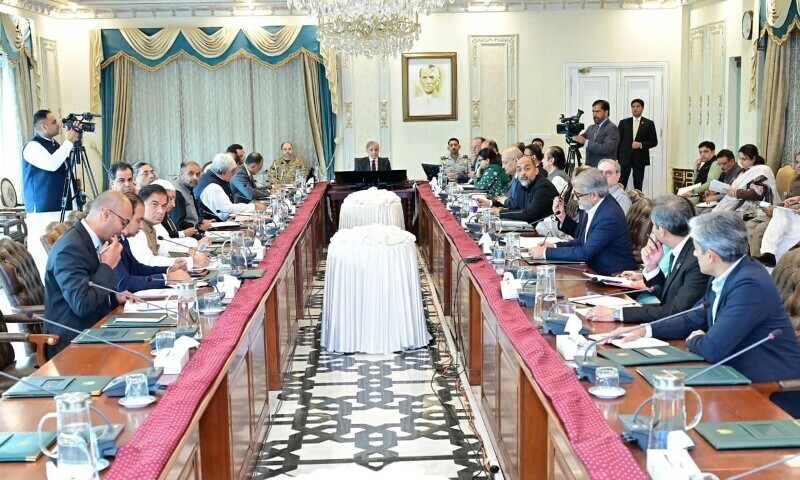
Federal Minister for Planning, Development and Special Initiatives, Ahsan Iqbal, on Monday underscored the electric vehicle (EV) sector as a key frontier for future collaboration between Pakistan and China, calling it a vital step in fostering sustainable development and industrial transformation.
Speaking at a press conference held at the Pakistani Embassy in Beijing, the minister responded to a journalist’s query by pointing to EVs as a growing global trend and an area where Pakistan is eager to leverage China’s technological leadership.
“EVs have become a very important segment,” Iqbal said. “We see enormous potential in learning from China’s advances — particularly in next-generation battery technology like sodium-ion batteries, which may prove more cost-effective and sustainable than traditional lithium-based systems.”
Highlighting Pakistan’s eagerness to develop its EV industry, Iqbal revealed that the upcoming Pakistan-China Business Conference, scheduled for September 4 in China, will serve as a major platform to connect stakeholders from both countries.
“We’re expecting participation from over 250 Pakistani and more than 200 Chinese companies,” he said. “This will be a unique opportunity for sector-wide matchmaking — with focus areas including electric vehicles, renewable energy, chemicals, and agriculture.”
A Strategic Opportunity for Localisation
Iqbal stressed that Chinese investment in Pakistan’s EV manufacturing ecosystem would offer mutual benefits — lower production costs for Chinese companies, and reduced fuel dependency and job creation for Pakistan.
“Localised EV production isn’t just about technology transfer — it’s about building an energy-efficient, forward-looking economy,” he noted.
This strategic push aligns with Pakistan’s newly introduced National Electric Vehicle Policy 2025–2030, which sets ambitious goals: 30% of all new vehicle sales to be electric by 2030, and complete transition to net-zero transport emissions by 2060.
The policy framework is backed by a comprehensive set of incentives — including tax breaks, subsidies, and infrastructure support — with strong emphasis on localisation of EV production and supply chains.
Several leading Chinese firms — including BYD, Chery, and others — are already active in Pakistan, exploring partnerships in assembly, infrastructure, and battery solutions. With continued collaboration, Pakistan aims to become a regional hub for EV manufacturing and export.


