





ISLAMABAD – July 16: In a startling revelation, Federal Minister for Religious Affairs Sardar Muhammad Yousuf has said that the government has no official record of approximately 40,000 Pakistani pilgrims who traveled to Iraq, Iran, and Syria in recent years and never returned.
Speaking at a press conference on Tuesday, the minister acknowledged the lack of a proper monitoring system for pilgrims—commonly referred to as Zaireen—visiting religious sites in these countries. “Had there been a formal system in place, we would have known where each pilgrim went and whether they returned,” Yousuf said.
He further disclosed that the absence of a registration and tracking mechanism has raised concerns not only within Pakistan but also among host countries. Authorities in Iran, Iraq, and Syria have repeatedly raised the issue with Islamabad, urging the Pakistani government to establish a more accountable and transparent framework.
“Previously, Zaireen traveled either individually or through loosely-organized informal groups,” the minister explained. “There was no official oversight or registration process, which not only compromised the safety of our citizens but also led to complaints from the host nations.”
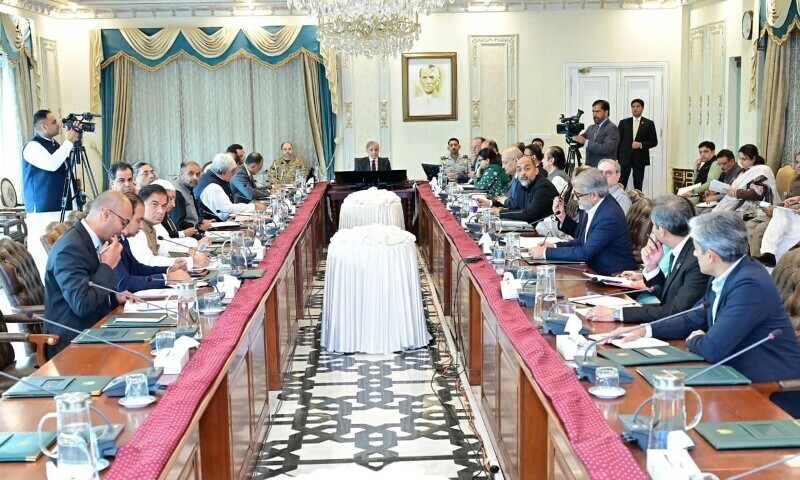
To address the issue, the government has now approved a centralized framework for the regulation of pilgrimages to Iran and Iraq. The Federal Cabinet has formally endorsed the new system, under which only registered Zaireen Group Organisers (ZGOs) will be allowed to operate.
The Ministry of Religious Affairs has already issued a public notice calling for registration of interested parties, and so far, over 1,400 companies have submitted applications to become official ZGOs.
“This new system will replace the outdated and unregulated practices of the past,” Yousuf said, adding that unregistered organizers will no longer be permitted to operate once the transition is complete.
In a related development, the minister also revealed that Pakistan has requested an increase in its official Haj quota. “Currently, our quota stands at 179,000, but based on population, it should be around 230,000,” he said. A formal request has been submitted to the Saudi authorities.


