



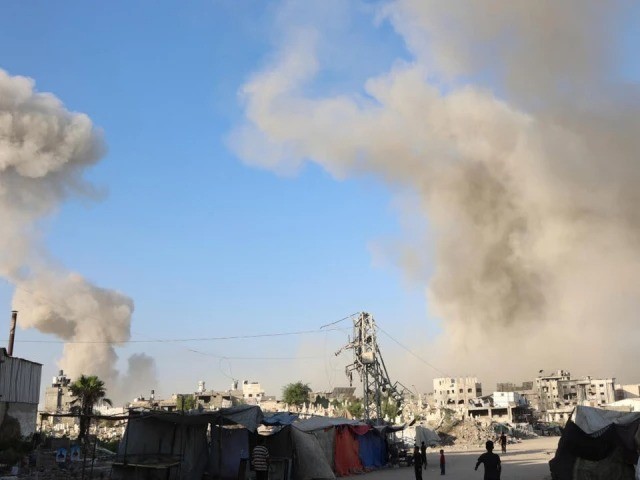

Israeli military forces attacked a hospital and a state TV headquarters in Iran. At the same time, Iran launched strikes on Haifa and locations close to Tel Aviv. Both sides have kept up intense assaults for a fourth consecutive day. The violent clashes between these long-time enemies appear nowhere near resolution.
On Monday Iranian state TV reported new drone and missile strikes targeting Tel Aviv and Haifa. A missile from Iran hit Haifa forcing the closure of all refineries and related businesses in the area. The Bazan oil refinery in Israel reported that the incident caused three deaths.
During a live segment, Iran’s most popular TV host stepped away from his desk moments after warning about an incoming missile. after, an explosion scattered debris injuring some reporters in the building.
The attack came after Israeli Defence Minister Israel Katz’s warning earlier that day. He declared, “The mouthpiece of Iranian propaganda and incitement is on the verge of disappearing.” Katz later confirmed that Israel’s military was behind the strike.
Iran issued a warning to Israeli news channels on Monday. Iranian state TV stated, “Iran has issued an evacuation warning to the N12 and N14 channels of Israel. This comes as a response to the hostile attack of Zionist enemy on the Islamic Republic of Iran’s broadcasting service.”
On the same day, Iran accused Israel of bombing a hospital in the country’s western region. Iran labeled the incident as a “war crime.”
“Farabi Hospital in the city of Kermanshah in western Iran was targeted by the Israeli regime’s aggressive attacks,” said Esmaeil Baqaei spokesman of the Ministry of Foreign Affairs. He mentioned that targeting a hospital and residential areas breaks international law and counts as a war crime.
Local outlets shared video footage confirmed by the Sanad fact-checking agency, that shows blood marks suggesting injuries or deaths from the strike.
Israel has bombed hospitals and medical centers in Gaza several times over its 20-month campaign in the Palestinian region even though international law protects these locations.


