



Deputy Prime Minister and Foreign Minister Ishaq Dar has delivered a sharp rebuke to India, stating unequivocally that Pakistan will not bow to pressure or accept unilateral dictates from its eastern neighbour.
Speaking at the Foundation Day ceremony of the Institute of Strategic Studies in Islamabad, Dar called on New Delhi to reassess its approach towards regional diplomacy and “abandon its policy of coercion.”
“India cannot impose its will on Pakistan,” Dar said. “It must review its strategic posture and stop using fabricated incidents to justify hostility.”
Citing the Pulwama attack as an example, Dar accused India of orchestrating false flag operations to create a pretext for aggression. “The Pulwama incident was exploited to construct a narrative that had no basis in fact,” he added.
Spike in Tensions
Tensions between the two nuclear-armed nations escalated again this April, following a deadly attack in Pahalgam that left 26 people dead. India swiftly blamed Pakistan, a claim Islamabad categorically denied.
What followed was a raft of retaliatory moves by New Delhi — including suspending the decades-old Indus Waters Treaty, shutting down the Pakistan High Commission in New Delhi, cancelling Pakistani visas, and sealing the Wagah-Attari border crossing.
In the aftermath, both countries scaled down diplomatic presence in each other’s capitals, signaling a serious dip in bilateral ties.
Dar: India Can’t Weaponize Water
Addressing the issue of water disputes, Dar asserted that India has no legal right to suspend the Indus Waters Treaty unilaterally.
“Water is a shared resource under a binding international agreement,” Dar said. “India’s attempt to weaponize it is a dangerous provocation that violates both international law and human decency.”
He reiterated that Pakistan will defend its water rights and uphold its sovereignty at all costs.
Kashmir & Regional Stability
Turning to the Kashmir dispute, the Deputy PM reaffirmed Pakistan’s position, calling the issue a “core dispute” that requires peaceful resolution through international frameworks.
He also accused India of blatantly violating international law in the occupied region, while insisting that Pakistan remains committed to principles of peaceful coexistence.
Support for Iran, Ceasefire in Gaza
On global developments, Dar welcomed the recently brokered ceasefire between Iran and Israel, and expressed strong support for Iran’s legitimate rights. He also called for diplomatic efforts to resolve the Iranian nuclear issue through dialogue.
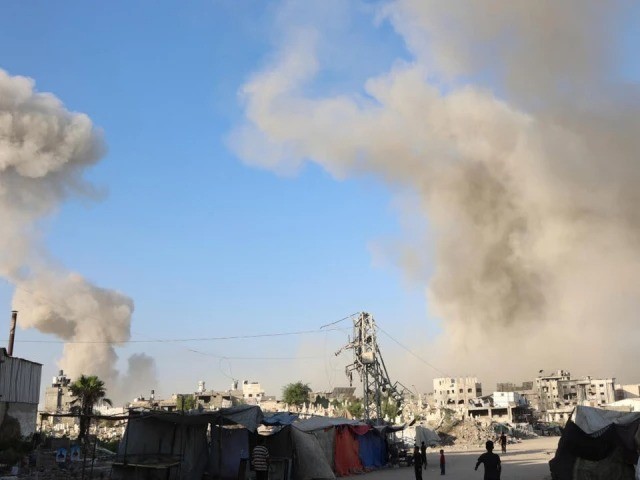
Dar voiced serious concern over the worsening humanitarian crisis in Gaza, strongly condemning what he described as “relentless atrocities” being committed in the besieged Palestinian territory.
PM Welcomes International Ruling on Indus Treaty
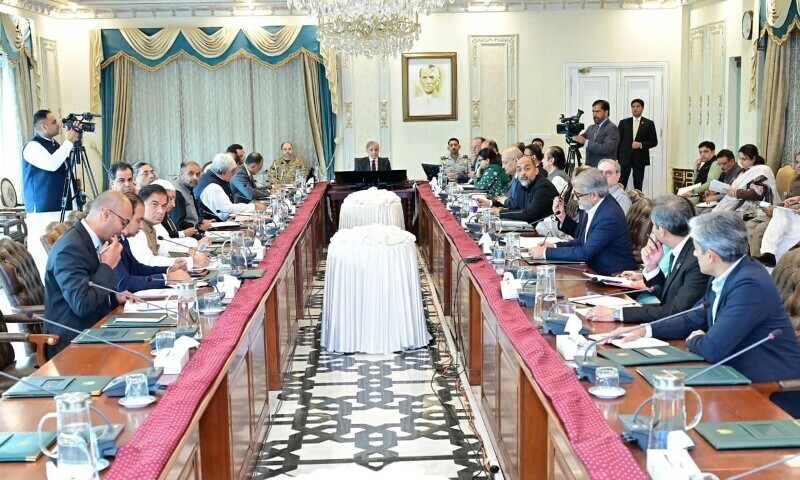
In a related development, Prime Minister Shehbaz Sharif welcomed the Permanent Court of Arbitration’s supplemental ruling on the Indus Waters Treaty, calling it a clear validation of Pakistan’s long-standing position.
“The court has reaffirmed that India cannot unilaterally suspend the treaty or its dispute resolution mechanism,” the premier said in a statement, thanking the legal team for their efforts.
The ruling confirmed that the treaty remains binding unless dissolved by mutual consent, effectively rejecting India’s claim of one-sided suspension rights.
Bilawal’s Warning
Meanwhile, PPP Chairman Bilawal Bhutto Zardari issued a stark warning over water disputes, declaring that if India chooses to ignore the treaty, Pakistan will consider all options — including war.
“India must decide — honour the treaty or lose control of all six rivers,” Bilawal said during a rally in Sukkur. “Either the river will flow, or their blood will.”


