



Liabilities Trimmed to Just Over Rs300b Amid Push to Ease Beijing’s Concerns
ISLAMABAD – In a significant move to address one of Beijing’s longstanding concerns, the government has decided to release over Rs100 billion to Chinese power producers just days before Prime Minister Shehbaz Sharif’s departure for China. The payment is aimed at reducing Pakistan’s outstanding dues under the China-Pakistan Economic Corridor (CPEC) power projects, which had reached Rs423 billion by June this year.
Officials confirmed that the Finance Ministry has directed the disbursement from the power sector subsidy allocated in the current budget. An additional Rs8 billion has also been cleared under routine allocations. With this injection, the country’s liabilities to Chinese Independent Power Producers (IPPs) are expected to drop by nearly one-fourth, leaving just above Rs300 billion outstanding.
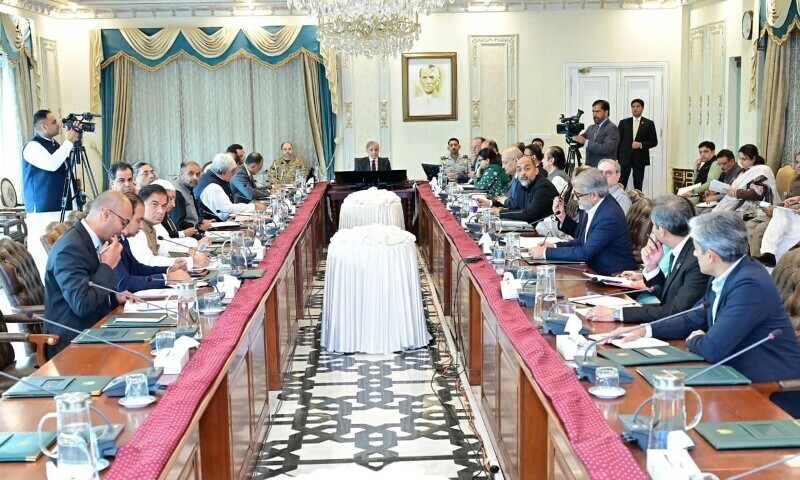
The timing of the decision is crucial, as Prime Minister Shehbaz is set to attend the Shanghai Cooperation Organization (SCO) summit in China this weekend. He will also participate in an investment conference being hosted by Pakistan’s embassy in Beijing. Sources said the premier personally instructed the Finance Ministry to ensure that Rs100 billion in payments be released by August 25.
Despite regular repayments, Chinese dues have continued to build up in recent years. Since 2017, Pakistan has already paid nearly Rs5.1 trillion to 18 Chinese power projects—covering over 92 percent of billed amounts, including interest. Authorities argue that the actual unpaid principal is lower than Rs300 billion, while the remaining amount stems largely from late payment surcharges.
Among the largest recipients of the new payments will be the coal-fired power plants in Sahiwal, Hub, and Port Qasim. Pakistan still owes Rs87 billion to the Sahiwal plant, Rs69 billion to the Hub project, and Rs85.5 billion to Port Qasim. Dues for the Thar Coal project stand at Rs55.5 billion.
The government has also been negotiating nearly Rs1.3 trillion in fresh loans from local commercial banks to retire circular debt owed across the power sector, including to state-owned, nuclear, private, and Chinese producers. However, the deal remains pending finalization.
Failure to clear dues has repeatedly strained ties under the CPEC framework. The 2015 CPEC Energy Agreement required Pakistan to create a revolving fund equivalent to 21 percent of monthly invoices, but implementation has been patchy. Although a revolving account was finally established at the State Bank of Pakistan in 2022, restrictions on withdrawals worsened the payment backlog.
While the government claims to have reduced circular debt by Rs800 billion by June this year, industry experts caution that the improvement is misleading. According to a recent Federation of Pakistan Chambers of Commerce and Industry (FPCCI) report, the reduction stemmed mainly from a one-time budgetary injection of Rs801 billion rather than genuine efficiency gains in the sector. The report further noted that without this stock settlement, circular debt would have actually risen by about Rs379 billion.
As Pakistan prepares to renew its pitch for Chinese investment, the latest payment appears to be a diplomatic gesture as much as a financial one seeking to assure Beijing of Islamabad’s commitment to honoring its energy commitments under CPEC.


