




ISLAMABAD – August 18, 2025:
China’s Foreign Minister Wang Yi is set to arrive in Islamabad on August 21 for a two-day visit, immediately after concluding a crucial stop in New Delhi. His trip is aimed at reviewing Pakistan-China relations, leading the next round of the strategic dialogue, and engaging with Pakistan’s civilian and military leadership on a wide range of regional and international issues.
According to official sources, Wang will hold extensive discussions in Islamabad to assess the current trajectory of bilateral ties and explore avenues for deeper cooperation in the evolving regional landscape. His visit follows a series of major geopolitical developments — including the Pakistan-India military clash in May, the Iran-Israel conflict in June, and Islamabad’s recent efforts to recalibrate its relations with Washington.
China has been a central player in South Asia’s shifting dynamics. During the four-day conflict with India, Beijing’s military and diplomatic backing was widely seen as decisive. While the Chinese military did not directly engage, the supply of advanced J-10C fighter jets and PL-15 long-range missiles gave Pakistan a significant edge, enabling its forces to down six Indian aircraft, including French-made Rafales. On the diplomatic front, Beijing also endorsed Pakistan’s demand for a third-party probe into the Pahalgam attack an incident that had pushed the two nuclear-armed rivals to the brink of a wider war.
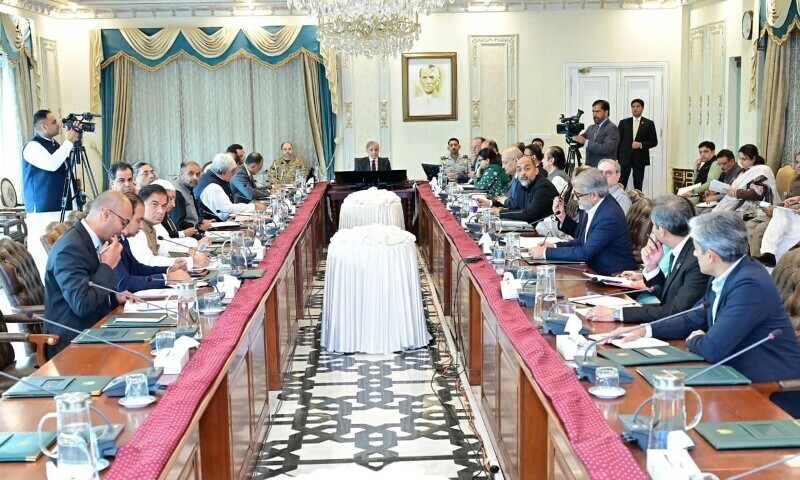
In Islamabad, Wang is also expected to finalise the agenda for Prime Minister Shehbaz Sharif’s upcoming visit to Beijing later this month. The premier is scheduled to attend the Shanghai Cooperation Organisation (SCO) Summit and hold bilateral meetings with the Chinese leadership.
Meanwhile, regional diplomacy is gaining momentum on another front. Deputy Prime Minister and Foreign Minister Ishaq Dar will travel to Dhaka on August 23 a trip that had been postponed twice amid rising tensions in South Asia. Dar was originally due in Bangladesh in April, but the Pahalgam attack and subsequent hostilities with India delayed the engagement.
The visit underscores the quiet but steady improvement in Pakistan-Bangladesh ties since the ouster of Sheikh Hasina Wajid last year. Relations, which had long been stagnant under the Awami League government, began to thaw under the interim administration of Professor Muhammad Younus. His government has already taken steps to normalise ties, including lifting restrictions on Pakistani exports and diplomats, as well as launching direct sea trade.
Dar’s talks in Dhaka will be followed by a series of high-level exchanges. Commerce Minister Jam Kamal is due in Bangladesh this week to discuss trade opportunities, while Finance Minister Muhammad Aurangzeb is expected in September for the first meeting of the Pakistan-Bangladesh Joint Economic Commission in two decades.
Wang Yi’s back-to-back trips to New Delhi and Islamabad, coupled with Pakistan’s renewed outreach to Bangladesh, highlight how regional diplomacy is entering a critical phase. For Pakistan, both sets of engagements could prove vital in shaping its foreign policy course amid a volatile security environment and rapidly shifting alliances.


