



New York – July 2025
In a high-stakes diplomatic engagement at the United Nations Headquarters, Pakistan’s Deputy Prime Minister and Foreign Minister, Senator Ishaq Dar, raised serious concerns over India’s violations of the Indus Waters Treaty (IWT) during his meeting with UN Secretary-General Antonio Guterres on Monday.
Calling India’s actions a threat to regional peace and stability, Dar urged the United Nations to uphold its moral and legal responsibility by ensuring that long-standing international agreements like the IWT are honored. “The treaty has remained a cornerstone of regional water cooperation, and its violation endangers not just Pakistan’s water security but also broader regional stability,” he said.
Dar also drew attention to other critical issues facing Pakistan, including the long-running Jammu and Kashmir dispute and what he described as “externally sponsored terrorism” undermining Pakistan’s internal security.
Pakistan’s Stand for Multilateralism
Emphasizing Islamabad’s deep-rooted belief in multilateral cooperation, Dar reiterated Pakistan’s unwavering commitment to the UN Charter and its pillars of peace, sustainable development, and human rights. “We firmly believe that dialogue, not confrontation, paves the path to global peace,” he told the UN chief.
He also highlighted key moments during Pakistan’s ongoing presidency of the UN Security Council, including a high-level debate on multilateralism and a session on UN-OIC cooperation — both seen as strong statements of Pakistan’s diplomatic posture.
Secretary-General Guterres, in turn, appreciated Pakistan’s active role at the Security Council, commending its initiatives aimed at bridging divides and fostering international cooperation.
Middle East, Palestine: Call for Justice
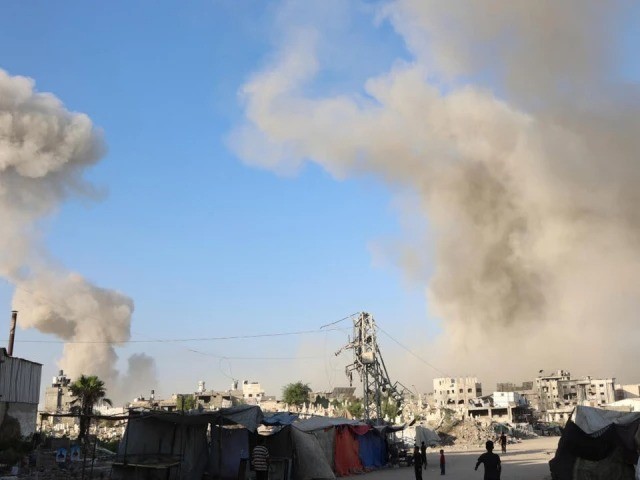
On the worsening humanitarian crisis in the Middle East, Dar repeated Pakistan’s principled position. He called for an immediate ceasefire in Gaza, voiced firm opposition to Israel’s annexation agenda in the West Bank, and reaffirmed Pakistan’s unwavering support for a sovereign Palestinian state. “Justice delayed is justice denied — and for the people of Palestine, that delay has stretched far too long,” he said.
Global South, Financial Equity, and the ‘UN80’ Vision
Another focal point of the meeting was the growing economic disparity between the Global North and South. Dar urged for scaled-up concessional financing, meaningful debt relief, and liquidity solutions for developing nations, stressing that current economic frameworks fall short of addressing the Global South’s pressing needs.
He welcomed Secretary-General Guterres’ “UN80” initiative — marking the UN’s 80th anniversary — as a timely opportunity to reinforce the organization’s commitment to peace, development, and human dignity. “For developing countries like Pakistan, equitable access to finance is not a luxury — it’s a lifeline,” Dar said.
Pakistan also voiced strong support for the newly appointed UN Special Envoy on Islamophobia, with Dar pledging Islamabad’s cooperation in the global fight against religious intolerance and hate-driven violence.
Renewables, Resilience, and Reform
Separately, during his address to the Ministerial Segment of the UN High-Level Political Forum (HLPF), Dar outlined Pakistan’s roadmap for achieving the 2030 Sustainable Development Goals (SDGs) — with a bold target of transitioning to 60% renewable energy by 2030.
“The compounding impact of the pandemic, economic crises, and climate change has reversed hard-earned development gains,” he told the forum. “But despite these challenges, Pakistan remains committed to climate resilience, economic reform, and inclusive growth.”
He cited national strategies like Uraan Pakistan, the Benazir Income Support Programme, and environmental initiatives such as Living Indus and Recharge Pakistan, which aim to foster sustainable development through green energy and ecosystem restoration.
Dar also spotlighted the role of the Special Investment Facilitation Council (SIFC), describing it as a key vehicle for aligning foreign direct investment with Pakistan’s national development goals.
“However, national efforts alone won’t suffice,” Dar added. “A deep reform of the international financial architecture is urgently needed. Without scaled-up access to grant-based financing and meaningful debt restructuring, the global South cannot bridge the SDG gap.”


