


WASHINGTON — June 18 marked a rare moment in the history of Pakistan–US relations. In a scene never before witnessed at the White House, a Pakistani Chief of Army Staff was hosted exclusively by the President of the United States in a high-level, closed-door meeting — one that came against the backdrop of a dangerously escalating conflict between Iran and Israel.
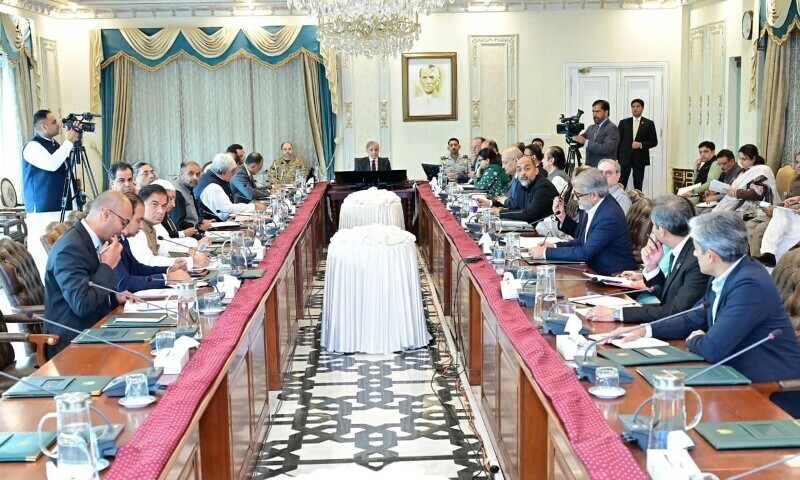
General Asim Munir’s presence at the Cabinet Room table — without any Pakistani civilian official by his side — was striking. No foreign minister, no ambassador. Just the army chief and Lt Gen Asim Malik, Pakistan’s national security adviser and intelligence head. On the American side, President Donald Trump was flanked by Secretary of State Senator Marco Rubio and Middle East envoy Steve Witkoff.
While the meeting was shrouded in quiet diplomacy, its symbolism spoke volumes. Pakistan’s military — not its civilian leadership — was once again front and center in shaping the country’s most sensitive international dialogues.
Sources described the meeting as “exploratory,” not one meant to lock in decisions. Yet it ran for over two hours — double the scheduled time — reflecting a depth of conversation and a cordial tone that surprised many.
According to the ISPR (Inter-Services Public Relations), the two sides touched on a wide range of subjects: the recent flare-up between Pakistan and India, Islamabad’s interest in cryptocurrency, potential cooperation in artificial intelligence, and the country’s vast reserves of rare minerals. But perhaps the most pressing topic was the conflict between Iran and Israel.
Both sides, ISPR noted, agreed on the importance of defusing tensions between Tehran and Tel Aviv. President Trump reportedly acknowledged Pakistan’s potential role, particularly in understanding Iran — a neighbor and longtime regional partner.
Yet, insiders suggest the meeting was more about feeling each other out than making firm commitments. In short, Pakistan was testing the waters.
Where Does Pakistan Stand on Iran?
The day after the meeting, Pakistan’s Foreign Office delivered a strong message. Spokesperson Shafqat Ali Khan condemned Israel’s strikes on Iran, especially attacks on nuclear facilities, calling them a blatant violation of international law and civilized norms.
“Our support to Iran is fundamental,” Khan stated firmly. “It is unequivocal and unambiguous.” When asked whether Pakistan would provide military support to Tehran, he was clear but cautious: “We’ve received no such request, and any speculation at this point is premature.”
This careful wording reflects Islamabad’s well-known balancing act: a moral and diplomatic closeness with Iran, paired with a strategic caution that avoids military entanglements. Pakistan has long walked this line, shaped by its own complex realities — a volatile relationship with India, a nuclear backdrop, and deep domestic divisions.
Only weeks ago, tensions between India and Pakistan surged after an attack in Pahalgam, bringing both nations uncomfortably close to another confrontation. For Pakistan, watching Israel strike Iranian nuclear facilities — with no global accountability — raises red flags. Islamabad fears a dangerous precedent, especially when its own nuclear infrastructure could one day be at similar risk.
What Message Was Sent?
In its post-meeting statement, ISPR proudly declared: “US-Pakistan relations have achieved in the last three days what India could not in three decades.” That line alone reveals how the military views this engagement: not just a diplomatic success, but a strategic win over its regional rival.
The military also suggested that Washington is now giving Pakistan “strategic priority” — a noteworthy shift from recent years of cool relations.
But not everyone at home welcomed the development without concern.
Former federal minister Dr. Shireen Mazari raised a critical point: “Any foreign government seeking alliance or support from a democracy normally deals with civilian leadership. But Pakistan sends a different message now.”
Indeed, the optics of the meeting — generals in the Cabinet Room, elected leaders nowhere in sight — reignite long-standing questions about where power really lies in Pakistan’s decision-making. For many, it was another reminder of the military’s dominant role, particularly in matters of foreign policy and national security.


