




WASHINGTON, D.C. — The Trump administration has announced sanctions against Francesca Albanese, the United Nations Special Rapporteur for the Palestinian territories, in a controversial move that escalates its crackdown on international criticism of Israel’s war in Gaza.
Albanese, a seasoned human rights lawyer from Italy, has drawn global attention for her outspoken condemnation of Israel’s military campaign in Gaza — a conflict she has repeatedly described as “genocide.” Her latest report accuses both Israel and Western entities, including several major U.S. corporations, of profiting from what she calls a “war economy rooted in occupation and destruction.”
Announcing the sanctions on Wednesday, Secretary of State Marco Rubio said the U.S. would no longer tolerate Albanese’s “campaign of political and economic warfare” against both the United States and its key Middle Eastern ally.
“We will always stand by our partners in their right to self-defense,” Rubio declared on social media.
The sanctions come just as Israeli Prime Minister Benjamin Netanyahu visits Washington to meet President Trump and senior officials, with Gaza high on the agenda. It’s unclear what concrete effects the sanctions will have — such as whether Albanese will be barred from entering the U.S. or have assets frozen — but the move has already drawn sharp responses from rights groups and legal experts.
Targeting a UN Voice
Albanese holds an independent mandate from the UN Human Rights Council, though she does not speak on behalf of the UN. Her role involves monitoring and reporting on human rights violations in the occupied West Bank and Gaza.
Her most recent report, issued on July 1, details the involvement of Western defense firms, tech companies, shipping giants, and even academic institutions in facilitating or benefiting from Israel’s prolonged occupation and bombardment of Palestinian territories.
“This report shows why Israel’s genocide continues: because it is lucrative for many,” she wrote, pointing to the complicity of companies that manufacture weapons, bulldozers, and surveillance tools used in the war.
Albanese has also backed the International Criminal Court’s arrest warrants against top Israeli leaders, including Netanyahu, over alleged war crimes. She has urged governments around the world to impose sanctions on Israel until its military campaign ceases.
Mounting U.S. Pressure
The Biden administration had previously withdrawn from the Human Rights Council, but Trump officials have gone a step further, attempting to force Albanese’s removal. When that failed, sanctions followed.
“This is not just an attack on an individual — it’s an attempt to muzzle international accountability mechanisms,” said a former U.S. diplomat familiar with the Human Rights Council proceedings.
The U.S. has accused Albanese of “anti-Israel bias” and even anti-Semitism, claims she denies. Last week, the U.S. mission to the UN called for her dismissal, labeling her years of work “offensive” and “false.”
Israel’s ambassador to the UN, Danny Danon, welcomed the sanctions, calling Albanese’s investigations a “relentless and biased campaign.” Israel’s diplomatic mission in Geneva also blasted her July report as “legally groundless” and accused her of “whitewashing Hamas atrocities.”
Genocide Claims and War Impact
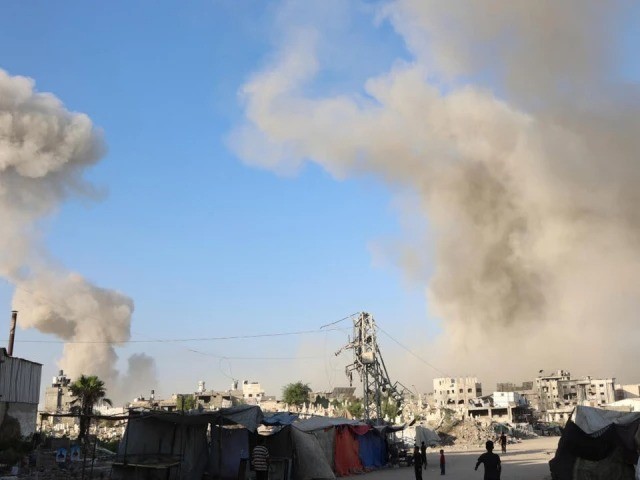
Albanese’s most stinging criticisms have come in recent months, as Israel’s war on Gaza stretches into its 21st month. Since the conflict erupted on October 7, 2023, following a deadly Hamas-led attack that killed 1,200 Israelis and led to 251 abductions, Israel has launched a punishing military campaign that has, according to Gaza’s Health Ministry, killed more than 57,000 Palestinians — the majority believed to be women and children.
The figures have not been independently verified, and Israel maintains that many of those killed were militants.
Nonetheless, the scale of human suffering is undeniable. Aid groups and health workers warn of a humanitarian catastrophe, with hospitals overwhelmed, the majority of Gaza’s 2.3 million residents displaced, and essential services on the brink of collapse.
“We must stop this genocide, whose short-term goal is completing the ethnic cleansing of Palestine, while also profiteering from the killing machine devised to perform it,” Albanese wrote on X (formerly Twitter) last week.
Crackdown Extends Beyond Diplomacy
The sanctions against Albanese are part of a broader campaign by the Trump administration to suppress dissent, especially pro-Palestinian activism on U.S. soil. Earlier this year, federal agents began arresting and deporting foreign faculty and students linked to pro-Palestine protests on university campuses.
Critics say the administration’s stance risks silencing legitimate voices of human rights advocacy at a time when international accountability is needed most.
The United Nations Human Rights Council has not officially commented on the sanctions, and it remains to be seen whether Albanese will continue in her role or face further restrictions.
For now, her words continue to echo across diplomatic circles:
“No one is safe until everyone is safe.”


