





ISLAMABAD:
In a rare moment of political self-reflection, the Pakistan Tehreek-e-Insaf (PTI) on Sunday publicly conceded that its decision to extend the tenure of former army chief General (retd) Qamar Javed Bajwa was a misstep. The party not only admitted the error but also apologised to the nation, pledging never to repeat such a move.
The acknowledgement came from senior PTI figure and ex-National Assembly speaker Asad Qaiser during a joint press conference alongside leaders of the Tehreek Tahafuz Aain Pakistan (TTAP) alliance in the federal capital.
“The decision about Bajwa’s extension was wrong historically wrong,” Qaiser said candidly. “We apologise to the entire nation for this mistake and assure you we will not support any such decision in the future.”
TTAP chief Mahmood Khan Achakzai went further, declaring that neither civilian nor military officials should ever receive service extensions, insisting that appointments must be made solely on merit. “That’s the only principle that can steer Pakistan towards real progress,” he said.
The issue dates back to late 2019, when then–prime minister Imran Khan’s government granted Gen Bajwa a three-year extension just days before his scheduled retirement. The decision sparked an unprecedented legal battle, with the Supreme Court suspending the extension while hearing a petition against it a first in Pakistan’s history.
At the time, the government justified its move by citing heightened regional tensions, including India’s scrapping of Kashmir’s special status and Pakistan’s role in the US–Afghan peace talks. Critics, however, saw it as a political calculation aimed at securing Khan’s own grip on power, given the military’s perceived role in his rise.
On Sunday, Qaiser also criticised the country’s current governance system, describing it as “illegal, unconstitutional and undemocratic.” He alleged that Pakistan was effectively under “practical martial law,” with decisions made under institutional pressure rather than merit.
He reiterated PTI’s demand for fair trials for political prisoners, including party founder Imran Khan, and called for live media coverage of court proceedings to expose what he termed the “true nature” of ongoing cases.
Turning to the proposed 27th Constitutional Amendment, Qaiser vowed to resist it on all fronts from parliament and the courts to public mobilisation. He said PTI planned to engage the legal community, hold consultations with the Islamabad Bar this month, approach foreign diplomats, and organise seminars to highlight its objections.
Achakzai, in his remarks, stressed the TTAP’s commitment to avoiding personal attacks and focusing on constitutional protection. He recalled visiting PML-N leader Nawaz Sharif and his daughter Maryam Nawaz during their imprisonment, pointing out that political leaders had done the same in the past without controversy. He warned that when public anger reaches a tipping point, even the most entrenched rulers can be swept away.
Calling for a broad political accord, he urged all parties to commit to upholding the Constitution, ensuring judicial independence, empowering a credible election commission, safeguarding press freedom, and ending harassment of journalists.
Also speaking at the event, former PML-N stalwart and ex-Sindh governor Muhammad Zubair painted a bleak picture of the country’s economic health. He cited record inflation with weekly price hikes touching 50 per cent and overall inflation at 38 per cent alongside a sharp rise in poverty and unemployment.
According to Zubair, over 110 million Pakistanis now live below the poverty line, with total unemployment at 22 per cent and youth unemployment at 30 per cent. He noted that public debt had ballooned dramatically rising by Rs19 trillion during PTI’s tenure and by another Rs38 trillion in the past three and a half years.
Foreign investment, he said, had plunged to a 50-year low despite repeated government promises, while GDP growth averaged just 1.62 per cent — well below the 2.6 per cent population growth rate. Purchasing power, he added, had fallen by 60 per cent over the past three years.
Zubair also decried the “shameful” state of education, citing 27 million out-of-school children and malnutrition affecting 40 per cent of the country’s youth. Loss-making public enterprises, he said, were draining Rs1 trillion annually from the national exchequer.
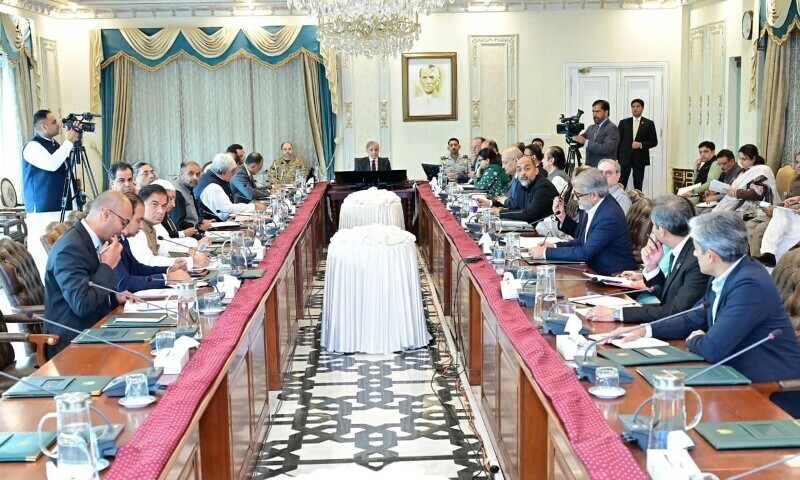
The joint presser underscored a rare convergence between former rivals, with leaders from across the political spectrum agreeing on at least one thing: the urgent need to restore constitutional supremacy and end a governance cycle driven by expediency rather than merit.


