



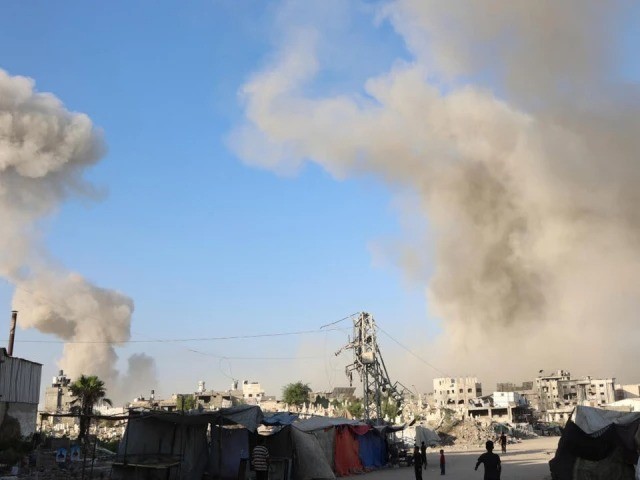



KABUL – A powerful earthquake struck eastern Afghanistan late Sunday night, leaving widespread devastation in its wake. Authorities have confirmed that more than 600 people have lost their lives while over 1,500 have been injured. Officials fear the toll could climb further as rescuers continue to comb through debris in remote areas.
The quake, recorded at magnitude 6.2 by the US Geological Survey, had its epicenter near Jalalabad in Nangarhar province at a shallow depth of just 8 kilometers. Within 20 minutes, an aftershock of 4.5 rattled the same region, compounding the destruction.
Many of the worst-hit districts are mountainous, with homes built from mud and stone, leaving entire villages vulnerable. In Nurgal district, local officials reported that several hamlets were buried under rubble, raising concerns that hundreds more could be trapped. “The number of casualties and injuries is high, but access to the area is extremely difficult,” said Health Ministry spokesman Sharafat Zaman, warning that the official figures could rise.
Provincial hospitals in Nangarhar and nearby regions are overwhelmed, with hundreds of injured being rushed in through the night. Witnesses described scenes of panic as families dug through collapsed homes with their bare hands, hoping to find loved ones alive. Among the victims were children, two of whom died when their roof caved in during the tremors.
Emergency teams, supported by helicopters, have been deployed to hard-to-reach areas. Afghan government spokesman Zabihullah Mujahid said on social media that all available resources were being mobilized to aid survivors: “Local officials and residents are engaged in rescue efforts, and support teams from nearby provinces are on their way.”
The quake was also felt across Pakistan, including Islamabad, Lahore, Peshawar, and several cities in Punjab and Khyber Pakhtunkhwa. While no casualties were reported there, residents rushed out of their homes in fear, reciting verses from the Holy Quran.
Afghanistan’s mountainous terrain has long been prone to deadly quakes. Just last year, a series of tremors in the country’s west killed more than 1,000 people, underlining the extreme vulnerability of one of the world’s poorest nations to natural disasters.
This latest tragedy comes at a time when Afghanistan is already grappling with deep humanitarian and economic crises, making the path to recovery even more uncertain.


