



Islamabad — In what appears to be a cautious but significant shift, the United States has quietly resumed funding for select USAID programmes in Pakistan, signaling a potential thaw in bilateral development cooperation that had been effectively frozen for much of the year.
According to credible sources within the Ministry of Economic Affairs, two key initiatives — the US Need-Based Merit Scholarship Programme (Phase II) and the Merged Areas Governance Programme — have received fresh disbursements, with funding set to continue through 2025.
The restart follows a dramatic halt earlier this year when President Donald Trump, under a sweeping Executive Order issued in February 2025, suspended $845 million in assistance. The freeze had impacted both government-to-government (G2G) aid and off-budget programmes implemented by non-governmental organizations (NGOs), sparking concern across Pakistan’s development sector.
Cautious Optimism Returns
While the resumed funding represents only a fraction of the previously committed aid, it has been welcomed as a symbolic step toward rebuilding trust between the two longtime — and often uneasy — allies.
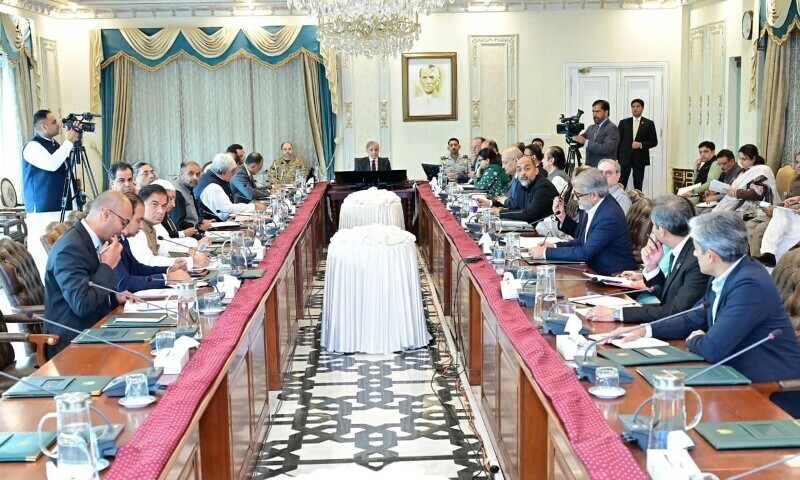
Behind closed doors, senior officials from the US Embassy in Islamabad and Pakistan’s Economic Affairs Division have been holding a series of meetings aimed at ironing out oversight mechanisms and ensuring better transparency in fund utilization. According to insiders, the American side has expressed concern over the monitoring of grants disbursed directly to NGOs — a sticking point that appears to have delayed a full resumption.
Still, the reactivation of these two programmes suggests progress. The scholarship initiative, in particular, is widely regarded as one of the most impactful educational collaborations between the two countries, enabling thousands of underprivileged students to access higher education. Meanwhile, the Merged Areas Governance Programme plays a critical role in post-merger stabilization efforts in the formerly Federally Administered Tribal Areas (FATA).
A Strategic Recalibration?
Responding to inquiries from the press, US Secretary of State Marco Rubio confirmed that Washington is in the process of “reorganizing foreign assistance programmes,” with a focus on continuing essential, life-saving initiatives and making “strategic investments that strengthen partners — and the United States itself.”
His statement hints at a broader shift in how the US is approaching foreign aid: not as a blanket disbursement, but as a more calculated extension of soft power — rooted in shared interests and mutual accountability.
Development experts in Islamabad view this as a strategic recalibration rather than a reversal of the February freeze. “This is less about giving Pakistan a blank check, and more about targeted re-engagement,” said one donor agency official familiar with the matter. “There’s clearly an appetite in Washington to support stability in the region — but not without conditions.”
Looking Ahead
With technical discussions ongoing, observers believe that a broader resumption of USAID programming may not be far off. However, both sides remain cautious. Washington is reportedly pushing for enhanced audit mechanisms, while Islamabad is seeking more flexibility in implementation — especially when it comes to working with local NGOs.
If both sides manage to strike a workable balance, the resumption of full-scale USAID operations in Pakistan could serve as a cornerstone for revitalized US-Pakistan development relations — something that has been noticeably absent amid shifting global alliances and internal political upheaval.
For now, though, the partial restoration of funding offers a sliver of optimism — and a reminder that even in strained times, development diplomacy still has room to breathe.


