



ISLAMABAD: In a powerful endorsement of Pakistan-China ties, Senator Mushahid Hussain Syed on Friday described the combination of Pakistani talent and Chinese technology as an “invincible wall” for peace and stability in South Asia.
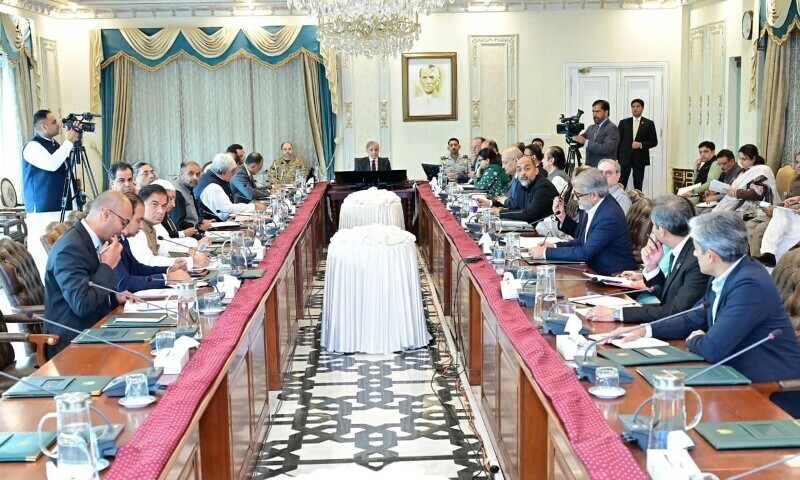
The comment came during his keynote address at the Pakistan-China Dialogue, an event hosted in Islamabad by the Pakistan-China Institute (PCI) under the banner of the Friends of Silk Road initiative. The event brought together diplomats, scholars, students, and parliamentarians in a show of regional solidarity.
Senator Mushahid, who also chairs the PCI, used the platform to highlight shifting global dynamics, saying, “The balance of global political and economic power is clearly moving from the West to the East. We are now witnessing the rise of the Asian Century.”
He praised China’s peaceful rise on the global stage, calling it a source of hope and support for developing countries across Asia, Africa, and Latin America. “China’s consistent backing of Pakistan — particularly its stance in defending Pakistan’s sovereignty in the face of Indian aggression — shows who our true friends are,” he added.
Referring to the China-Pakistan Economic Corridor (CPEC), the senator called it a “lifeline for Pakistan’s economy,” and a key pillar of regional connectivity and development.
The senator didn’t shy away from addressing global tensions. He strongly condemned the recent Israeli airstrikes on Iranian soil, labeling them as a blatant violation of international law and the UN Charter. He also pushed back against the growing narrative of a “new Cold War” or the so-called “China threat,” saying, “Security cannot be achieved through alliances or demonizing countries. It comes through cooperation.”
Also present at the dialogue was a five-member delegation from China’s International Department of the Communist Party (IDCPC), led by Ambassador Hu Zhaoming. In an emotionally resonant remark, Hu said, “Pakistan is etched in the deepest hearts of the Chinese people. China and Pakistan are like two sides of the same coin — you simply cannot separate one from the other.”
Ambassador Hu also highlighted the global expansion of the Belt and Road Initiative (BRI) since 2013, noting that over 150 countries now participate in the infrastructure and development framework. “It’s not just about China’s growth — it’s about global connectivity. We hope the youth will carry this friendship forward.”
PCI Executive Director Mustafa Hyder Sayed, who moderated the session, echoed similar sentiments. “Our friendship with China has never been transactional or temporary. It is rooted in mutual trust, shared history, and a deep commitment to the region’s future,” he said.
Mustafa also criticized recent moves by the United States, including a $325 million annual fund created under the “Countering PRC Influence Fund,” which he described as a relic of Cold War thinking. “The world doesn’t need confrontation. It needs cooperation and development — especially our region,” he said.
Adding depth to the dialogue, Dr. Shezra Mansab Ali Kharal, Minister of State for Climate Change, spoke about the growing fragmentation of the global order. “At a time when divisions are growing, China continues to advocate for multipolarity, dialogue, and mutual respect,” she noted. “The BRI reflects that vision of shared progress.”
Former Foreign Secretary Ambassador Aizaz Ahmad Chaudhry also weighed in, calling for a new model of global relations. “We’re living in uncertain times — where rules are collapsing and wars are erupting. President Xi’s philosophy of win-win cooperation offers the most realistic path forward.”
Aqeel Malik, Minister of State for Law and Justice, emphasized the need for stability in the region to realize CPEC’s full potential. He proposed including Afghanistan in the project, calling it a “natural extension” of the shared vision between China and Pakistan.


