



ISLAMABAD — In a significant push to elevate their long-standing bilateral ties, Pakistan and Turkiye have pledged to deepen defence cooperation, expand economic engagement, and explore cutting-edge areas like aerospace technology and disruptive warfare. The renewed commitment came during a high-level visit to Islamabad by Turkish Foreign Minister Hakan Fidan and Defence Minister Yasar Guler.
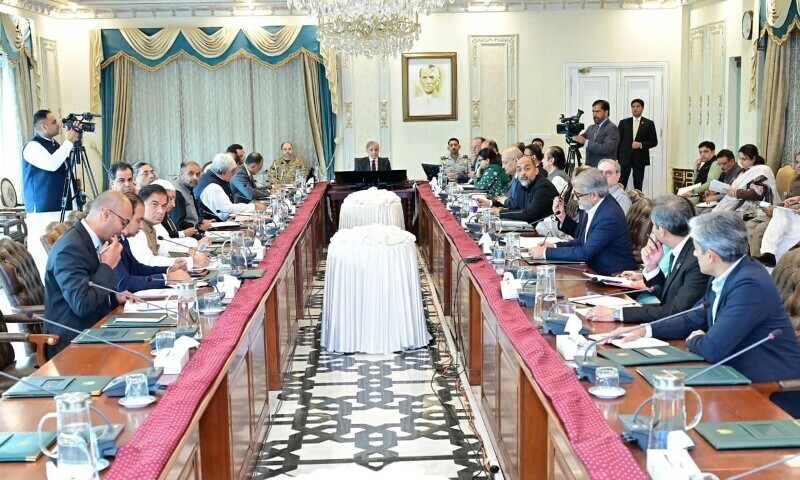
Landing in Islamabad on Tuesday night, the Turkish delegation held a series of important meetings on Wednesday with Pakistan’s top civilian and military leadership. Among those present were Prime Minister Shehbaz Sharif, Foreign Minister Ishaq Dar, Army Chief General Syed Asim Munir, National Security Adviser, and ISI Director General Lt Gen Asim Malik — reflecting the strategic weight attached to the visit.
At the heart of the discussions was a shared vision to expand bilateral trade to $5 billion, accelerate cooperation in aerospace, counterterrorism, and defence production, and align on regional issues, particularly the evolving situations in Gaza and Iran.
Welcoming the delegation at the Prime Minister’s Office, PM Shehbaz described Turkiye as a “time-tested brotherly nation,” noting the deep roots of mutual respect, shared history, and cultural affinity that bind the two countries. He reaffirmed Pakistan’s intent to elevate bilateral ties into a comprehensive strategic partnership, emphasizing collaboration in trade, investment, technology, and defence.
The prime minister specifically thanked the Turkish government for its strong support during recent tensions with India and highlighted the importance of closer coordination in a rapidly shifting global landscape. “Our shared interests demand more than just goodwill — they require concrete, forward-looking collaboration,” he said.
Foreign Ministers Dar and Fidan also held detailed talks at the Foreign Office, culminating in a joint press conference. Fidan pointed to ongoing efforts to enhance cooperation in energy and mineral sectors, including oil, gas, and rare earth elements. He referenced a key agreement signed earlier this year between Turkish Petroleum Corporation (TPAO) and Pakistani state-owned oil firms, calling it “a milestone in our move toward institutionalised cooperation.”
Dar echoed the sentiment, saying both countries had agreed to strengthen collaboration across a wide range of areas — from economic and energy infrastructure to privatisation and defence industry links. He praised Turkiye’s advancements in defence manufacturing and said Pakistan was keen to learn and partner in this area. Dar also confirmed Turkish interest in participating in the privatisation of Pakistan’s electricity distribution companies.
A notable development was the plan to establish a special economic zone for Turkish investors in Karachi and Istanbul, to facilitate smoother bilateral trade and investment. “We are drawing heavily on Turkish expertise, from agricultural water management to shipbreaking and logistics,” Dar noted.
Significantly, the two nations agreed to revive their Joint Ministerial Commission after an 11-year pause. The body will now be co-chaired by Pakistan’s Commerce Minister Jam Kamal and Turkish Defence Minister Yasar Guler, setting the stage for the next High-Level Strategic Cooperation Council, scheduled for next year in Turkiye.
On the military front, Defence Minister Guler held a separate meeting with Air Chief Marshal Zaheer Ahmed Baber Sidhu at Air Headquarters. According to the Inter-Services Public Relations (ISPR), both sides agreed to form joint working groups to accelerate cooperation in aerospace technologies, advanced pilot training, and new warfare domains, including unmanned aerial systems and electronic warfare.
Guler commended the Pakistan Air Force’s operational capabilities, especially during its recent standoff with India, and emphasized Turkiye’s interest in launching industry-to-industry joint ventures in defence innovation. Plans were also discussed to ramp up joint air exercises and enhance training collaboration between air forces.
The ISPR said the visit “reflected the shared resolve of two brotherly nations to reinforce strategic ties, deepen defence cooperation, and build enduring institutional linkages between their armed forces.”
As global fault lines continue to shift and new security challenges emerge, the renewed momentum between Pakistan and Turkiye signals not just a reaffirmation of old friendships, but a bold recalibration toward strategic self-reliance and high-tech defence collaboration.


