



Islamabad – Foreign Minister Ishaq Dar on Friday reaffirmed that Pakistan follows an independent foreign policy and will not compromise its national interest under any external pressure — including that of close allies like the United States. Speaking at a news conference, Dar clarified that while Islamabad enjoys cordial relations with Washington, it does not equate to endorsing every American policy or action.
“There’s a perception that Pakistan avoids taking a clear stance when it comes to U.S. actions. Let me dispel that. When the United States bombed three of Iran’s nuclear sites, we condemned it unequivocally,” Dar said. He emphasized that having good ties with the U.S. does not mean “standing with them when they are wrong.”
U.S.-Iran Tensions: Pakistan’s Position
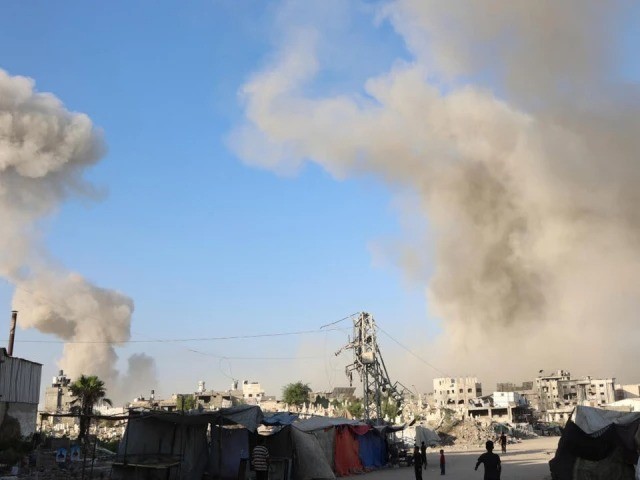
The foreign minister was referring to the recent escalation between the United States and Iran, which saw the U.S. abandon its long-standing policy of avoiding direct strikes on Iranian soil. In a dramatic escalation, the U.S. used B-2 bombers to hit Iranian nuclear facilities using bunker-buster bombs — a move that drew international attention and condemnation.
Pakistan, in a rare but firm statement, condemned the strikes and supported Iran’s right to respond. “We knew Iran wouldn’t remain silent. It retaliated by targeting a U.S. base in Qatar, and in doing so, it emerged from the crisis with dignity,” Dar noted. He added that the ceasefire between Iran and Israel — reached after the exchange — continues to hold, a development Pakistan views as encouraging.
Dar also revealed that Iran acknowledged and appreciated Pakistan’s diplomatic support during the crisis. “At the UN Security Council, we made sure Iran was not isolated. The Iranian parliament even echoed with chants of ‘Thanks to Pakistan’ during President [Ebrahim] Raisi’s address,” he said.
Behind-the-Scenes Diplomacy
Giving insight into backdoor diplomacy, Dar disclosed that Pakistan played a quiet but crucial role in regional stability. When tensions peaked, Pakistan’s army chief, while returning to the country, stopped over in Istanbul at Islamabad’s suggestion. There, a high-level meeting was held with Turkish President Recep Tayyip Erdoğan.
The delegation from Pakistan included the army chief, Foreign Minister Dar, and the country’s ambassador. On the Turkish side were Erdoğan, his foreign minister, the intelligence chief, and other top officials. “The focus of the meeting was on Iran, and the aim was de-escalation through diplomatic engagement,” Dar said.
He further noted that Iran had informed Pakistan that while it had no intention of building nuclear weapons, it would not hesitate to respond militarily if provoked — a message that was later validated by its targeted strike on the U.S. base in Qatar.
Kashmir, India, and Diplomatic Posture
Dar also touched upon Pakistan’s broader diplomatic engagements, saying the country continues to advocate for Muslim causes. He highlighted Pakistan’s successful push for convening an OIC Contact Group meeting on Kashmir, calling it a step forward in keeping the issue alive on international forums.
Commenting on relations with India, Dar took a firm stance: “We are not begging for talks. We will not request any third party to persuade India to engage with us.” However, he reiterated Pakistan’s openness to dialogue on all contentious issues, including terrorism, the Kashmir dispute, and the Indus Waters Treaty.
“The Indian foreign minister says they’ll only talk about terrorism. We are ready to discuss terrorism — but also Kashmir and water. There are over 200 countries in the world. If both nations are sincere, they can find a neutral venue for talks,” he remarked.
A Sovereign Diplomatic Outlook
In closing, Dar reiterated that Pakistan’s foreign policy is shaped by its own national interests, not by allegiance to any global power. “No country can dictate our decisions. We will continue to stand for what is right — whether it’s Iran, Kashmir, or regional peace,” he concluded.
The foreign minister’s remarks come at a time of shifting alliances and heightened tensions in the Middle East, reflecting Islamabad’s attempt to navigate complex geopolitics with a balanced and sovereign approach.


