



ISLAMABAD – August 4, 2025:
In a significant push toward economic revitalization, Pakistan and China have agreed to deepen their strategic cooperation as part of Pakistan’s long-term economic roadmap, Uraan Pakistan — a national initiative that envisions turning the country into a $1 trillion economy by 2035.
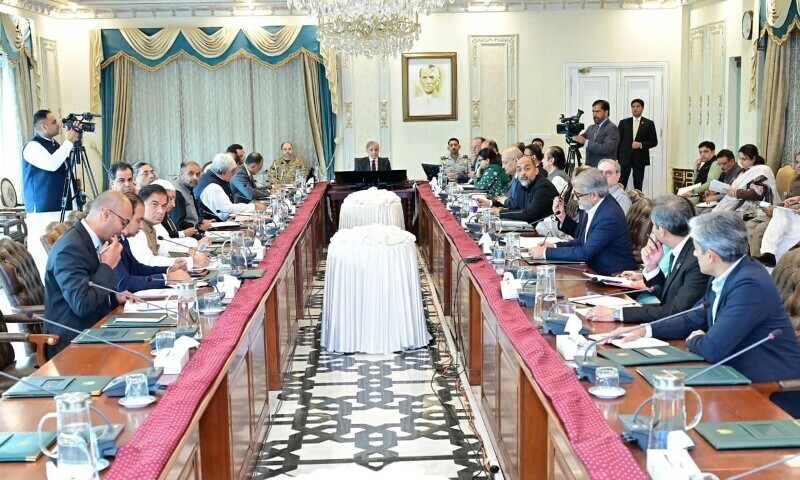
The latest development came during a meeting on Sunday between Federal Minister for Planning, Development, and Special Initiatives Ahsan Iqbal and Lu Hao, President of China’s Development Research Center (DRC) and the Center for International Knowledge on Development (CIKD). The two sides formalized a new agreement aimed at strengthening bilateral economic collaboration through research, training, and policy guidance.
“This partnership is more than just symbolic. It’s a practical step forward in learning from China’s economic model, which has successfully lifted millions out of poverty and turned the nation into a global powerhouse,” Minister Iqbal told reporters following the meeting.
Under the banner of Uraan Pakistan, the government is focusing on five pillars: exports, digital transformation, climate and environment, energy and infrastructure, and social equity. The initiative seeks to stabilize and grow the economy by leveraging innovation and global partnerships — with China being the most prominent.
“CPEC laid the foundation, but now we are entering a new era of economic and social cooperation,” Iqbal said. “China’s experience with long-term planning and reform offers valuable lessons for Pakistan’s own development journey.”
President Lu Hao echoed the sentiment, expressing full confidence in Pakistan’s strategy to shift toward an export-led economy. He emphasized China’s willingness to support Pakistan through shared research and policy knowledge.
The meeting also touched on Pakistan’s desire to increase its footprint in Chinese markets. “China imports over $2 trillion worth of goods annually, but Pakistan’s share in that is minimal,” Iqbal noted. “We want to change that — gaining access to Chinese markets is not just a goal, it’s an economic necessity.”
Minister Iqbal painted a cautiously optimistic picture of the domestic economy. He highlighted recent positive indicators such as a sharp drop in the policy rate — from 23% to 11% — and record highs in the Pakistan Stock Exchange, which recently crossed the 140,000-point mark.
“International financial institutions are starting to recognize the signs of recovery in Pakistan’s economy,” he added. “Uraan Pakistan is not just a slogan; it’s a serious roadmap backed by reforms and results.”
The newly signed agreement with China’s DRC adds another layer to this strategy, signaling a broader effort to integrate global best practices into Pakistan’s development plans.
As the country faces mounting challenges at home and abroad, the government hopes that partnerships like this one will not only stabilize the economy, but also set the stage for long-term prosperity and self-reliance.


