




ISLAMABAD – Defence Minister Khawaja Muhammad Asif has said that the recently brokered ceasefire between Pakistan and Afghanistan will only hold if the Afghan Taliban effectively curb cross-border terrorist attacks originating from their soil.
In an exclusive conversation with journalists at Parliament House on Monday, Asif made it clear that Pakistan’s commitment to peace “hinges entirely” on the Taliban’s ability to stop such incursions. “Anything coming from Afghanistan will be a violation of this agreement,” he emphasized.
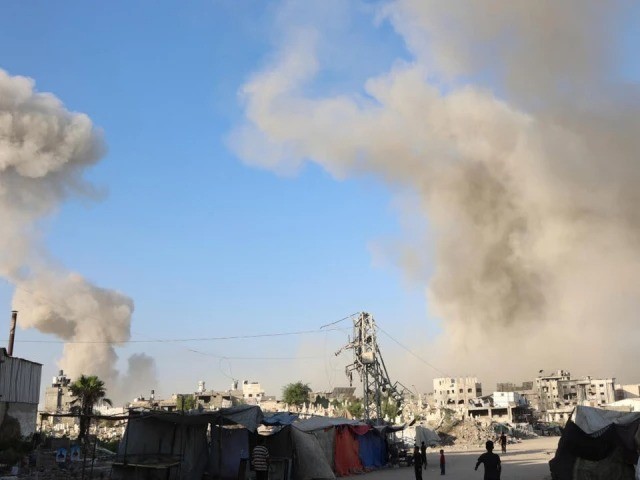
The remarks came a day after Pakistan and Afghanistan agreed to a ceasefire in Doha following days of intense border clashes the deadliest since the Taliban took power in 2021. The fighting, which left dozens dead, erupted after Islamabad demanded that Kabul rein in militants allegedly using Afghan territory to stage attacks inside Pakistan.
According to Asif, the ceasefire agreement was signed by Pakistan, Afghanistan, Turkiye, and Qatar, with both mediators guaranteeing the accord’s enforcement. “It was clearly stated that there will be no incursions. The ceasefire remains intact as long as this clause is respected,” he said.
The minister accused the banned Tehreek-i-Taliban Pakistan (TTP) of operating from Afghan safe havens “in connivance” with the Taliban regime a claim Kabul has consistently denied.
In an interview with Al Jazeera Arabic, Asif said the foremost objective of the Doha accord was to “eliminate the menace of terrorism” that has long destabilized the Pakistan-Afghanistan border. He noted that both sides agreed that regional peace could not be achieved without decisive action against militant networks.
Asif acknowledged the key mediation roles played by Qatar and Turkiye, praising Qatari Emir Sheikh Tamim bin Hamad Al Thani and Turkish President Recep Tayyip Erdogan for their diplomatic efforts. He added that another high-level meeting is scheduled to take place in Istanbul next week to finalize the implementation mechanism and address outstanding issues between the two countries.
The minister expressed hope that the deal would pave the way for normalized relations, including the resumption of bilateral trade and transit operations. “Once peace returns, Afghanistan will again be able to utilize Pakistan’s ports and routes for trade,” he said.
Touching on the refugee situation, Asif clarified that Afghan nationals with valid visas and documents would be allowed to stay, but the ongoing repatriation of undocumented refugees would continue.
However, the defence minister cautioned that it was “too early” to draw conclusions about the ceasefire’s durability. “We will have to see in the coming weeks how effectively the agreement is implemented,” he said.
In a separate interview with Arab News, Asif dismissed speculation that Pakistan’s recent airstrikes inside Afghanistan were carried out at Washington’s behest. “It’s total nonsense,” he said firmly. “Pakistan has had enough of involvement in Afghan affairs. We want to live as decent neighbours and have no business interfering in their relations with any other country.”
Later, speaking on Geo News’ Aaj Shahzeb Khanzada Kay Sath, Asif described the Doha talks as “constructive and calm,” crediting Qatari and Turkish mediators for maintaining a balanced environment. “There was no confrontation. All discussions, including amendments and clarifications, were channelled through Qatar and Turkiye,” he explained.
He revealed that the draft agreement was a concise, one-page document contrary to the longer versions circulating on social media. The upcoming Istanbul meeting, he said, will refine operational details, including the mechanism to handle violations.
Asked whether the ceasefire would last, Asif replied with measured optimism. “I have guarded hope. It’s too early for conclusions, but if both sides stay committed, peace can prevail.”
He stressed that the Taliban must act as a unified government in dealing with Pakistan rather than attributing border violations to rogue factions. In case of any breach, Qatar and Turkiye would again step in as guarantors.
Asif also confirmed that the entire TTP leadership remains based in Afghanistan a point that will be raised again in Istanbul. He categorically ruled out the possibility of Pakistan engaging in direct negotiations with the outlawed group, saying, “These talks should not be misunderstood as dialogue with the TTP.”
Addressing controversy over changes in Qatar’s press release on the ceasefire, the minister clarified that the wording debate had “no bearing” on the signed agreement. “It’s between them. It has absolutely no effect on the accord itself,” he said.
Asif concluded by expressing cautious optimism: “We’ve suffered immense losses over the years, but if this agreement holds, it could mark the beginning of genuine peace between Pakistan and Afghanistan.”


