




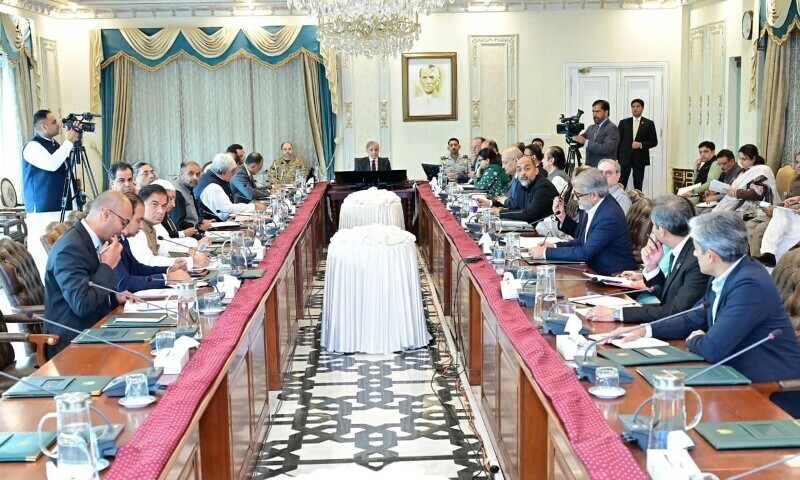

Prime Minister Shehbaz Sharif on Friday made it clear that Pakistan will not grant any further extensions to Afghan refugees living in the country without legal documentation, instructing federal and provincial authorities to ensure their swift and respectful repatriation.
Chairing a high-level meeting in Islamabad, the premier said Pakistan has “carried this burden for long enough” and that “those without valid visas must now return home.”
The meeting was attended by Chief of Army Staff (COAS) Field Marshal Syed Asim Munir, several federal ministers, and the chief ministers of Sindh, Punjab, and Balochistan. Representatives from Gilgit-Baltistan and Azad Jammu and Kashmir were also present, while Khyber Pakhtunkhwa was represented by Muzzammil Aslam, as CM Sohail Afridi was unable to attend.
“The people of Pakistan, who have sacrificed so much in the fight against terrorism, are now asking how long we will continue to shoulder this responsibility,” Shehbaz remarked during the session.
Expressing concern over the recent surge in terror incidents allegedly involving Afghan nationals, the prime minister said that despite Pakistan’s own economic and security challenges, the country has hosted millions of Afghans for decades. “It is deeply troubling that attacks are now being launched from Afghan soil and that Afghan individuals are being found complicit in such acts,” he noted.
Officials briefed the meeting that the phased repatriation of Afghan nationals is already underway, with around 1.47 million individuals sent back as of October 16. The forum decided unanimously that no further grace period would be extended to those without documentation.
Shehbaz directed all federal and provincial departments to work in close coordination to complete the process efficiently. “Only Afghans holding valid visas will be allowed to stay in Pakistan,” he emphasized, adding that authorities must ensure the process is handled “with dignity, particularly for the elderly, women, children, and minorities.”
“We will not permit any mistreatment,” the prime minister said. “However, the law will take its course.”
He also revealed that Pakistan’s leadership including the deputy prime minister, foreign minister, and defence minister has repeatedly engaged with the Afghan interim government to ensure Afghan soil is not used for terrorism. But, he added, “the growing frustration among the public has made this issue a matter of urgency.”
The meeting was briefed on the expansion of border exit points to facilitate a smoother repatriation process. Officials further warned that providing shelter to illegal Afghan residents or allowing them to stay in guesthouses would be treated as a criminal offense.
The prime minister lauded Pakistan’s armed forces for their swift and decisive response to recent cross-border attacks from Afghanistan. “Under the leadership of Field Marshal Syed Asim Munir, our forces repelled these assaults and proved once again that they stand ready to defend the motherland,” he stated.
Participants praised the government’s “diplomatic success” in handling the crisis and commended both the prime minister and the army chief for their coordination and leadership. The meeting concluded with a unanimous commitment to enforce all recommendations regarding the repatriation of illegal Afghan nationals.
Tensions at the Border
Meanwhile, the Foreign Office has asserted that the current Taliban administration in Kabul does not represent the Afghan people. “There is no formal government in place only a group that has seized power by force,” the FO spokesperson said.
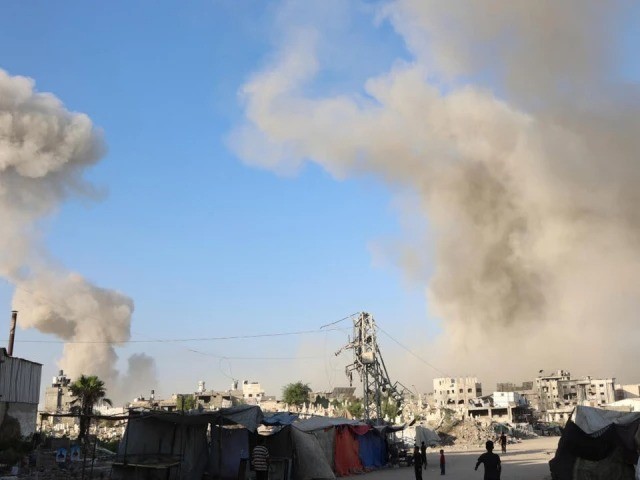
Tensions have intensified since the night of October 11–12, when Afghan Taliban fighters, reportedly backed by “Indian-sponsored elements of Fitna al-Khawarij,” launched an unprovoked attack on Pakistani border posts, according to the Inter-Services Public Relations (ISPR).
“The cowardly assault which included cross-border fire and limited incursions aimed to destabilize the region and advance FAK’s malicious agenda,” ISPR stated, adding that Pakistani forces exercised their right to self-defence and inflicted heavy losses on the attackers.
Following Pakistan’s precision strikes on Taliban and terrorist hideouts in Kandahar and Kabul, the Ministry of Foreign Affairs announced on October 15 that both sides had agreed to a 48-hour ceasefire at the Taliban’s request.
The ministry said the ceasefire aims to provide space for “constructive dialogue” and to seek a “positive and lasting solution” to a complex but resolvable issue. “This temporary pause is meant to foster stability along the border and pave the way for meaningful discussions,” the statement concluded.


