




For all of Donald Trump’s repeated claims that he had no intention of dragging the United States into another war, the events of this past weekend told a very different story.
By ordering a full-scale military strike on Iran’s nuclear facilities — and doing so in coordination with Israel — the former president not only shattered his own pledges but also upended international law and thrust the Middle East into yet another period of perilous uncertainty. For the first time in history, two nuclear-armed states launched an assault on a non-nuclear country — a sign of how dramatically the rules of global engagement are eroding.
The symbolism is powerful. Iran, a signatory of the Nuclear Non-Proliferation Treaty (NPT), was attacked by countries that themselves have nuclear arsenals but refuse to disarm. The implications won’t be lost on Iran — or on other nations watching from the sidelines.
A Calculated Act of Deception
In the days leading up to the strike, speculation had been mounting. U.S. military assets were quietly repositioned in the region, and the signals were unmistakable. But Trump — in typical fashion — tried to throw the world off the scent. He publicly said a decision would be made “within two weeks,” giving the impression that diplomacy was still on the table.
That, it turns out, was nothing more than a smokescreen.
When American B-2 bombers lit up Iran’s key nuclear sites at Fordow, Natanz, and Isfahan, it became painfully clear: the decision had already been made. And Trump’s narrative as a “peacemaker” crumbled in real time. For those who had placed their faith in his restraint, the strikes felt like a betrayal.
In a televised address that night, Trump boasted that the operation had been a “spectacular success,” and that Iran’s nuclear infrastructure had been “completely and totally obliterated.” He issued a chilling warning: if Iran dared retaliate, the U.S. would respond with even greater force.
Iran’s Response: Anger, Resilience, and Strategic Calculations
Iran’s Foreign Minister, Abbas Araghchi, called the strikes “an outrageous violation of international law” and warned that the consequences would be “everlasting.” Tehran made it clear that all options were now on the table to defend its people and sovereignty.
But even amid outrage, Iran faces tough choices. While its officials have pledged to continue their nuclear program and hinted at severing cooperation with the IAEA, a direct military response against the U.S. — at least for now — may not be in its best interest.
Iranian leaders are reportedly weighing their next move carefully. Some in parliament have called for the closure of the Strait of Hormuz — a critical global oil route — to spark an energy crisis. But Tehran knows such a move would come with steep economic and geopolitical costs.
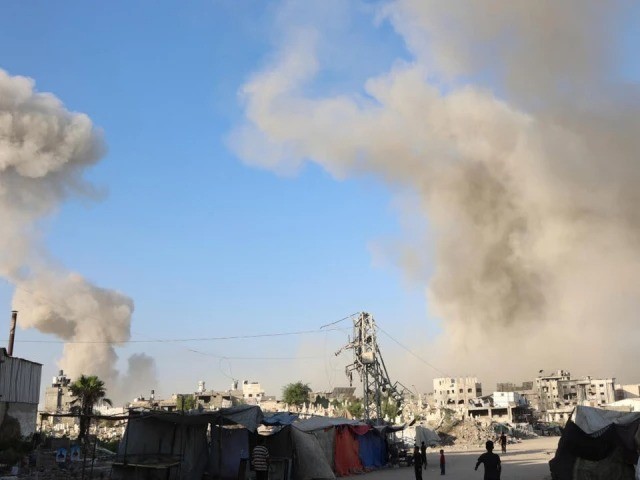
Instead, the response so far has been limited but deliberate. Iran has intensified missile attacks on Israel, even as Israeli forces continue to escalate their own offensive. Yet Tehran seems to be avoiding a direct confrontation with Washington — perhaps hoping to avoid further U.S. strikes while it regroups and recalibrates.
The Death of Diplomacy
One of the greatest casualties of this conflict may not be counted in buildings destroyed or lives lost — but in trust. Any hope for diplomacy, already fragile, now appears shattered.
Many had believed that backchannel talks — especially those held recently in Oman — might help de-escalate tensions. But as it turns out, those negotiations were taking place even as the U.S. and Israel coordinated their military plans. Trump himself admitted he had been working hand-in-glove with Israeli Prime Minister Benjamin Netanyahu all along.
It’s hard to overstate the sense of betrayal in Tehran. “Last week, we were in negotiations with the U.S. when Israel decided to blow up that diplomacy,” Iran’s foreign minister said. “This week, we held talks with the E3/EU when the U.S. decided to blow up that diplomacy.” From Iran’s perspective, there’s little left to negotiate.
UN Secretary General António Guterres described the U.S. attack as “a dangerous escalation in a region already on edge,” warning that the conflict could spiral out of control, with “catastrophic consequences for civilians, the region, and the world.”
A High-Stakes Gamble
Trump may be celebrating the operation’s success, but the risks for the U.S. are enormous. The idea that a quick show of force will bring Iran to its knees is not only naïve — it’s dangerous.
The ghost of Iraq looms large. A war that was supposed to be swift and decisive turned into a years-long quagmire that destabilized the entire region. Have the lessons of that conflict already been forgotten?
Trump has hinted that if Iran doesn’t comply with U.S. terms — meaning, a total surrender of its nuclear ambitions — more strikes will follow. But Iran has shown time and again that it won’t submit under pressure. If the U.S. keeps escalating, it may soon find itself in a conflict with no clear end.
A Pivotal Moment
The most sobering takeaway from this crisis may be what it signals to the rest of the world. Iran had chosen to abide by the NPT, to operate within international frameworks. And yet, it was attacked — not for possessing nuclear weapons, but for pursuing nuclear technology under the watch of international inspectors.
The message? Playing by the rules doesn’t guarantee protection.
This moment could mark a turning point in Iran’s strategic calculus. If diplomacy is off the table, if restraint leads to vulnerability, then what incentive does Iran — or any other country — have to remain non-nuclear?
That’s the real danger: not just the immediate fallout, but the longer-term unraveling of a global order built on norms that no longer seem to matter.


