





Lack of early warning systems, emergency drills could put lives and $50bn in infrastructure at risk
KARACHI – August 7, 2025:
Karachi, Pakistan’s largest city and economic backbone, remains dangerously exposed to the risk of a major earthquake, yet government preparedness remains alarmingly absent, experts warned at a high-level seminar held at Karachi University on Wednesday.
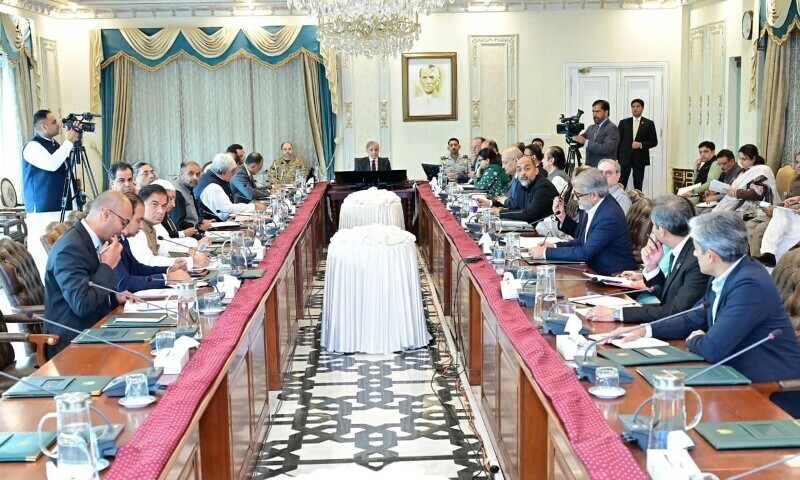
The seminar, titled “Recent Earthquakes in Karachi: Causes, Impacts and Mitigations”, was organized jointly by KU’s Geology Department and the Society of Economic Geologists and Mineral Technologists (SEGMITE). It brought together geologists, seismologists, engineers, and academics to discuss the growing seismic threats facing the city of over 20 million residents.
Speaking at the event, Chief Meteorologist Ameer Hyder Leghari pointed out that Karachi’s proximity to active fault lines and its location at the junction of three tectonic plates—Arabian, Indian, and Eurasian—makes it extremely vulnerable to seismic disasters. “The 1945 Makran tsunami, which killed over 4,000 people, is a grim reminder of what can happen. And yet, we have done very little to prepare,” he said.
Experts noted that while Karachi has experienced over 60 minor tremors—ranging between 1.5 and 3.8 magnitude—in recent times, these small quakes may be silently building toward something far more dangerous. Former PPL CEO Moin Raza Khan explained that these tremors, largely in the Landhi and Korangi zones, stem from fault creep and groundwater-induced stress. “They may have helped release some tectonic pressure, but they also signal brewing seismic tension. It’s a wake-up call.”
Khan warned that Karachi could face local ruptures of magnitude 5 on the Landhi fault or even an 8.0 quake from the Makran subduction zone. The estimated infrastructure value at stake? A staggering $50 billion.
Beyond natural geology, rapid and unregulated urbanization is also compounding the risk. “Over-extraction of groundwater, unplanned construction on soft marine sediment, and deltaic compaction are all contributing to land subsidence and seismic activity,” said Khan.
Geotechnical engineer Hasan S. Akhtar emphasized the importance of structural resilience. He recommended the integration of polypropylene fiber in construction materials—a cost-effective solution that enhances a building’s resistance to cracking and collapse during quakes. “We must focus on strengthening what we’ve already built and stop making the same mistakes,” he urged.
Drawing comparisons with earthquake-prone countries like Japan, speakers highlighted how strict enforcement of building codes and the use of advanced engineering practices have helped minimize damage there. They lamented that Karachi, by contrast, remains largely unregulated and ill-equipped for a large-scale seismic event.
KU Vice Chancellor Prof. Dr. Khalid Mahmood Iraqi closed the session by stressing that raising alarms alone is not enough. “We need policies based on ground realities, coupled with real action. Awareness campaigns, strict regulations, emergency drills—these should not be optional. They must become part of our system.”
Also addressing the seminar were senior geophysicist Riaz Hussain Rajpar and Professor Viqar Hussain, both of whom echoed the urgency of developing early warning systems and city-wide earthquake preparedness plans.
As one expert put it: “We’re living on borrowed time. Karachi must act—before nature does.”


