




LAHORE – The federal government has announced plans to revive the Islamabad Tehran Istanbul (ITI) freight train service by December 31, marking a significant step toward restoring regional trade routes that have been inactive for more than two years.
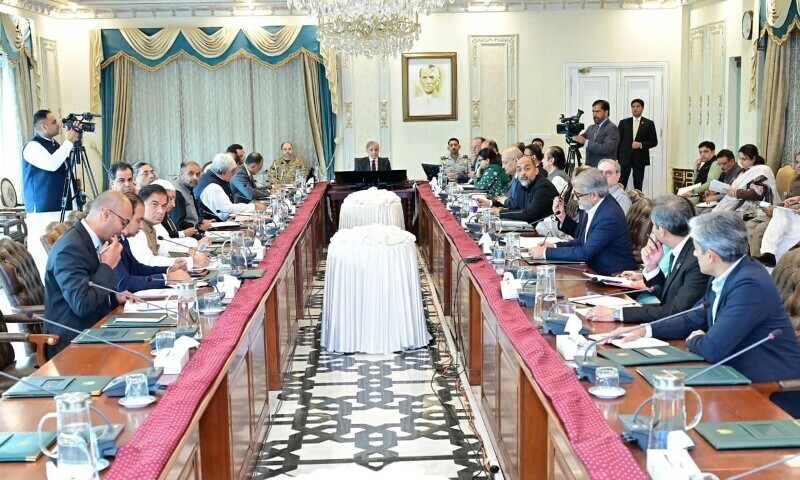
Speaking at a press conference held at the Pakistan Railways headquarters in Lahore on Sunday, Federal Minister for Railways Muhammad Hanif Abbasi said that the long-awaited resumption of the ITI train had faced repeated delays due to regional instability and administrative hurdles, but preparations were now in their final stages.
“We wanted to restart the ITI train earlier, but the conflict in the region involving Israel caused unforeseen delays,” Abbasi said. “Our goal is to resume operations by December, once discussions on tradable goods between Türkiye and Pakistan are finalized. The trade ministries are currently working on these details.”
The ITI train linking Pakistan, Iran, and Türkiye was last revived in December 2021 after nearly a decade of suspension. It operated successfully until August 2022, when administrative inefficiencies, freight disputes, and devastating floods disrupted service across Balochistan and Sindh.
Officials familiar with the project said that multiple operational issues, including slow customs clearance, high freight costs, and poor logistics coordination, had previously discouraged the business community. Additionally, the collapse of the 140-year-old Hirok Bridge and the submersion of railway tracks during the 2022 floods made the route impassable, forcing another suspension.
Abbasi noted that both sides were now determined to address past shortcomings before relaunching the train service. “We’re taking steps to ensure reliability and better coordination this time. The ITI train has immense potential to boost trade not only between Pakistan and Türkiye but across the wider region,” he said.
Expanding Regional Connectivity
The minister also revealed plans to link Pakistan’s railway network with Kazakhstan via Chaman, as part of a new agreement under negotiation. “We already have a track up to Chaman, and from there, we can access Kazakhstan, Central Asia, Russia, and even Europe,” Abbasi explained.
He added that a similar agreement with Uzbekistan had already been signed, reflecting Pakistan’s broader vision of becoming a central hub for regional trade through improved rail connectivity.
Infrastructure Overhaul and Upcoming Projects
In a bid to modernize key railway corridors, the government is preparing to launch the rehabilitation of the 500-kilometre Rohri–Karachi track in July next year, with financial assistance from the Asian Development Bank. Plans are also underway to attract private investment for the Rohri–Peshawar section, considered vital for north-south freight movement.
Abbasi shared that the Karachi Railway Station had been expanded and upgraded, making it nearly double the size of Lahore’s central station. The newly upgraded Shalimar Express will begin operations on November 7, followed by improved versions of the Awam, Allama Iqbal, and Rehman Baba Express trains in the coming months.
Highlighting financial reforms, the minister said Pakistan Railways had generated an additional Rs4.5 billion through the outsourcing of luggage vans and express cargo services.
A Step Toward Regional Revival
The revival of the Islamabad–Istanbul freight train is being hailed as a strategic move to reconnect Pakistan with Europe and Central Asia through land-based trade routes. If successfully implemented, it could strengthen Pakistan’s role in the region’s evolving transport and logistics network.
“The ITI train isn’t just about freight it’s about reconnecting economies,” Abbasi remarked. “By rebuilding these routes, Pakistan is opening doors to new opportunities across continents.”


