



ISLAMABAD – The International Monetary Fund (IMF) has projected Pakistan’s economic growth rate at 3.6% for the current fiscal year — significantly lower than the government’s official target of 4.2%. The figures were published in the IMF’s latest World Economic Outlook update, which maintained its earlier forecast and offered a cautious view of Pakistan’s recovery path.
The government had hoped for stronger growth on the back of a rebound in agriculture and industry. But independent economists have questioned these expectations, citing outdated data and a lack of transparency. Pakistan’s provisional GDP growth rate for FY2024-25 stands at 2.7%, though this figure has sparked debate due to population estimates that many consider underreported.
Adding to the skepticism, the World Bank recently estimated that nearly 45% of Pakistan’s population still lives in poverty. Yet, official statistics on poverty and unemployment remain unavailable, with the Pakistan Bureau of Statistics (PBS) still working to finalize key surveys. The PBS is expected to release updated figures, including results from the long-delayed Agriculture Census, next month.
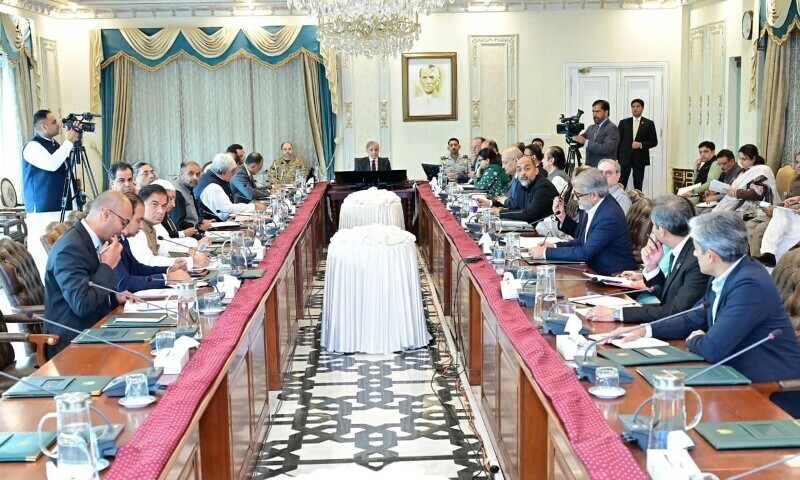
While growth remains sluggish, the federal government is actively courting foreign investors to help lift the economy. On Tuesday, a detailed briefing was held for diplomats from over a dozen countries, including the U.S., U.K., EU members, and Saudi Arabia. The goal was to showcase economic reforms and seek support for increasing Foreign Direct Investment (FDI).
But the diplomatic community expressed several concerns — particularly over Pakistan’s rising debt burden, reliance on costly commercial borrowing, and controversial tax relief policies. Questions were also raised about a government plan to curb circular debt in the power sector by borrowing Rs1.25 trillion domestically, a move that will ultimately be paid for by consumers through higher electricity bills.
Finance Minister of State Bilal Azhar Kayani, alongside Power Minister Sardar Awais Leghari, led the briefing. They pointed to a 10% rise in per capita income, a primary budget surplus of 3.1% of GDP — reportedly the highest in two decades — and falling inflation, which dropped to 4.5%, a nine-year low. The central bank has also halved its policy rate from 22% to 11%, in what the government calls a sign of economic stability.
Officials emphasized that the external sector has shown signs of strength, including a rare current account surplus of $2.1 billion — the first in 14 years and the highest in over two decades. However, the central bank’s aggressive dollar purchases from the local market — totaling $7.3 billion between July and April — raised eyebrows. Economists say this move helped stabilize reserves above $14.5 billion but kept the rupee artificially low.
Diplomats were told that Pakistan had received encouraging reviews from two global credit rating agencies, with Moody’s also expected to upgrade its rating soon. S&P recently bumped Pakistan up to ‘B negative’, citing improved macroeconomic management but stressing the need for political and security stability to sustain progress.
Turning to the power sector, Minister Leghari acknowledged that while some key targets had been met, deep-rooted structural challenges persist. Circular debt currently stands at Rs2.4 trillion. The government’s plan to reduce this — by taking new loans and passing the cost on to consumers — drew sharp questions from foreign envoys.
Leghari admitted that high tariffs and outdated pricing systems have made electricity unaffordable for households and industries, placing additional stress on the fiscal framework. To tackle this, the government is implementing reforms focused on tariff rationalisation, operational efficiency, and more effective planning for seasonal demand and supply imbalances.
He also highlighted plans to privatize several power distribution companies, with three expected to be ready for sale by early 2026. In addition, foreign governments and investors were invited to explore opportunities in renewable energy, smart grids, and distribution upgrades, with investment potential estimated between $2–3 billion.
On the tax front, FBR Chairman Rashid Langrial briefed diplomats on an ongoing transformation plan centered on people, processes, and technology. He said tax collection had surged by 46% due to tighter enforcement, and the tax-to-GDP ratio had improved to 10.24%, up from 8.8% last year.
Yet, despite record tax hikes, Pakistan still narrowly missed its revenue target agreed with the IMF — falling short by 0.3% of GDP.
While officials painted a generally optimistic picture, it was clear that many questions remain — especially about the long-term sustainability of reforms, the true state of the economy, and how the government plans to manage rising public expectations amid ongoing fiscal pressures.


