




July 25, 2025
In a decision that could mark a historic shift in the Middle East conflict, French President Emmanuel Macron has announced that France will formally recognise the State of Palestine during the upcoming United Nations session in September. The move, confirmed by AFP, positions France as the most influential European nation yet to officially back Palestinian statehood — a move welcomed by many but fiercely opposed by others.
“The urgent priority today is to end the war in Gaza and rescue the civilian population,” Macron posted on social media, calling for an end to the bloodshed and a renewed commitment to peace. “We must finally build the State of Palestine… ensuring its viability and demilitarisation while fully recognising Israel.”
France’s decision comes at a time of mounting global frustration with the humanitarian crisis in Gaza and the continued occupation of Palestinian territories. According to AFP, at least 142 countries now recognise or have declared intentions to recognise Palestinian statehood — a growing chorus that underscores shifting global sentiment.
A Warm Welcome from the Arab World
Macron’s announcement was immediately embraced by several key players in the Arab world. Saudi Arabia praised the move, calling it “historic” and urging other nations to follow France’s lead.
“This decision reaffirms the international community’s consensus on the Palestinian people’s right to self-determination,” the Saudi Foreign Ministry said in a statement, reiterating support for a Palestinian state based on 1967 borders with East Jerusalem as its capital.
The Palestinian Authority also lauded the move. Hussein al Sheikh, a senior aide to President Mahmoud Abbas, described it as a “significant step” toward justice for the Palestinian people.
“France is reaffirming its commitment to international law and our right to live freely on our own land,” Sheikh said.
Fierce Opposition from Israel and the U.S.
Unsurprisingly, the announcement provoked an angry response from Israel. Prime Minister Benjamin Netanyahu condemned the move, calling it a “reward for terrorism” and warning that it would only embolden groups like Hamas.
“France is legitimising what could become another Iranian-backed proxy — just like Gaza — whose goal is to annihilate Israel, not live in peace beside it,” Netanyahu said in a strongly worded statement.
The United States also reacted with concern. Secretary of State Marco Rubio criticised the decision as “reckless,” claiming it would undermine peace efforts and strengthen extremist narratives.
“This is a slap in the face to the victims of October 7th,” Rubio posted on X (formerly Twitter), referencing the attacks that reignited the current conflict.
Pakistan, Canada, and Australia Speak Out
Meanwhile, Pakistan has condemned what it calls Israel’s “unlawful claim of sovereignty” over the occupied West Bank — a move seen by many as a step toward formal annexation.
“These provocative actions represent a dangerous escalation and violate international law,” said Pakistan’s Foreign Office. “The international community must act urgently to stop Israel’s continued disregard for Palestinian rights.”
Canada and Australia also expressed sharp criticism of Israel’s conduct in Gaza. Canadian Prime Minister Mark Carney blamed Israel for worsening the humanitarian catastrophe by blocking aid and targeting civilians.
“This is a humanitarian disaster,” Carney said. “We call for an immediate ceasefire and for both sides to uphold international law.”
Australian Prime Minister Anthony Albanese was equally direct, stating that the killing of civilians and denial of basic necessities in Gaza was “indefensible.”
“We cannot turn a blind eye to children dying while seeking food and water,” Albanese said.
Gaza’s Grim Reality
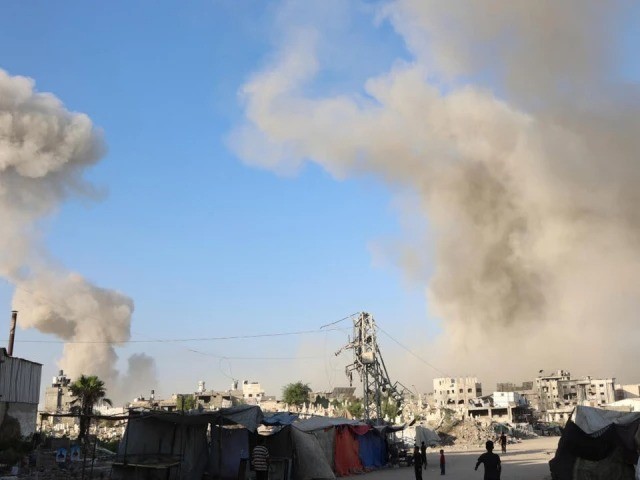
Since the war began in October 2023, Gaza has borne the brunt of Israel’s military campaign. Over 58,667 Palestinians, including 17,400 children, have been killed, and nearly 140,000 have been injured. More than 14,000 people remain missing under the rubble.
In November 2024, the International Criminal Court issued arrest warrants for Israeli Prime Minister Netanyahu and former Defence Minister Yoav Gallant, citing war crimes and crimes against humanity. Israel is also facing a genocide case at the International Court of Justice.
Efforts for a ceasefire are underway, with a proposed 60-day deal that includes a pause in hostilities, the release of captives, and increased humanitarian aid. However, progress remains fragile.
A Defining Moment for the World
France’s bold step may signal a turning point in the global approach to the Israeli-Palestinian conflict. For decades, many Western countries have hesitated to recognise Palestinian statehood, fearing backlash from Israel and its allies. But with Gaza engulfed in suffering and peace talks long stalled, patience is running out.
Whether Macron’s decision will pave the way for meaningful change or trigger further geopolitical tension remains to be seen. But for now, the message is clear: the world is no longer willing to look the other way.
“History will remember who stood for justice,” said a young activist in Ramallah. “And who stayed silent.”


