



ISLAMABAD — The federal government has officially imposed a ban on the religio-political group Tehreek-i-Labbaik Pakistan (TLP) under the Anti-Terrorism Act (ATA), following a series of violent protests that erupted earlier this month.
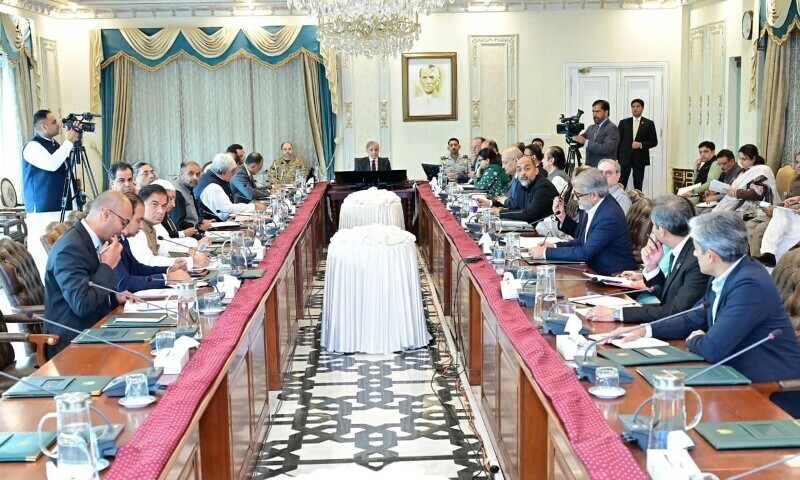
The decision came after a detailed session of the federal cabinet, which unanimously endorsed a recommendation from the Punjab government to outlaw the organisation. According to a statement issued by the Prime Minister’s Office, the Interior Ministry briefed the cabinet on the “violent and terrorist activities” linked to the TLP and presented a summary supporting the provincial government’s request.
Officials informed the meeting that since its inception in 2016, the TLP had repeatedly instigated unrest across the country, resulting in attacks on security forces and loss of civilian lives. The statement further reminded that the group had previously been banned in 2021 but was later reinstated after pledging to abandon violent methods a commitment it has now allegedly violated.
“The TLP’s repeated involvement in riots, attacks on law enforcement, and public disorder cannot be ignored,” the press release noted, confirming that the cabinet had once again declared the group a terrorist outfit under national security laws.
Adviser to the Prime Minister on Political Affairs Rana Sanaullah clarified that the move was not meant to suppress religious opinion but to cleanse the party of extremist elements. “No one has an issue with their religious ideology,” he said. “But every time they protest, it results in bloodshed from the 2017 Faizabad sit-in to more recent violent demonstrations.”
Similarly, Minister of State for Interior Talal Chaudhry, speaking to Geo News, stated that the party had “acted like an extremist organisation” and failed to uphold its previous commitments. He added that reports submitted by the Punjab government left the federal authorities with no alternative but to take decisive action.
Chaudhry revealed that all provincial administrations had been directed to submit records of the group’s activities over the last decade, including incidents of violence, sectarian provocation, and attacks on minorities. “Those who choose the path of violence cannot expect to enjoy political privileges,” he said firmly.
How a Ban Works Under the Law
The National Counter-Terrorism Authority (NACTA) maintains official lists of proscribed individuals and organisations. Once listed, these entities face severe restrictions including travel bans, asset freezes, and surveillance under the Fourth Schedule of the ATA.
Historically, groups such as Tehreek-i-Taliban Pakistan (TTP), Lashkar-i-Jhangvi, and Jaish-i-Mohammad have been subject to similar sanctions. However, the process of banning a political party is more complex and must ultimately be validated by the Supreme Court under Article 17(2) of the Constitution.
Legal experts note that while the federal government can issue a declaration against a political entity deemed “prejudicial to the sovereignty or integrity of Pakistan,” the final decision rests with the apex court.
Punjab Government’s Crackdown
Earlier in the day, Punjab Information and Culture Minister Azma Bokhari confirmed that the province had forwarded a comprehensive dossier to the federal government, recommending a ban on the TLP.
In a press conference, Bokhari detailed the extensive damage caused during recent protests, revealing that TLP activists had snatched police weapons, vehicles, and riot-control equipment. “This is their pattern they encircle police, seize arms, and use them later against the state,” she said, displaying images of recovered weapons and ammunition allegedly stolen during clashes.
Bokhari disclosed that during the latest protests, eight police vehicles were damaged and large quantities of ammunition, tear gas shells, and protective gear were stolen. She also noted that 559 suspects had been arrested, with dozens already sent on judicial remand.
The minister said the Punjab government had suspended over two dozen weapons dealers’ licences, sealed unregistered arms shops, and implemented a province-wide ban on issuing new licences. “A province with more than a million licensed weapons presents a serious challenge to law and order,” she remarked.
Bokhari further revealed that 75 social media links spreading hate speech and incitement had been blocked, while over 100 individuals were detained for online extremism. Citizens were urged to report illegal arms holders and “extremist activities” through the police helpline.
She confirmed that 130 TLP-linked mosques had been taken under the control of the Auqaf Department, and 223 affiliated seminaries were geo-tagged. “This is not an action against any sect or group,” she clarified. “It’s a step against the ideology of extremism.”
The Road Ahead
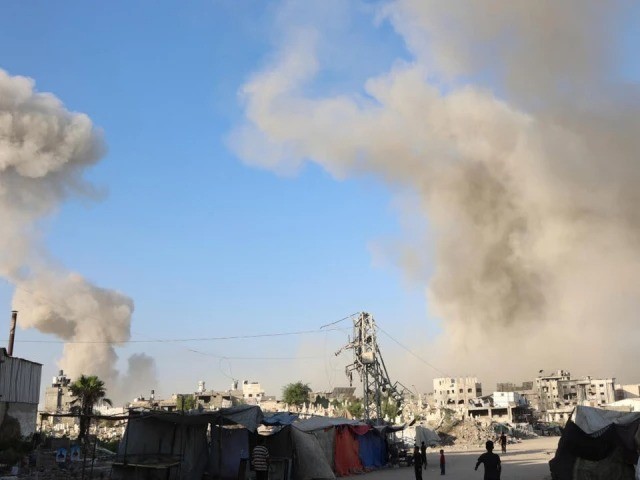
The latest ban follows the violent “Gaza solidarity march” organised by the TLP earlier this month, during which clashes broke out between protesters and law enforcement agencies in Muridke. The operation led to dozens of arrests, widespread disruption, and injuries on both sides.
Authorities are also investigating the alleged financial networks of the group. Bokhari said that over 3,800 financiers linked to TLP have been identified, with their bank accounts frozen and assets blocked under anti-terrorism laws.
According to officials, the whereabouts of TLP chief Saad Rizvi and his brother remain unclear, though Punjab authorities claim to have traced them to Azad Jammu and Kashmir and sought assistance from local authorities for their arrest.
The government maintains that this action is a necessary measure to preserve national stability and deter future violence. “Pakistan cannot afford to let extremist elements operate under the guise of political activism,” one senior official remarked.


