





ISLAMABAD:
The Executive Committee of the National Economic Council (ECNEC) on Monday gave the green light to the second phase of the Karachi Water and Sewerage Services Improvement Project, revising its total cost to Rs186 billion — an increase of Rs19 billion from the earlier estimate.
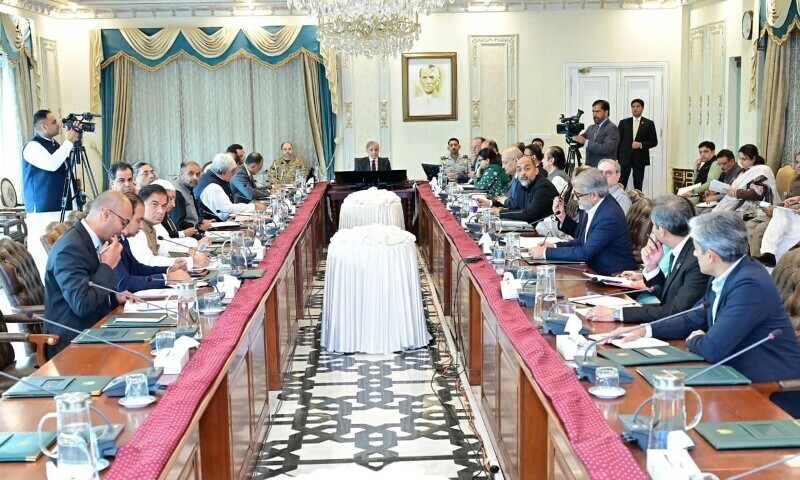
The meeting, chaired by Deputy Prime Minister Ishaq Dar, also granted in-principle approval for the revised land acquisition plan for interchanges along the Karachi–Lahore Motorway. The land-related component has now been priced at Rs68.8 billion, reflecting significant cost escalation over the past decade.
According to officials, the updated price tag for the Karachi water and sewerage project marks an 11% increase compared to the amount approved in 2024. Karachi, home to more than 20 million people, continues to struggle with severe shortages of clean drinking water and an aging sewerage system in urgent need of overhaul.
ECNEC was briefed that the World Bank and the Asian Infrastructure Investment Bank (AIIB) will each provide $240 million in financing, while the European Investment Bank has committed a 60-million-euro loan and a three-million-euro grant. The Sindh government will also contribute $60 million from its own resources.
The broader water and sewerage improvement programme is based on the Karachi Diagnostic Study of 2016, with four phases planned through 2032. The World Bank and AIIB have collectively pledged $1.6 billion, accounting for 40% of the total cost of all phases combined.
The first phase is already underway and is expected to be completed by June 2026.
Motorway Land Acquisition Project
In a separate decision, ECNEC approved the revised PC-1 for acquiring land for the Karachi–Lahore Motorway, a key north–south transportation corridor. The updated plan sets aside Rs68.8 billion to acquire 25,925 acres for the 959-kilometre stretch that forms part of the 1,152-kilometre motorway.
The revised scope includes compensation for land and damages, provision of allied facilities, right of way (RoW), construction of interchanges, relocation and resettlement expenses, and shifting of public utilities. Land acquisition will be carried out by district collectors and revenue boards of Sindh and Punjab.
Documents shared with the committee show that the original PC-1, approved in 2014, carried a cost of Rs51 billion. However, current estimates reflect a 34% spike, driven mainly by sharp increases in land valuation and higher costs of utilities and labour. Revenue authorities have reassessed land prices based on today’s market rates, which have risen substantially over the last ten years.
ECNEC further directed that any land owned by the Sindh government and required for the motorway should be handed over to the National Highway Authority free of cost.


