





Islamabad – Chief of Army Staff (COAS) Field Marshal Asim Munir on Friday urged Afghan authorities to take decisive action against Indian-backed militant proxies operating from their soil. Speaking at the 52nd Common Training Programme for civil service officers in Islamabad, the army chief underscored Pakistan’s desire for peaceful, cooperative ties with its western neighbour, but made it clear that tolerance for cross-border terrorism would not be accepted.
“We ask only one thing: do not give space to India’s terrorist proxies — Fitna al-Hind and Fitna al-Khawarij,” said COAS Munir, warning Kabul of the destabilizing consequences of harbouring hostile elements. He reiterated that while Afghanistan remains a “brotherly, neighbouring Islamic country,” it must act responsibly to counter the influence of external adversaries.
During his address, the army chief also touched upon broader national themes, including internal and external security challenges, and emphasized the military’s pivotal role in safeguarding peace and stability in the region. He called on civil service officers to uphold integrity, professionalism, and patriotism, describing these qualities as essential to public service.
Highlighting the vital role of the civil bureaucracy, Field Marshal Munir stressed that an effective and transparent administrative system is indispensable to national development. He also spoke about the importance of institutional harmony between civilian and military leadership, advocating for a collaborative approach in advancing Pakistan’s strategic goals.
The session concluded with an interactive Q&A segment, encouraging dialogue and reinforcing a shared vision for Pakistan’s future.
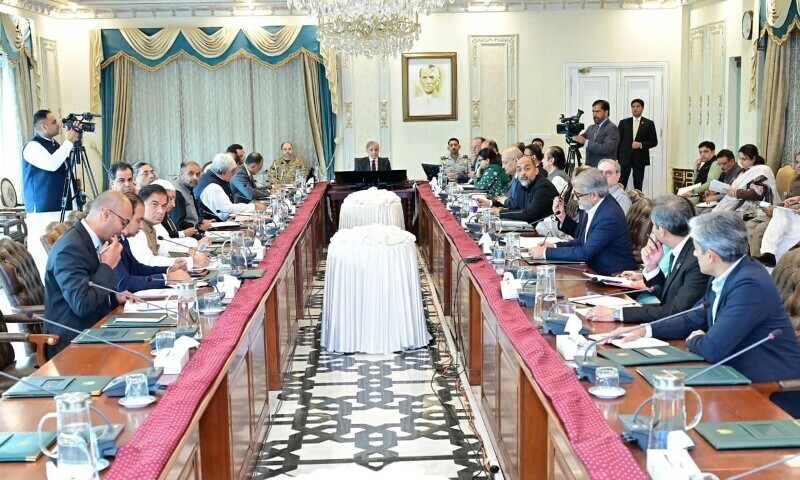
In a separate development, Finance Minister Muhammad Aurangzeb chaired a meeting of the Cabinet Committee on State-Owned Enterprises (SOEs), where he reiterated the government’s firm commitment to reform public sector institutions.
Aurangzeb emphasized that aligning SOEs’ business plans with national priorities and addressing operational inefficiencies must be treated as a top priority. He called for urgent reforms in sectors such as power and energy, which have long been plagued by mismanagement and financial drain.
The finance minister also underlined the responsibility of government-appointed board directors in SOEs, urging them to provide informed and proactive input to ensure fiscal discipline and performance accountability.
A briefing by the Central Monitoring Unit of the Finance Division during the meeting presented a stark reality: cumulative losses of state-owned enterprises stood at a staggering Rs5.8 trillion during the July–December period of last year. The report outlined key challenges, including outdated governance structures and inefficiencies, which continue to weigh down the national economy.
Both events — the COAS’s address and the finance minister’s briefing — highlighted a common theme: the need for stronger institutions, accountability, and cooperation across the board to steer Pakistan towards stability, growth, and national resilience.


