




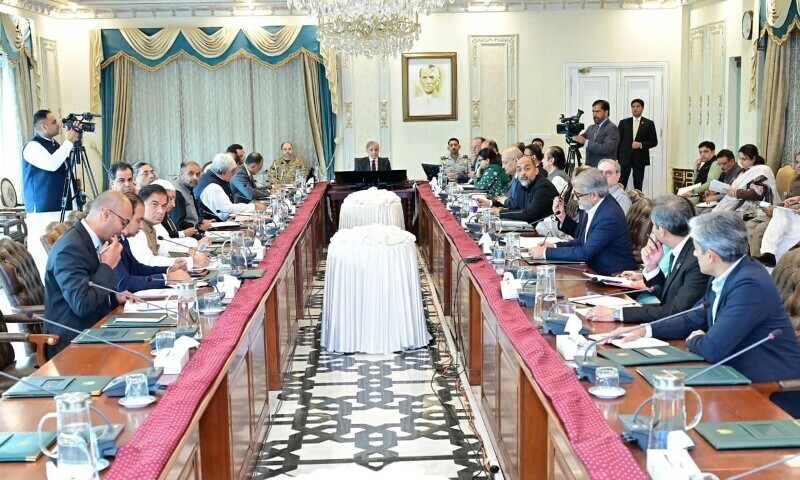

ISLAMABAD – July 12, 2025: Just days after advertising top federal positions for private sector professionals, Prime Minister Shehbaz Sharif has constituted a high-level ministerial committee to re-evaluate the plan and finalize recommendations for overhauling Pakistan’s bureaucratic structure — particularly the recruitment process for secretaries in key economic ministries.
The committee includes Climate Change Minister Dr. Musaddiq Malik, Power Minister Sardar Awais Laghari, Commerce Secretary Jawad Paul, and Federal Board of Revenue (FBR) Chairman Rashid Langrial. It has been assigned the task of examining the proposed inclusion of domain experts into suitable roles within the civil service, rather than direct appointments at the top level.
This panel will coordinate with two other reform committees led by Finance Minister Muhammad Aurangzeb and Planning Minister Ahsan Iqbal. The PM’s Office confirmed in a statement that the objective is to modernize government institutions by “recruiting the best talent, aligning ministries with digital systems, and improving governance.”
The development comes amid backlash over last week’s advertisement seeking private candidates for the roles of Principal Accounting Officers (PAOs), technical advisors, and heads of organizations in seven key economic divisions. These include the Finance, Petroleum, Power, Planning, Industries and Production, National Food Security, and Vocational Education divisions — all currently led by senior officers from the powerful Pakistan Administrative Service (PAS).
Sources privy to recent high-level meetings said concerns were raised about replacing career civil servants with individuals from the private sector who might lack exposure to public sector accountability, parliamentary oversight, and bureaucratic processes. “The idea that someone with no prior government experience can serve as a federal secretary without consequence is deeply flawed,” one official noted.
Critics also pointed out that foreign investment hasn’t suffered due to the bureaucracy, but because of inconsistent policies and contract breaches — issues that won’t be resolved by simply replacing secretaries.
Some federal ministers, including those whose secretaries’ posts were advertised, expressed frustration over not being consulted beforehand. One federal minister reportedly objected that advertising his division’s top position without his knowledge was “disrespectful and premature.”
Still, not all reactions were negative. Economic Affairs Minister Ahad Khan Cheema clarified that there was no reversal in the government’s decision, but rather a refinement of strategy. “The goal is to create a pool of competent professionals who can contribute through well-defined roles. It’s not about displacing the existing civil service but supplementing it smartly,” he explained.
The core debate now revolves around the level of entry for these private sector professionals. Many argue that instead of placing them directly as federal secretaries, their induction should occur at Grade 20 or 21, or within the technical advisory structure — a middle-tier lateral entry — allowing time for acclimatization to public sector demands.
Meanwhile, the job advertisement itself lacked clarity — no ministries were named, and qualifications or job descriptions were not specified. Applicants were simply given two weeks to apply for high-level roles with little contextual guidance, raising eyebrows among observers.
Past attempts to entice private talent into the public sector have faltered, mainly due to unattractive compensation packages and a lack of protection against political interference. “Top-tier professionals are unlikely to take the risk unless pay scales and job security are overhauled,” said a senior bureaucrat. “The management pay scale system hasn’t produced stellar results so far.”
Adding to the complications, many young officers from provincial services are hesitant to work in the federal government due to more competitive benefits and faster promotions back home. The federal government had even introduced a 140% executive allowance to counter this talent drain — but with limited success.
The prime minister, however, remains firm on the need for transformation. “We cannot build a modern economy with a 70-year-old system,” he reportedly told his aides. “Reform is not a choice, it is a necessity.”
The coming weeks will determine whether the government sticks to its original plan of directly hiring outsiders for secretary-level posts or charts a more balanced path by integrating them into the civil service through structured and accountable roles.


