




July 19, 2025 | Sweida, Syria
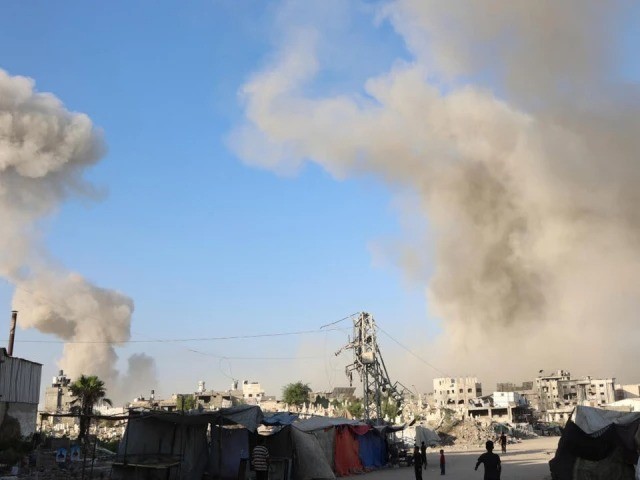
After a harrowing week of relentless bloodshed, smoke-filled streets, and mass displacements, Israel and Syria have agreed to a tentative ceasefire in Syria’s southern Sweida province — a region that has become the epicenter of some of the deadliest violence the war-weary country has seen in years.
The agreement, brokered with the backing of Turkey, Jordan, and the United States, comes after more than 300 people were killed in clashes that pitted Bedouin fighters against Druze militias — once-local tensions that spiraled into a regional firestorm.
A Fire Ignited, a People Trapped
What began as localized skirmishes quickly escalated when Israel launched airstrikes against Syrian government positions in Damascus and the south. The stated goal? To protect Syria’s Druze population — a small but historically significant minority that also resides in Lebanon and northern Israel.
The strikes, however, added more chaos to a city already teetering on the brink. According to eyewitnesses, Israeli missiles fell near residential areas and government compounds alike, shaking the fragile foundation of an already divided nation.
“For four days, we’ve had no electricity, no water, no food,” said Mudar, a 28-year-old resident of Sweida who spoke via a weak phone signal. “People are afraid to step outside — the snipers don’t care if you’re armed or just a father trying to find bread.”
A Ceasefire With Conditions
On Friday, under increasing international pressure and with reports of mounting civilian casualties, Israel agreed to a 48-hour window allowing limited Syrian security forces to enter Sweida. The aim: restore order and prevent further bloodshed — at least temporarily.
A senior Israeli official, speaking anonymously to reporters, said:
“In light of the ongoing instability in southwest Syria, Israel has agreed to allow limited entry of the Syrian internal security forces into Sweida district for the next 48 hours.”
This marks a stark reversal for Israel, which had earlier vowed never to allow Syrian troops near its southern border, citing deep distrust of Syria’s new, Islamist-led leadership. Israeli officials have described Syria’s new rulers as “barely disguised jihadists” and have leaned heavily on internal calls from Israel’s own Druze community for military intervention.
US Walking a Tightrope
While Israel insists its strikes were defensive and humanitarian in nature, Washington has expressed unease. The White House confirmed it had helped broker the initial truce earlier in the week but stated clearly that it does not support Israeli airstrikes on Syrian territory.
Tom Barrack, the U.S. ambassador to Turkey, struck a reconciliatory tone in a post on X:
“We call upon Druze, Bedouins, and Sunnis to put down their weapons and together with other minorities build a new and united Syrian identity.”
But the ground reality tells a different story. Thousands of Bedouin fighters were still entering Sweida on Friday, according to eyewitnesses and local journalists, raising fears that the ceasefire could collapse before it even takes hold.
Anatomy of a Humanitarian Crisis
Behind the military posturing and diplomatic statements lies a darker truth: Sweida is a humanitarian disaster zone.
The Syrian Network for Human Rights reported 321 deaths since Sunday, including women, children, and medical staff. More than 500 people have been injured, hundreds of families displaced. Graphic footage has emerged of field executions, burned homes, and desperate civilians fleeing with only the clothes on their backs.
One of the most disturbing incidents reported by the UN involved 13 civilians allegedly gunned down during a family gathering by factions affiliated with Syria’s interim authorities. Six others were said to have been executed near their homes in broad daylight.
“This is not a battle for territory — this is revenge,” said Ryan Marouf, editor of the independent outlet Sweida24, who has remained in the city despite the violence.
Power Cuts, No Aid, and a City on Its Knees
As clashes rage on in the northern and western parts of the province, basic survival has become a daily struggle. Electricity has been out for days. Fuel is gone. Food is either spoiled or inaccessible. Phone and internet coverage are nearly non-existent, leaving residents cut off from the outside world — and from each other.
The UN’s refugee agency has urged all sides to grant humanitarian access, which has been all but impossible due to the fighting. Aid convoys remain stuck in Daraa province, waiting for a green light to enter Sweida.
A Truce on Thin Ice
While Syrian authorities have promised to send a dedicated force to restore calm, few on the ground believe peace is within reach. Syrian President Ahmed al-Sharaa — who has been trying to build bridges with the West — condemned Israeli involvement, accusing it of exploiting sectarian tensions to “fracture Syria.”
For the civilians in Sweida, however, politics are a distant concern. Their immediate needs are far more basic: water, safety, and the ability to sleep through a night without the thunder of rocket fire.
Whether the ceasefire holds will depend on more than diplomacy — it will require accountability, restraint, and perhaps a rare moment of empathy from all the players now standing on the edge of a humanitarian cliff.
“This isn’t about victory anymore,” Mudar said. “It’s about survival.”


