




Washington D.C. | July 2025
In a surprising off-the-cuff remark during a closed-door dinner at the White House, former U.S. President Donald Trump claimed that up to five fighter jets were downed during the most recent bout of military hostilities between India and Pakistan earlier this year. Speaking to Republican lawmakers, Trump referred to the intense clashes that followed the Pahalgam attack, which triggered days of high-stakes confrontations between the two nuclear-armed neighbors.
“In fact, planes were being shot out of the air — five, five, four or five, but I think five jets were shot down actually,” Trump said, offering no further clarification about which side lost how many aircraft.
The comments, although brief, quickly gained attention in diplomatic circles, especially since both New Delhi and Islamabad have offered conflicting narratives about the scope and impact of the hostilities.
Pakistan’s Claim vs. India’s Response
Pakistan has publicly asserted that it downed five Indian aircraft in air-to-air combat during the escalation. However, India has officially acknowledged only limited losses and maintains that its forces swiftly adapted after initial setbacks. In late May, India’s top military commander stated that the Indian Air Force recalibrated its tactics after the first wave of attacks, gaining a tactical edge before a ceasefire came into effect three days later.
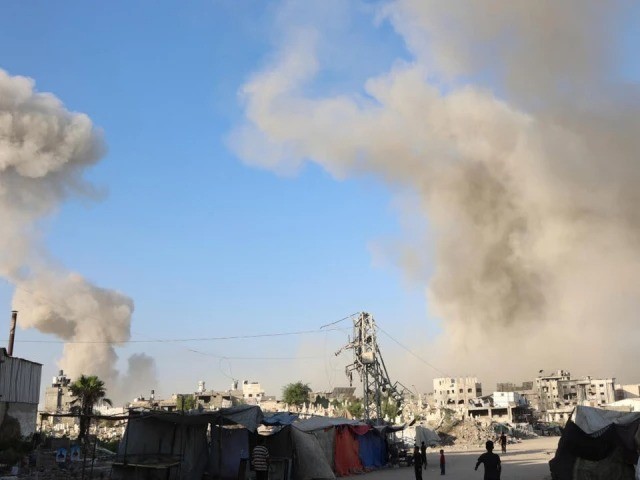
The three-day skirmish, marked by cross-border strikes, dogfights, drone activity, and artillery exchanges, left dozens dead on both sides. Tensions ran particularly high after Indian jets reportedly targeted positions across the border on May 7 — an act that set off a ferocious retaliatory cycle.
Trump’s Ceasefire Claim — and India’s Pushback
Trump has repeatedly taken credit for facilitating the ceasefire announced on May 10, claiming that diplomatic pressure from Washington played a decisive role in cooling down tempers in South Asia. “We got them to stop. It was getting bad — really bad,” Trump said in a social media post shortly after the ceasefire.
However, India has publicly pushed back against these claims, insisting that the ceasefire came as a result of direct communication between New Delhi and Islamabad — without third-party mediation. For years, India has maintained a firm stance that disputes with Pakistan are bilateral matters and should not involve outside intervention.
A Familiar Rivalry, A New Chapter
The April incident in Pahalgam — where 26 security personnel were killed in a deadly convoy attack — served as the immediate trigger for the latest escalation. India squarely blamed Pakistan-based militant groups for orchestrating the attack, while Islamabad denied any involvement and instead called for an impartial international investigation.
Washington strongly condemned the attack but stopped short of blaming Pakistan directly, choosing instead to maintain a delicate balance in its statements. That response reflected the U.S.’s complex relationship with both countries: India is a strategic partner in Washington’s Indo-Pacific strategy aimed at countering China, while Pakistan remains a key regional ally with its own security importance.
The Bigger Picture
Trump’s vague and unverified statement about five jets being shot down may stir diplomatic chatter, but without official backing or corroboration from defense officials, it remains speculative. What it does underscore, however, is the continued volatility of the India-Pakistan relationship — where even a single incident can snowball into full-fledged hostilities.
The return to calm after the May ceasefire is a relief, but as history has shown, peace between India and Pakistan remains fragile, and often subject to the whims of politics, perception, and provocation.
As South Asia continues to navigate its delicate balance of power, the international community including Washington watches closely. For now, both sides appear to have stepped back from the brink. But how long that holds is anyone’s guess.


