






Islamabad — In a bid to meet the International Monetary Fund’s (IMF) conditions, the federal government on Friday approved a 50% increase in fixed gas charges for domestic users and raised tariffs for bulk, power, and industrial gas consumers. However, a contentious proposal to import up to 500,000 metric tons of sugar was put on hold due to disagreements over a massive subsidy plan.
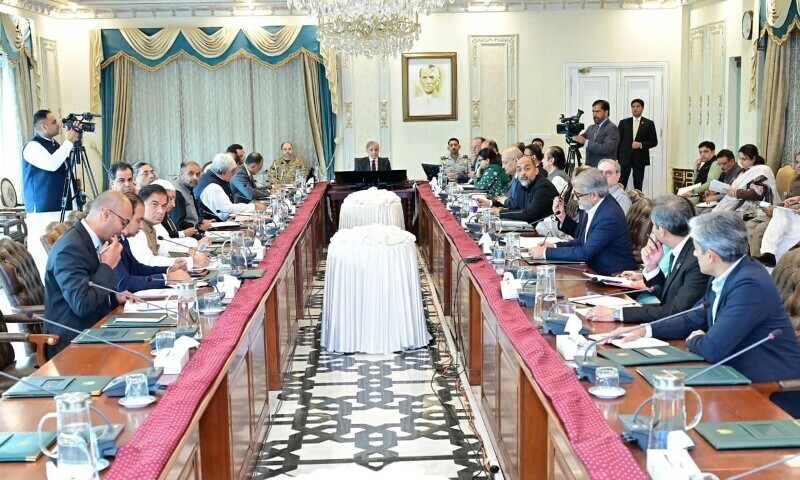
The decisions were taken during a meeting of the Economic Coordination Committee (ECC) of the Cabinet, chaired just three days before the end of the fiscal year 2024-25. The committee also cleared a record Rs2.6 trillion in supplementary grants — primarily to cover repayments of domestic and foreign debt — underscoring the fiscal pressure the government faces heading into FY 2025-26.
Gas Price Adjustments
According to a statement issued by the Ministry of Finance, the ECC approved adjustments in gas tariffs to ensure cost recovery for gas utilities, in line with IMF’s requirement for biannual revisions. While the per-unit gas rates for residential consumers remained unchanged, fixed monthly charges for domestic users saw steep hikes.
For protected domestic consumers, fixed charges were increased by Rs200, bringing the monthly cost to Rs600. In the non-protected category:
- For usage up to 1.5 hm³, fixed charges were raised from Rs1,000 to Rs1,500
- For usage above 2 hm³, the increase was from Rs2,000 to Rs3,000
Meanwhile, average gas prices were hiked for:
- Bulk consumers by 9% to Rs3,160/mmbtu
- Power plants by 17% to Rs1,230/mmbtu
- Industrial units by 7% to Rs2,300/mmbtu
These hikes are aimed at helping the Sui Northern Gas Pipelines Limited (SNGPL) and Sui Southern Gas Company (SSGC) recover their combined revenue requirement of nearly Rs889 billion for the upcoming fiscal year. Without the tariff increase, the government faced a revenue shortfall of Rs41 billion, which risked violating IMF benchmarks.
Some ECC members, however, raised serious concerns about the guaranteed 24% return on assets given to the gas companies, calling it an incentive for inefficiency and discouraging reductions in line losses.
Sugar Import Stalemate
The ECC stopped short of approving the proposed sugar import plan, citing its heavy fiscal burden. The Ministry of National Food Security had suggested importing up to 500,000 metric tons of sugar to avert a potential shortage later this year — largely blamed on the government’s own earlier decision to export 765,000 metric tons.
According to officials, the landed cost of imported sugar — inclusive of taxes and duties — would be Rs245 per kg, far higher than the current local price of Rs190 per kg. The proposal required a Rs85/kg subsidy, amounting to Rs42.5 billion, which the Ministry of Finance flatly refused to provide.
Finance Secretary Imdad Ullah Bosal told the ECC that the ministry would neither release the subsidy nor seek IMF’s permission for it. Without duties and taxes, the base import price stands at Rs153/kg, but even that raised questions about affordability and practicality.
As a compromise, the ECC approved the formation of a 10-member steering committee to further evaluate the import proposal. The committee will be led by the Minister for National Food Security and include the Commerce Minister, SAPM on Foreign Affairs, Finance Secretary, FBR Chairman, and others.
Remittance Subsidy Review
Another contentious issue discussed was the Rs200 billion in pending claims by commercial banks under the Pakistan Remittance Initiative. The Finance Division has already discontinued the subsidy for FY 2025-26, while the State Bank of Pakistan confirmed it could not extend any further support due to IMF restrictions.
Some ECC members criticized the subsidy scheme, particularly the Rs6 per dollar incentive, arguing that it enriched banks and exchange companies at the expense of actual remitters. They called for redirecting such funds toward the productive sectors, such as manufacturing.
The ECC directed the State Bank and Finance Division to present a revised remittance incentive plan by July 31, complete with an impact assessment and implementation roadmap.
Defence and Strategic Grants
The ECC also approved:
- Rs15.8 billion in supplementary grants for the Ministry of Defence to meet salary shortfalls and pay allowances, including dues related to the martyrs of the recent Pakistan-India conflict
- Rs5.5 billion for the Strategic Plans Division, serving as rupee cover for SUPARCO operations in FY 2024-25
Risk Coverage Scheme for Farmers
In an important move for the agriculture sector, the ECC gave in-principle approval to launch a risk coverage scheme targeting small farmers and underserved areas, with an expected rollout on August 14, 2025. The scheme aims to bring 750,000 new borrowers into the formal credit system and generate an incremental Rs300 billion in agricultural lending over the next three years.
The estimated budgetary cost of Rs37.5 billion, spread over five years, will cover operational costs and risk premiums for banks. The ECC requested further safeguards and structural fine-tuning before the scheme’s official launch.
Conclusion:
With mounting fiscal pressures and IMF-imposed constraints, the government continues to walk a tightrope between public relief, macroeconomic stability, and political sustainability. While energy price hikes and fiscal prudence may please international lenders, deferring key decisions like sugar import reflects the growing complexity of policymaking amid constrained resources and competing interests.


