



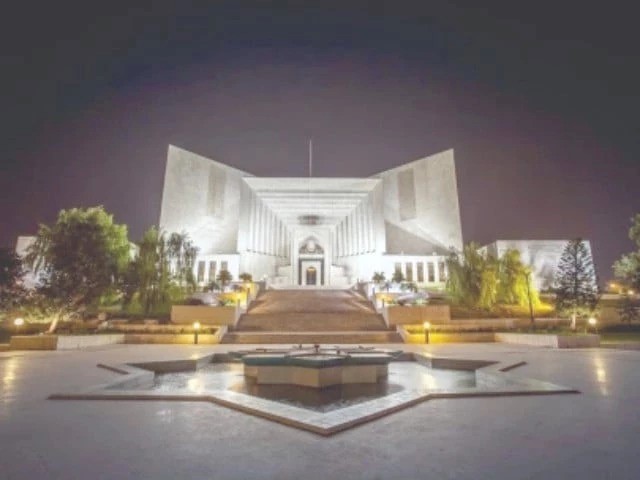
ISLAMABAD – In a significant development, the federal government has allowed the Supreme Court of Pakistan (SC) to set up its own project sanctioning body, empowering the judiciary to approve development schemes worth up to Rs1 billion without relying on the law ministry.
The decision, confirmed by Minister for Planning and Development Ahsan Iqbal on Friday, means that for the first time the apex court will have the autonomy to design and approve its own projects under a Departmental Development Working Party (DDWP).
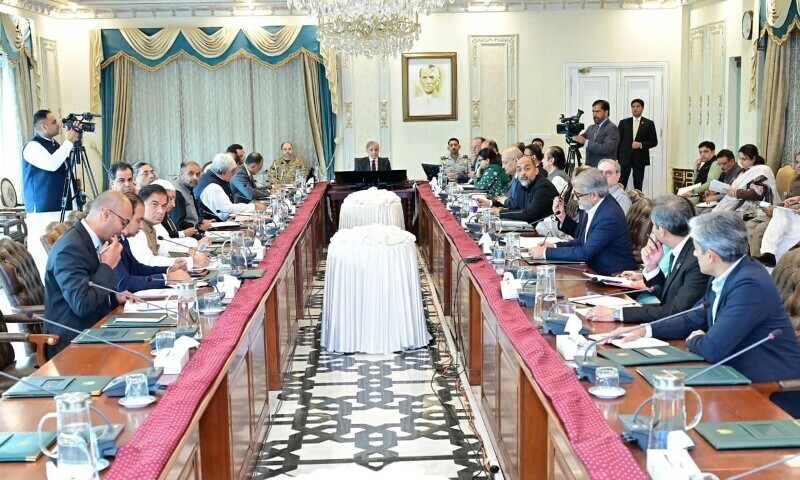
The move follows a request from the Supreme Court earlier this year, when the court sought clarity from the Prime Minister’s Office on whether it could establish such a body. Prime Minister Shehbaz Sharif approved the summary, giving the green light for a DDWP headed by the SC registrar, who also serves as its principal accounting officer.
Hurdles Ahead
Despite the approval, the Supreme Court may not be able to immediately exercise its new powers. In June, the National Economic Council (NEC) imposed a moratorium on all DDWPs, barring them from approving fresh projects until Pakistan completes its ongoing IMF programme. The freeze was introduced to conserve fiscal resources, as the development budget has been slashed to less than 1% of GDP down from 3% just seven years ago.
Officials from the Planning Commission had initially resisted the idea, arguing that the SC, being a constitutional body, is not equivalent to a ministry or division. Under existing rules, only federal ministries and autonomous institutions are allowed to establish DDWPs. However, the Supreme Court maintained that under Article 175 of the Constitution, it has the institutional independence to conceive and execute its own projects.
A Question of Autonomy
The apex court’s argument rested on the fact that its expenditure, like that of the Election Commission and Parliament, is approved in full by the National Assembly without the right of lawmakers to reduce or reject the allocation. On that basis, the court insisted that it should have full control over how its development projects are designed and sanctioned.
Documents reviewed by The Express Tribune show the SC had already notified its own DDWP in December last year. But the Planning Commission pushed back in January, insisting that only autonomous bodies could sanction projects and only if self-financed. With the PM’s approval, however, that barrier has been lifted, at least in principle.
The Road Ahead
For now, the Supreme Court’s newfound authority remains limited by the NEC’s moratorium. Planning Minister Ahsan Iqbal made it clear that only the NEC can decide when the ban will be lifted, depending on the fiscal space available.
This year, the government has earmarked Rs1 trillion for development projects barely half of what is required for schemes already underway. Even then, utilisation has been sluggish, with only a small portion of allocated funds spent in the first two months of the fiscal year.
While the court’s authority to approve its own schemes represents a landmark shift in the balance of institutional autonomy, its practical impact will depend on when and if the NEC relaxes its restrictions. Until then, the judiciary’s ambitious plans may remain on paper.