


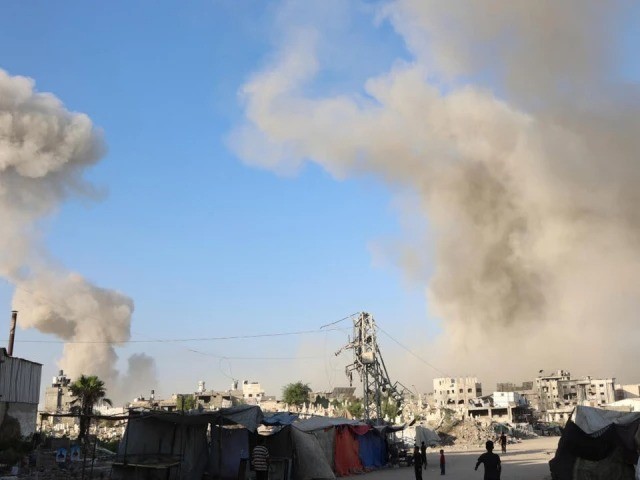

As tensions rise in the Middle East following U.S. strikes on Iranian nuclear facilities, China has called for urgent international efforts to dial down the conflict between Iran and Israel — warning that continued instability could rattle the global economy.
The call comes amid growing support inside Iran’s parliament to shut down the Strait of Hormuz — a critical maritime passage for global oil shipments — in retaliation for the U.S. attacks. That move, if carried out, could have far-reaching economic consequences.
Speaking at a regular press briefing in Beijing on Monday, Chinese Foreign Ministry spokesperson Guo Jiakun underscored the significance of the Persian Gulf and surrounding waters, calling them “vital arteries for the international trade of goods and energy.”
“Preserving peace and stability in this region is in the shared interest of the international community,” Guo said. “China urges all parties to act with restraint and step up efforts to de-escalate the situation before it causes deeper shocks to the global economy.”
A Choke Point for the World’s Oil
The Strait of Hormuz is widely regarded as one of the world’s most strategically important oil chokepoints. Roughly 20 million barrels of oil — nearly one-fifth of global daily consumption — pass through the narrow waterway every day, according to the U.S. Energy Information Administration (EIA). The strait links the oil-rich Persian Gulf to the Arabian Sea, bordered by Iran to the north and Oman to the south.
For China, which depends heavily on foreign oil, the strait is especially vital. In the first quarter of 2025, Beijing imported an estimated 5.4 million barrels of crude oil per day through Hormuz — nearly half of its total daily crude imports, based on data from the EIA and Chinese customs.
U.S. Urges China to Rein In Tehran
Washington, too, is watching closely. On Sunday, U.S. Secretary of State Marco Rubio publicly called on Beijing to use its influence with Tehran to prevent any attempt to close the Strait of Hormuz, warning such an act would be seen as a major escalation.
While China has maintained a neutral tone in its official statements, its message is clear: any disruption to energy flows from the Middle East could spell trouble not just for individual nations, but for global economic stability.
As the Israel-Iran conflict drags on and rhetoric intensifies, the world’s biggest economies — and oil consumers — are increasingly concerned about the broader fallout.


