



ISLAMABAD — In a significant move aimed at making Pakistani exports more competitive, Prime Minister Shehbaz Sharif on Monday ordered the immediate abolition of the Export Development Surcharge (EDS). The decision comes as the government attempts to bring down the high cost of doing business and address long-standing complaints about the misuse of export-related funds.
The prime minister also directed the formation of a committee to supervise the remaining Rs52 billion parked in the Export Development Fund (EDF), which has been financed for years through a 0.25% surcharge on all exports.
The measure was taken on the recommendation of the private sector–led working group on the EDF, headed by well-known textile exporter Musadaq Zulqarnain. Acting on the group’s findings, the government agreed that the surcharge should be removed without delay to provide immediate relief to exporters and improve their ability to compete globally.
According to the PM Office, Shehbaz Sharif also instructed that an international-standard third-party audit of the EDF be carried out. Officials confirmed that the government is even considering a presidential order to ensure the surcharge’s swift withdrawal.
This is the second major cost-cutting step taken by the prime minister in recent weeks. Earlier, he abolished the Rs35 television fee charged through electricity bills—another move intended to reduce business expenses at a time when Pakistan is struggling to expand its export base.
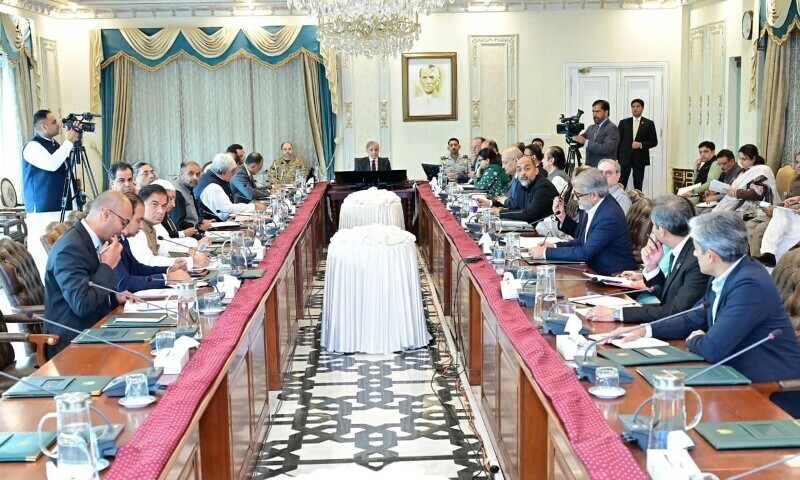
During Monday’s meeting, exporters raised concerns about rising taxes and the heavy burden of energy costs. The prime minister acknowledged these issues, noting that separate working groups were finalising their recommendations on both matters. He also emphasised the need for a competent chairman to oversee the EDF and ensure that funds are used effectively. This recommendation is the first among proposals from eight different working groups to secure direct approval from the premier.
In its latest submissions, the EDF panel stressed that the remaining balance and the additional Rs8 billion expected to be collected during the current fiscal year should be managed transparently. The committee, now set to include private-sector representatives, will monitor how these funds are spent.
The prime minister reiterated that the EDF must be used strictly for activities that directly support exports including research and development, skill enhancement, and competitiveness initiatives. He made it clear that the fund should not be diverted to infrastructure projects.
Historically, EDF money has been used for international trade fairs, overseas exhibitions, and local expos. A large portion of the funds has gone to the Trade Development Authority of Pakistan (TDAP) and various chambers of commerce. Last year, TDAP alone received close to Rs4 billion from the EDF for trade exhibitions and related events.
“All schemes under the EDF should undergo independent audits,” the prime minister directed, underscoring the need for accountability.
The meeting also reviewed the rising tax burden on export-oriented businesses. It was acknowledged that exporters face significantly higher taxes compared to domestic industries. A separate working group, led by Shahzad Saleem, has completed a detailed assessment of these issues.
Prime Minister Shehbaz Sharif said that it is the federal government’s responsibility to promote Pakistani products globally and that exporters should be provided maximum support as part of the government’s economic revival strategy.


