





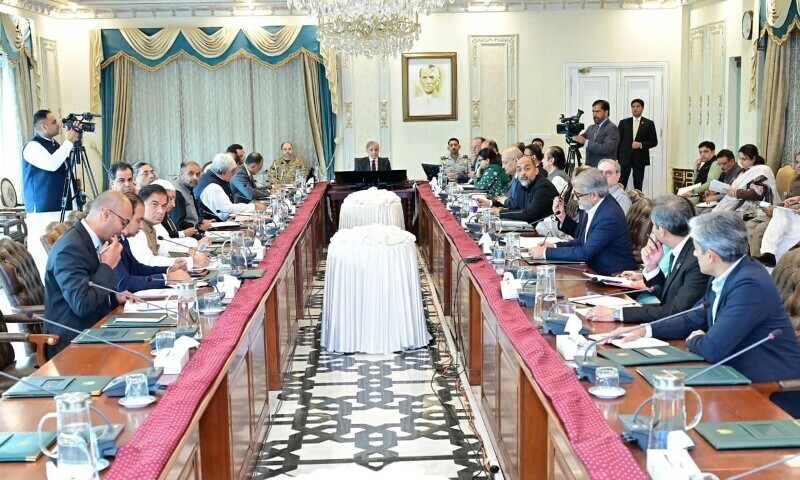
KARACHI: The Karachi Metropolitan Corporation (KMC) has stepped in to clear the air after confusion erupted over a council resolution opposing heavy e-challan fines, saying the motion was never formally approved.
In a statement issued late Sunday, KMC officials described the incident as a “misunderstanding” stemming from an administrative error that mistakenly gave the impression that the resolution had passed.
According to the clarification, the motion which sought to challenge the recently introduced traffic e-challan fines, some reportedly as high as Rs50,000 did not complete the mandatory review or debate process required under council procedures. As a result, it holds no official validity.
KMC officials said the matter would be properly reintroduced in the next council meeting, where it will undergo formal discussion before any decision is taken.
Opposition Pushes Back
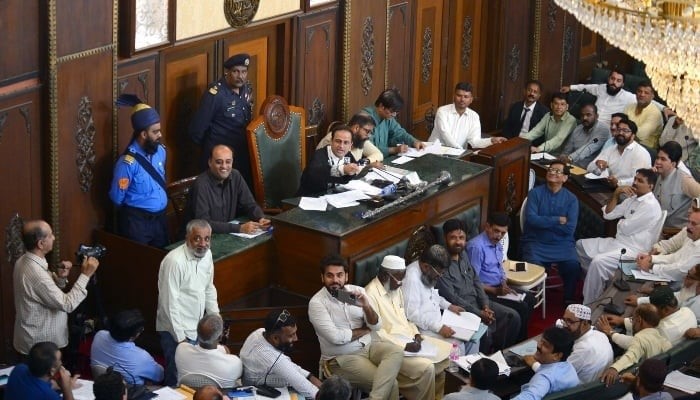
Opposition Leader Saifuddin Advocate, who originally submitted the resolution, rejected the KMC’s explanation, insisting that the motion had indeed been presented and discussed during the council session held on October 31.
He claimed that representatives from Jamaat-e-Islami (JI), Pakistan Tehreek-e-Insaf (PTI), and the Pakistan Peoples Party (PPP) all participated in the debate, and that the session, chaired by Deputy Mayor Salman Abdullah Murad, concluded with a unanimous decision to adopt the resolution.
“The claim that signatures were added by mistake is unprecedented,” a spokesperson for the opposition leader said. “If the mayor is serious about Karachi’s welfare, he should stand with the people, not defend the provincial government.”
The disputed resolution had called for the withdrawal of the Sindh government’s notification enforcing steep e-challan fines and highlighted Karachi’s deteriorating road conditions. It also questioned whether the e-challan cameras could effectively control crime when basic infrastructure remains in disrepair.
Digital System or Double Standards?
The controversy comes on the heels of Chief Minister Syed Murad Ali Shah’s recent inauguration of the Traffic Regulation and Citation System (TRACS) a fully automated, AI-powered mechanism aimed at overhauling traffic management across Sindh.
TRACS replaces manual ticketing with a digital platform that uses AI-integrated CCTV cameras to detect violations such as over-speeding, red-light jumping, and helmet non-compliance. The system aims to remove human discretion, reduce bias, and ensure transparency and accountability.
To facilitate citizens, TRACS Sahulat Centres have been established at key traffic offices and police stations, offering services like fine payment, violation clarification, and challan appeals. Additionally, the TRACS mobile app enables motorists to check and settle challans in real-time.
In its first phase, around 200 cameras have been installed across Karachi, with plans to scale up to 12,000 cameras citywide, eventually expanding to other districts in Sindh. The system has also been integrated with Excise and Taxation, Driving Licence, and NADRA e-Sahulat databases for real-time verification.
Errors and Outrage
Despite the government’s claims of transparency, the system has already drawn criticism. Several citizens have reported receiving incorrect e-challans, raising concerns about its reliability.
One affected motorist told that he was fined Rs2,500 for riding without a helmet near Clifton’s Teen Talwar even though he was at home in Scheme 33 at the time. “The photo on the challan shows a different number plate than the one mentioned in the text,” he said, calling it a “major technical flaw.”
The same challan also added six demerit points to his record. “If these digital errors continue, where will ordinary people go for justice?” he asked.
According to official data, over 12,900 e-challans were issued within three days of the system’s launch including more than 2,600 on the first day alone.
Following public backlash, Chief Minister Murad Ali Shah directed authorities to waive the first e-challan for motorists as a goodwill gesture, warning that repeated violations would invite strict action.
Meanwhile, JI MPA Muhammad Farooq tabled a resolution in the Sindh Assembly demanding an immediate review of the e-challan policy. He termed the heavy fines “unjust,” arguing that “Karachi’s roads are broken, signboards are missing yet citizens are being punished.”
Separately, the Markazi Muslim League filed a constitutional petition in the Sindh High Court, challenging the legality of the system. The petition claimed that authorities were threatening to block citizens’ CNICs over unpaid fines and questioned why Karachi motorists are fined Rs5,000 while Lahore drivers pay only Rs200 for the same violations.
“The city’s infrastructure is crumbling these fines are turning daily life into a punishment,” the petition read, urging the court to take up the case on an urgent basis.


